Weekend flooring projects used to be the “measure twice, panic three times” kind of adventure. Now, with better materials, smarter rental options, and a ton of practical know-how floating around, DIY floors are way more doable—if your tool setup is solid. The reality is simple: most ugly floors aren’t caused by “bad taste,” they’re caused by bad cuts, rushed layout, and skipping prep. That’s why the right kit matters just as much as the planks or tiles you pick. A measuring tape and a level can save you from a room that slowly drifts out of square. A utility knife can make vinyl look clean instead of chewed. And yes, small stuff like flooring spacers often decides whether your floor looks professional six months later or starts buckling after the first hot week.
In 2026, a lot of homeowners are also mixing materials—like vinyl plank in the basement and laminate upstairs—so you’ll get more mileage out of tools that are versatile and accurate. Think of this guide like a tool “game plan,” following a fictional DIYer named Maya who wants new floors before hosting family. She’s not trying to become a contractor; she just wants a floor that looks sharp, lasts, and doesn’t come with surprise squeaks. If that sounds familiar, you’re in the right place.
En bref
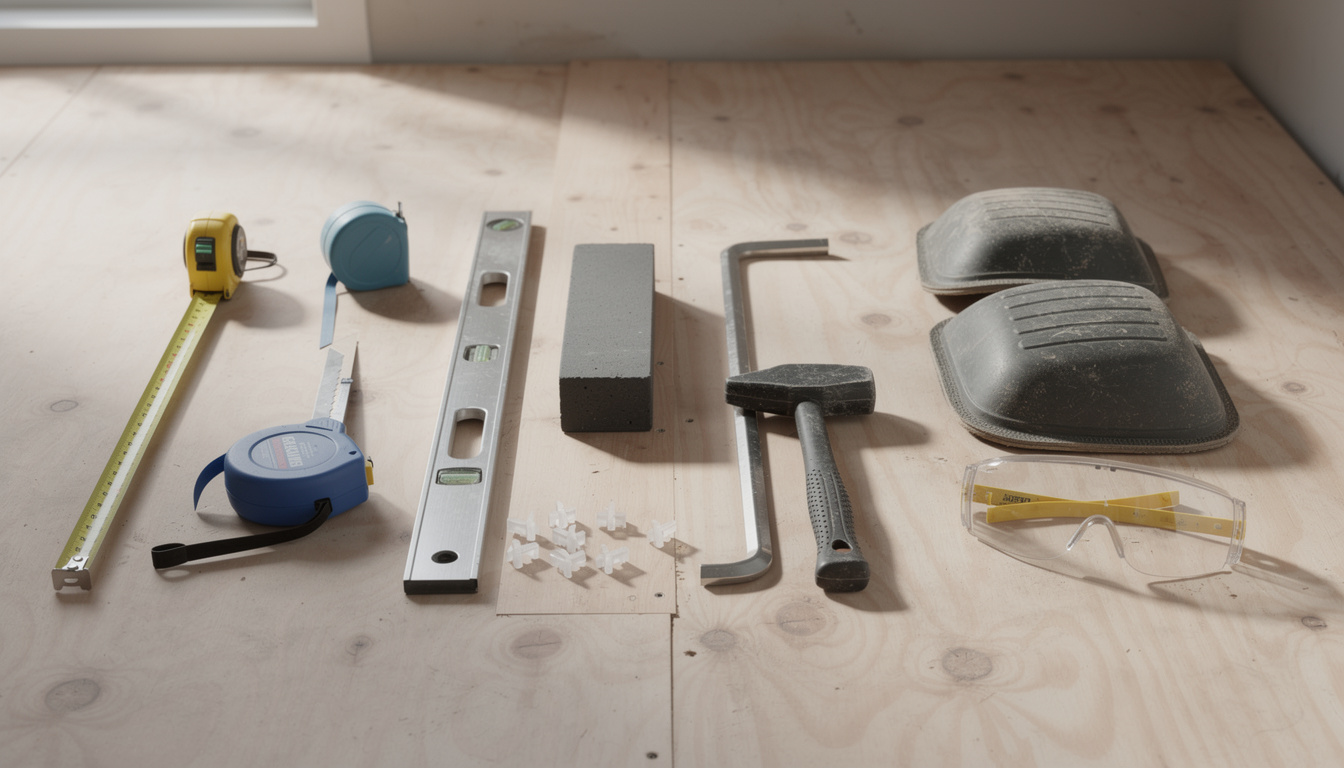
- 🧰 Build your core kit around measurement + layout: measuring tape, chalk line, and level prevent “drifting” rows.
- ✂️ Match cutting tools to material: utility knife for vinyl/underlayment, saws for wood, wet saw for tile.
- 🔨 For click-lock floors, tapping block + pull bar + rubber mallet are your gap-killing trio.
- 🧱 Prep is non-negotiable: a floor scraper and cleaning tools protect your finish and your patience.
- 🧤 Safety counts: safety goggles and knee pads make long days safer and way less miserable.
- 🧪 Adhesives need pressure: vinyl and glue-down installs often benefit from a roller and the right adhesive technique.
Essential Tools for DIY Flooring Projects: Measuring, Layout, and a Plan That Doesn’t Drift
If Maya’s project has a villain, it’s not the old floor—it’s the room itself. Rooms are rarely perfectly square, walls aren’t always straight, and doorways love to throw curveballs. That’s why the smartest first purchase isn’t a fancy saw; it’s a dependable measuring tape and a good level. Accurate dimensions help you buy the right amount of material, but more importantly, they help you create a layout that won’t “walk” as you install row after row.
A classic move is to start installing from the most visible wall and assume everything lines up. Then you get to the final rows and discover you’ve narrowed down to awkward slivers. Instead, Maya snapped a chalk line to establish a true reference line through the room. That chalk line becomes the “truth,” even if the wall is lying. It’s a small step that prevents big regret.
Measurement basics that actually matter
Start by measuring length and width in multiple spots. If the room is wider near one end, plan around that reality rather than fighting it later. A simple trick: measure both diagonals. If they’re different, the room isn’t square, and your layout needs a reference line (not blind faith).
When Maya priced her flooring, she added extra material for offcuts and mistakes. In practice, waste varies by pattern and room shape, but the bigger point is this: precision reduces waste. Better layout tools often pay for themselves by saving you from buying another box on Sunday afternoon.
A practical checklist before you touch the first plank
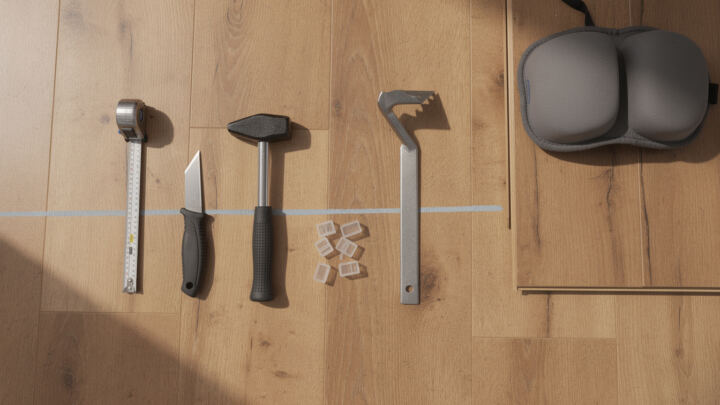
- 📏 Measuring tape for room dimensions, plank sizing, and repeat checks
- 📍 Chalk line for a dead-straight starting reference
- 📐 Level to spot high/low areas that can cause bounce or gaps
- 🧱 Straightedge or long ruler for guiding cuts and checking edges
- 🧩 Flooring spacers to maintain expansion gaps at walls and fixed objects
Those flooring spacers deserve special attention. Wood and many floating floors expand and contract with humidity. Skip the gap and you might get tenting or buckling later. Use spacers along the perimeter and keep them in until trim goes on. It’s boring, but it’s the kind of boring that keeps your floor flat.
Once your room is mapped and your reference lines are set, the next challenge is making clean cuts—because a great layout still looks rough if every edge is jagged. That’s where cutting tools come in.
Cutting Tools for DIY Flooring Projects: From Utility Knife to Wet Saw Without the Drama
Cutting is where DIY flooring turns from “assembly” to “craft.” The goal isn’t just to get pieces smaller; it’s to get them repeatably accurate. Maya learned fast that using the wrong tool is the quickest way to chip laminate edges, splinter wood, or shred vinyl. The right cutting setup makes your work faster, safer, and noticeably cleaner.
When a utility knife is the hero (and when it’s not)
A sharp utility knife is perfect for scoring vinyl plank, trimming underlayment, cutting carpet backing, and cleaning up small bits at transitions. The key is blade discipline: new blade for clean finish work, and don’t “muscle through” dull blades. A dull blade drifts, chews edges, and increases the chance of slipping.
For vinyl sheet goods, scoring and snapping can look surprisingly professional. For thicker or rigid core products, the knife still helps with underlayment and detail trims, but forcing it through tough boards can leave uneven breaks. In those cases, a saw-based approach is cleaner.
Saws for wood and laminate: cleaner edges, fewer headaches
Hardwood, engineered wood, and many laminates cut best with a fine-tooth blade. A miter saw makes crosscuts quick and consistent; a circular saw helps rip long lengths. Maya rented a saw for the weekend instead of buying one she’d barely use. That rental choice freed budget for better underlayment and trim—stuff she’d actually see every day.
A small but real detail: support the material close to the cut. Unsupported ends vibrate, and vibration equals chipping. Also, cut laminate face-down (depending on blade direction) to reduce surface tear-out. Little technique tweaks like this separate “DIY” from “looks DIY.”
Tile cutting: why a wet saw earns its keep
Tile is unforgiving. If you’re working with ceramic, porcelain, or stone, a manual tile cutter can handle straightforward snap cuts, but corners, notches, and cleaner edges are where a wet saw shines. The water keeps dust down and reduces heat, and the diamond blade delivers crisp edges that make grout lines look intentional rather than “close enough.”
Maya didn’t tile her whole house, but she did a small laundry room. She rented a wet saw for a day, did every cut twice as carefully as she thought necessary, and ended up with corners that looked like a pro did them. That’s the thing with tile: speed comes from planning, not rushing.
Cutting is only half the battle. The next make-or-break phase is getting the flooring to lock together tight, stay aligned, and survive daily life—without dents, gaps, or squeaks.
Installation Tools for DIY Flooring Projects: Tapping Blocks, Pull Bars, Nailers, and Tight Seams
Installation is where tools stop being “nice to have” and become the difference between a floor that feels solid and one that annoys you every time you walk across it. Maya’s top fear wasn’t messing up a cut; it was finishing the room and noticing tiny gaps that catch socks or make the whole surface look uneven in angled light. That’s exactly what the right joining and fastening tools prevent.
Click-lock and floating floors: the gap-killing trio
For laminate and many engineered or floating installs, the standard combo is tapping block, pull bar, and rubber mallet. The tapping block protects the plank edge while letting you persuade boards into place. The pull bar is your secret weapon for the final rows near walls where you can’t swing a mallet freely. And the rubber mallet gives controlled force without leaving dents like a metal hammer might.
Here’s the practical rhythm Maya used: place the plank, engage the joint, tap lightly along the seam with the tapping block, then check the line and repeat. If a board doesn’t seat, stop and inspect. Debris in the joint, a warped plank, or a misaligned angle can all create a stubborn gap that no amount of banging will fix.
Hardwood fastening: nailers, staplers, and when to rent
For solid hardwood (and some engineered products designed for nail-down), a flooring nailer or stapler speeds things up and creates consistent fastening. Hand-nailing works, but it’s slower and can lead to uneven set depth, which shows up later as squeaks or lifted edges. For most DIYers, this is a prime rental tool: you get pro-grade results without paying for something you’ll use once.
Remember that the subfloor matters. If the subfloor has dips, boards can flex and fasteners can loosen over time. That’s why Maya rechecked flatness with her level before she committed to the first row. It’s not glamorous, but it’s how you avoid “why is this spot bouncy?” a month later.
Spacers aren’t optional—here’s why
Flooring spacers keep expansion gaps consistent. That gap is what lets the floor move slightly with seasonal humidity changes. Without it, the pressure has to go somewhere—often upward. Maya’s neighbor skipped spacers in a hallway and later watched the floor crown in the middle during a humid summer. Trim can hide a gap, but it can’t hide a buckle.
| Tool 🧰 | What it does ✅ | Best for 🏠 | DIY tip 💡 |
|---|---|---|---|
| Tapping block 🧩 | Seats planks without damaging edges | Laminate, floating wood | Tap along the seam in short passes, not one big hit |
| Pull bar 🪝 | Closes gaps near walls and tight spots | Laminate, engineered, floating floors | Use a scrap piece to protect the wall/trim area |
| Rubber mallet 🔨 | Applies force without denting surfaces | Laminate, wood, tile (gentle adjustments) | Light taps + patience beat heavy swings |
| Flooring nailer/stapler 🏗️ | Fastens boards consistently to subfloor | Hardwood, some engineered | Rent it for the weekend if you won’t reuse it |
| Flooring spacers 📏 | Maintains expansion gaps | Laminate, wood, floating systems | Keep them in until baseboards/quarter round go on |
Once the boards are tight and aligned, the next win is longevity—and that mostly depends on what’s under the floor. Let’s talk prep, removal, and adhesives.
Surface Prep Tools for DIY Flooring Projects: Scraping, Leveling, Cleaning, and Adhesive Control
Surface prep is the part everyone wants to skip, and it’s also the part that decides whether your floor feels premium or just looks okay in photos. Maya’s first instinct was to start laying planks right after pulling the old flooring. Then she stepped on the subfloor and felt tiny crunchy bits—old adhesive spots, paint drips, and debris. That crunch doesn’t disappear; it telegraphs through floating floors, creates hollow spots, and can even prevent click-lock joints from sitting fully.
Removal and cleanup: the unsexy tools that carry the project
A floor scraper is the workhorse for getting rid of old glue, stuck underlayment, and random gunk. Pair it with a shop vacuum or a strong household vacuum (and frequent emptying), and you’ll keep the surface clean enough for accurate layout lines and consistent plank seating.
For stubborn residues, some DIYers use a heat gun carefully to soften old glue, while others rely on adhesive removers formulated for flooring. The key is to avoid saturating the subfloor and to follow product instructions so you don’t leave behind oily residue that fights your new adhesive or underlayment tape.
Flatness checks: a level isn’t just for shelves
Your level helps you spot humps and dips. Even small variations can cause floating floors to flex, which leads to clicking sounds and stressed joints. Maya marked high spots and sanded them, then used an appropriate patch/leveling compound for low areas. This is the difference between a floor that sounds quiet and one that feels like it’s “talking back.”
Adhesive and vinyl: pressure is part of the install
Glue-down vinyl, linoleum, and some specialty planks depend on consistent contact with adhesive. That’s where a floor roller earns its reputation. Rolling the surface helps eliminate bubbles and ensures the product beds into the glue evenly. Maya borrowed a roller from a neighbor, rolled in overlapping passes, and immediately saw seams flatten out.
Also: watch your timing. Many adhesives have an open time and a set time. If you install too early, things slide; too late, bonding suffers. Treat it like cooking—timing is the recipe.
With prep handled, you’re almost ready to work like you’ve done this before. The last piece is staying safe, comfortable, and consistent for long sessions.
Safety and Comfort Tools for DIY Flooring Projects: Goggles, Knee Pads, and Mistake-Proof Workflow
DIY flooring looks chill on social media until you’re four hours in, kneeling on a subfloor, trimming around door jambs, and dealing with dust. Maya’s “aha” moment came when she realized fatigue creates mistakes. Not dramatic mistakes—tiny ones: a misread line, a rushed cut, a chipped corner. The fix is simple: treat safety and comfort gear like real tools, not accessories.
Protect your eyes and lungs (seriously)
Safety goggles are non-negotiable when cutting, scraping, or using a wet saw. A small chip in the eye isn’t a “walk it off” situation. For dusty work, especially with underlayment trimming, add a mask suited for fine particles. Even if you’re cutting outdoors, dust clings and gets tracked through the house.
Knees, hands, and pacing
Knee pads are a massive quality-of-life upgrade. They let you stay steady while aligning joints and placing flooring spacers. Without them, you shift your weight constantly, and that movement makes it easier to knock boards out of alignment.
Gloves are helpful when handling tile edges or hauling boxes, but the bigger win is pacing: set up a “cut station” and an “install station.” Maya kept her saw outside (less dust), then brought in cut pieces in batches. That workflow prevented constant tool shuffling and reduced the chance of stepping on debris.
A mini “site setup” list that keeps things under control
- 🦵 Knee pads for long install sessions and stable plank seating
- 🥽 Safety goggles for cutting, scraping, and any flying debris
- 🧹 Vacuum/broom to keep joints clean (clean joints = tighter seams)
- 🧴 Rags + manufacturer-approved cleaner for quick adhesive smears
- 🔫 Caulking gun for neat edge sealing at transitions where appropriate
One last practical note: tool quality matters, but so does tool care. Clean blades cut cleaner. A wiped-down utility knife track slides smoother. A mallet free of grit won’t scuff surfaces. This is how a DIY job quietly turns into a “wait, you did this yourself?” result.
Do I really need a level for a DIY flooring project?
Yes. A level helps you spot high and low areas that can cause flexing, gaps, and squeaks. Even floating floors need a reasonably flat subfloor, so checking early saves you from rework later.
What’s the difference between a tapping block and a pull bar?
A tapping block lets you tap along the plank edge to seat joints without damaging them. A pull bar is shaped to hook the far edge of a plank—especially useful near walls—so you can tighten seams where a mallet swing won’t fit.
When is a utility knife enough, and when do I need a saw?
A utility knife works great for trimming underlayment, cutting vinyl (score-and-snap), and detail trimming. For hardwood, engineered wood, and many laminates, you’ll get cleaner, faster results with a miter saw or circular saw using a fine-tooth blade.
Why are flooring spacers such a big deal?
They maintain the expansion gap around the perimeter so the floor can move with humidity and temperature changes. Without that gap, pressure builds and can cause buckling, tenting, or edge lifting over time.
What’s the smartest tool to rent instead of buy?
Specialty gear like a flooring nailer/stapler (for nail-down hardwood) or a wet saw (for tile) is often best rented. You get pro-grade performance for a short window, and you avoid storing expensive tools you may not use again.