In brief
- 🧱 Underlayment is the “quiet layer” between your subfloor and your finished flooring, and it influences how the whole system behaves.
- 🔇 The right pick boosts soundproofing and cuts down the click-clack that makes new floors feel cheap.
- 💧 In moisture-prone rooms, a real moisture barrier can be the difference between a stable floor and warping or mold.
- 🧊🔥 Better underlayment can improve temperature feel underfoot, increasing everyday comfort and helping energy efficiency.
- 🛡️ It supports floor protection by smoothing minor imperfections and reducing impact stress, which improves durability.
- 🧰 Smart material selection depends on room conditions, the kind of flooring, and how the floor is installed (floating vs glue-down vs nail-down).
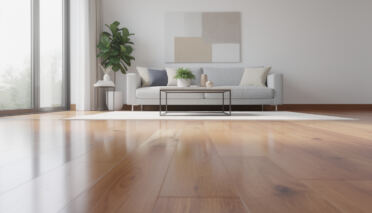
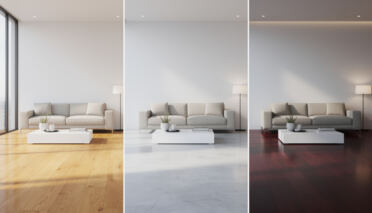
Most people shopping for flooring obsess over what they’ll see every day: the oak tone, the matte finish, the tile size, the “is this too gray?” debate. Fair. But the thing that decides whether your new floor feels solid, quiet, and “expensive” is often the one part you’ll never post on social media. Underlayment is that hidden layer—thin enough to underestimate, important enough to make or break the whole installation. It deals with the messy reality underneath: slightly imperfect subfloor seams, everyday foot traffic, seasonal humidity swings, the hollow drum sound in upstairs hallways, and the random water incident that always happens in the kitchen at the worst time.
Think of it like good tires on a nice car. You can have premium flooring, but if what’s beneath it is wrong for the space, you get squeaks, shifting, premature wear, and that constant “something feels off” sensation. Choosing the right underlayment isn’t about buying the thickest roll on the shelf; it’s about material selection that matches your home’s conditions and your lifestyle. To keep this grounded, we’ll follow a fictional homeowner, Maya, as she renovates a busy two-story place with a basement—because real houses don’t behave like perfect diagrams.
Why the Right Underlayment Matters for Flooring Performance and Daily Comfort
Maya’s first mistake was assuming underlayment equals “padding.” She picked a generic foam because it was cheap and said “universal” on the label. Two weeks after the installation, her upstairs laminate had that sharp tapping sound, like heels in an empty apartment. The floor looked great, but it didn’t feel great. That’s the underlayment story in a nutshell: it’s not a decoration; it’s a performance layer.
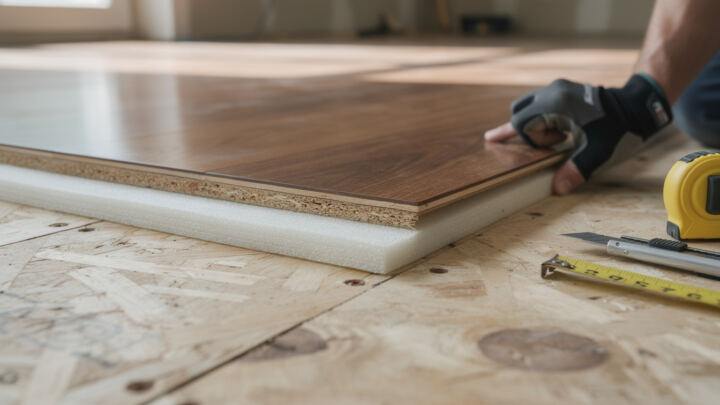
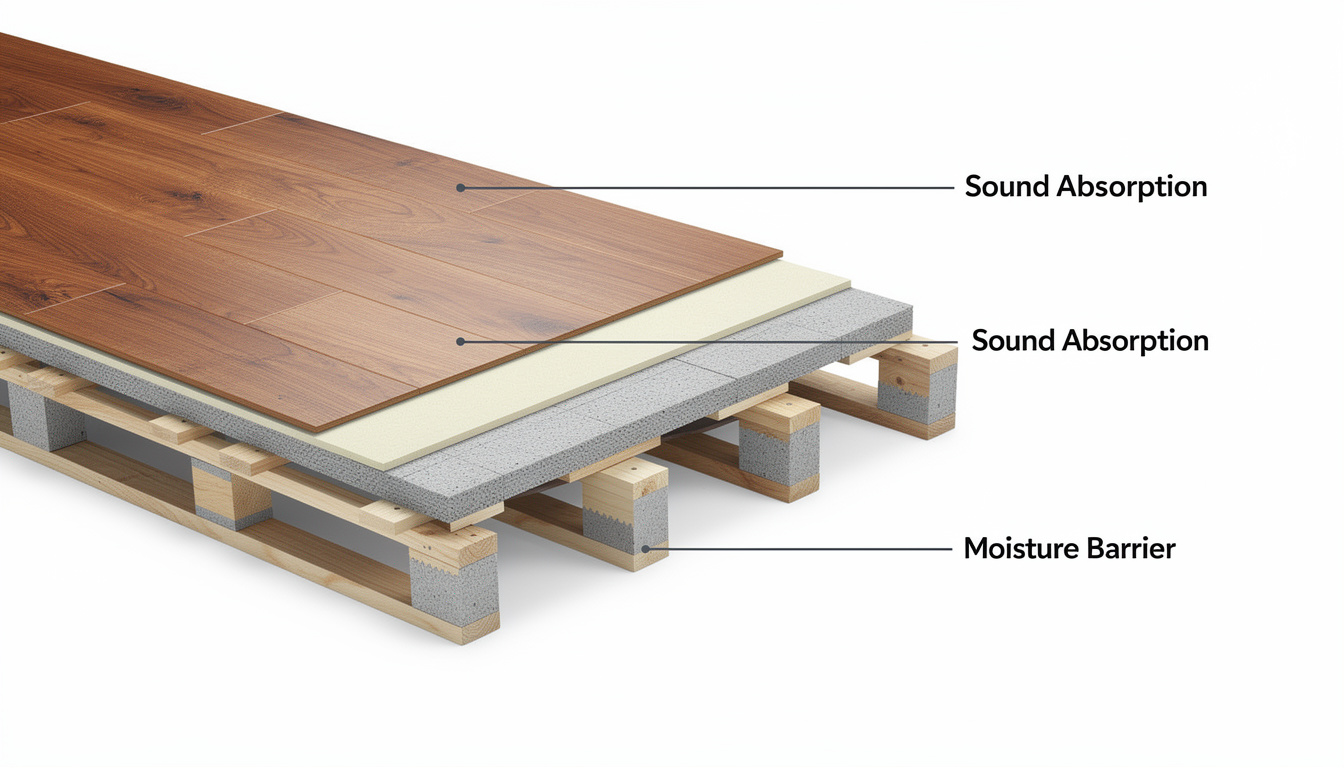
At its simplest, underlayment sits between the subfloor (plywood or concrete, usually) and the visible flooring (laminate, hardwood, vinyl, tile, or carpet). Its job is to manage a bunch of physical annoyances that would otherwise be passed straight into your finished surface.
Comfort underfoot is not a “nice-to-have”
Ever stood cooking for an hour on a hard surface and felt it in your knees? The right underlayment adds subtle cushioning, which changes how a room feels in everyday life. In high-traffic areas—kitchens, hallways, living rooms—this can reduce fatigue in a way people notice immediately, even if they can’t explain why.
But there’s a catch: too much softness under certain floors can cause movement. That movement stresses joints and edges, and it can shorten durability. So comfort isn’t about “as squishy as possible.” It’s about the correct density and thickness for that flooring type.
Soundproofing: the difference between “new floor” and “cheap floor”
Noise is where people get disappointed fast. Hard surfaces reflect sound, and floating floors can amplify it. A good underlayment supports soundproofing by absorbing impact noise (footsteps) and reducing how much sound transfers to rooms below.
Maya noticed the problem during a movie night: upstairs footsteps sounded like someone dribbling a basketball. After switching to an underlayment designed for acoustic performance, the same hallway turned from echo chamber to “normal house.” Not silent—just calmer.
Floor protection through surface smoothing (within limits)
Underlayment can help create a smoother plane by bridging tiny gaps, softening minor ridges, and reducing point pressure. That’s real floor protection, because pressure points can lead to creaks, wear spots, or joints working loose over time.
Still, it won’t fix a bad subfloor. If the subfloor has dips or a slope, you need proper leveling methods. Underlayment helps with small imperfections; it doesn’t perform miracles. The key insight here: underlayment is performance engineering, not decoration.
Moisture Barrier Underlayment: Preventing Warping, Mold, and Costly Repairs
Maya’s basement renovation was the moment moisture stopped being an abstract concept. The concrete felt dry most days, but after heavy rain, the air got clammy. That’s normal for a lot of homes, and it’s exactly why the moisture barrier conversation matters.
Moisture is sneaky: it can come from below (vapor rising through concrete), from above (spills, wet boots), or from the air (humidity swings). When you choose the wrong underlayment, you’re basically inviting moisture to mess with the most sensitive flooring materials—especially laminate and many wood products.
What a moisture barrier really does
A moisture barrier underlayment helps slow or block vapor transmission. That reduces swelling, edge curling, and the kind of long-term dampness that encourages mold or mildew. It’s not just about dramatic floods; it’s about everyday conditions adding up over months.
In basements, kitchens, laundry rooms, and entryways, moisture management is often the main event. If your underlayment is missing the right barrier (or installed with sloppy seams), you can end up with a floor that looks fine until it suddenly doesn’t.
Practical example: basement LVP vs laminate
Maya debated laminate because it looked warm and was budget-friendly. But with a basement slab, she would have needed a well-specified vapor barrier system and tight seam taping. Instead, she chose LVP designed for below-grade use, paired with a thin, dense underlayment approved by the manufacturer.
The result wasn’t just peace of mind. The floor felt less “cold concrete,” and it didn’t develop that musty smell some basements get when moisture gets trapped the wrong way.
Moisture mistakes people keep repeating
These are the classic errors contractors see again and again:
- 💧 Skipping seam tape where the moisture barrier depends on sealed overlaps.
- 🧽 Installing over damp concrete without allowing proper drying or testing conditions.
- 📦 Using a “one-size-fits-all” foam roll that offers little real protection.
- 🪵 Pairing moisture-sensitive flooring with the wrong underlayment and assuming warranties will still apply.
If there’s one takeaway: moisture planning is cheaper than repairs. The best insight here is simple—a moisture barrier is not an accessory, it’s risk management.
Want a quick visual on how pros think about underlayment layers and barriers? This search pulls up solid demonstrations.
Soundproofing Underlayment for Apartments and Multi-Level Homes: What Actually Works
If you live in a multi-story house, a condo, or an apartment, noise is personal. It’s the toddler sprinting at 6 a.m., the dog nails on the hallway, the “why does it echo so much?” moment when furniture hasn’t even moved in yet. Soundproofing is where underlayment earns its keep, but only if you’re realistic about what it can and can’t do.
Impact noise vs airborne noise (and why that matters)
Underlayment primarily targets impact noise—footfalls, dropped objects, chair movement. Airborne noise—voices, music—needs other strategies like insulation between joists or added mass in ceilings. People get disappointed when they buy acoustic underlayment expecting it to silence a neighbor’s TV. That’s not its lane.
Maya’s upstairs issue was impact noise. A denser acoustic layer reduced that “hollow” signature. The floor stopped sounding like a stage platform and started sounding like, well, a normal home.
Material selection for acoustics: foam, cork, rubber
Material selection affects how vibration energy gets absorbed. Foam is common and easy to work with, but not all foams perform equally. Cork can be excellent for acoustics in many assemblies, but it isn’t always appropriate under certain wood floors—especially if the floor system needs specific stability or the manufacturer disallows it.
Rubber-based options often deliver strong acoustic performance and good resilience, which can help durability. They’re also heavier and usually pricier, so they make the most sense where noise control is a top requirement.
Acoustic performance is also about the whole floor system
Even the best underlayment won’t fix bad edges. If you hard-connect the floor to walls (no expansion gap), you create sound bridges. If transitions and trims are installed too tight, you can transmit vibration into framing. Acoustic success is a detail game.
Maya’s installer re-did perimeter gaps and used proper transitions, and that mattered almost as much as the underlayment choice. The insight that sticks: soundproofing is a system, not a single product.
| Goal 🎯 | Typical Underlayment Traits 🧩 | Best Fit Example 🏠 | Watch-Out ⚠️ |
|---|---|---|---|
| Quieter footsteps 🔇 | Denser acoustic layer; impact absorption | Upstairs hallway in a two-story home | Don’t expect it to stop loud voices |
| Lower sound transfer between floors 🧱 | Resilient material, good compression recovery | Condo bedrooms above living space | Edge gaps and trims can ruin results |
| Reduce “hollow” floating floor sound 👟 | Proper thickness + density matched to flooring | Laminate or floating engineered wood | Too soft can stress locking joints |
| Calmer room acoustics 🎧 | Moderate absorption + stable surface | Home office with hard flooring | Furniture pads still matter |
Next up: even if you nail moisture and noise, your floor still has to survive day-to-day abuse. That’s where underlayment choices quietly decide durability.
Underlayment and Durability: How It Extends Floor Protection Over Years
There’s a myth that durability is “all about the top layer.” Sure, the wear layer, finish, and hardness matter. But underlayment influences how stress travels through the floor every single day. That includes the micro-movements from walking, the pressure spikes from a chair leg, and the seasonal expansion and contraction that happens even in climate-controlled homes.
Impact absorption and joint stability
A well-chosen underlayment can absorb small impacts before they stress the locking mechanisms of floating floors or the brittle edges of some laminate products. Over time, that reduces squeaks, minimizes joint separation, and helps maintain a consistent feel across the room.
Maya had a dining area where chairs moved constantly. With the first underlayment, the floor developed subtle “clacks” at seams. After correcting the underlayment to one with better compression resistance, the seams stayed tighter, and the sound faded.
Smoother load distribution over imperfect subfloors
Real subfloor surfaces have character—small ridges at plywood joints, fastener spots, or minor height differences where old renovations meet new. Underlayment helps distribute loads more evenly across these transitions. That’s a big deal for floor protection, because point loads create localized wear.
This is also why “thicker” isn’t automatically better. What you want is appropriate density and structure. A mushy layer can amplify movement, while a firm, supportive layer can stabilize the flooring above.
When underlayment is required (and when it’s forbidden)
Some floors have attached pads. Some glue-down products demand direct bonding and specifically forbid extra layers. Some nail-down hardwood setups use specific papers or membranes mainly for moisture control and minor slip, not cushioning.
So the real durability move is boring but powerful: follow manufacturer guidance, and match underlayment to the installation method. The insight: durability comes from compatibility, not guesswork.
If you want to see how installers approach creaks, flatness, and product compatibility, this is a useful place to start.
Choosing the Right Underlayment: Room-by-Room Material Selection and Installation Tips
By the time Maya reached her final rooms, she stopped asking “what’s the best underlayment?” and started asking the better question: “what’s the best underlayment for this room?” That’s the mindset that prevents expensive do-overs.
Match underlayment to flooring type (and how it’s installed)
Floating laminate often benefits from foam or specialized acoustic options that support the click-lock system while improving comfort and noise reduction. Many vinyl plank systems prefer thin, dense underlayments—sometimes none at all if the product already includes an attached pad. Hardwood can be tricky: nail-down installations may use a specific membrane or felt-like layer, while floating engineered wood may allow a different underlayment profile.
The point isn’t to memorize rules; it’s to confirm compatibility. Warranties and long-term durability depend on it.
Room conditions: moisture, temperature, traffic
Basements and slab-on-grade spaces usually demand a serious moisture barrier. Kitchens and entries combine spills with heavy use, so you want moisture resistance plus stability. Bedrooms might prioritize soundproofing and comfort. Home gyms need resilience and impact handling. The same roll of underlayment shouldn’t be forced into every situation.
A practical checklist before you buy
- 🧭 Identify your subfloor: plywood, OSB, or concrete, and whether it’s above or below grade.
- 💧 Check the room’s moisture risk: basement humidity, kitchen spills, or wet boots at entries.
- 🔇 Decide if soundproofing is a priority: multi-level home, condo rules, kids/pets.
- 🧱 Confirm the installation method: floating, glue-down, or nail-down.
- 📋 Read the flooring manufacturer’s underlayment requirements to protect warranty and durability.
- 🛠️ Plan details: seam tape for barriers, perimeter gaps, and transitions that don’t create sound bridges.
Small pro moves that make a big difference
Don’t skip subfloor prep. Vacuum thoroughly so debris doesn’t create bumps or squeaks. Stagger seams where applicable, tape moisture-barrier overlaps, and keep expansion gaps where the flooring system needs them.
If you’re tempted to “fix” a noticeably uneven floor with underlayment alone, pause. Use proper leveling compounds or subfloor repairs first, then treat underlayment as the performance layer it is. The insight to end on: the right underlayment isn’t extra—it’s the foundation of a calm, comfortable, long-lasting floor.
Do I always need underlayment for flooring installation?
Not always. Many floating floors require it, but some vinyl products include an attached pad and may forbid additional layers. Glue-down flooring often needs direct adhesion and can’t take a soft underlayment. Always match the underlayment to the flooring’s approved installation method to protect durability and warranty.
Can underlayment fix an uneven subfloor?
It can smooth tiny imperfections, but it won’t correct real dips, humps, or slopes. If the subfloor is uneven, use proper floor prep (sanding high spots, patching low spots, leveling compound) before underlayment goes down.
What rooms benefit most from a moisture barrier underlayment?
Basements, slab-on-grade rooms, kitchens, laundry areas, and entryways often need a moisture barrier because vapor and spills can damage sensitive flooring. A correctly taped barrier helps prevent warping, swelling, and mold issues.
What’s the best underlayment for soundproofing between floors?
Dense, resilient underlayments designed for impact noise reduction usually perform best, especially in multi-level homes and condos. The result also depends on details like perimeter gaps, transitions, and avoiding sound bridges into walls and framing.
How do I choose the right underlayment material selection without overpaying?
Start with your flooring type and manufacturer requirements, then factor in room conditions (moisture risk, traffic, and sound needs). Spend more where performance matters—like moisture barrier needs in basements or soundproofing upstairs—rather than buying the priciest product for every room.