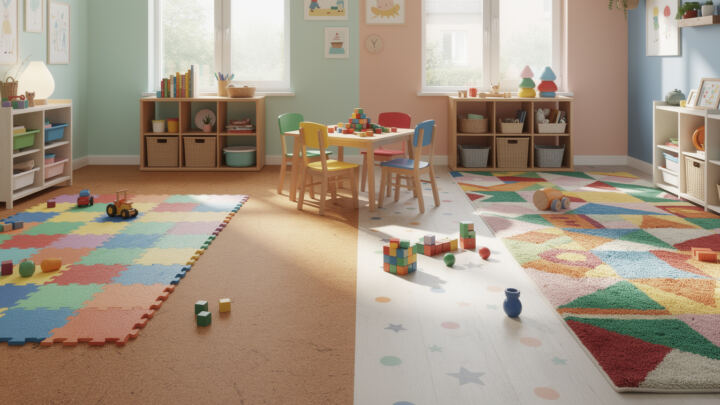
In a kids’ playroom, the floor isn’t just “the thing you walk on.” It’s the crash pad for spontaneous gymnastics, the race track for toy cars, the art studio for marker experiments, and—on a rainy afternoon—the place where everyone ends up sitting. The best flooring choices for kids’ playrooms balance safe landings with real-life durability, so you’re not panicking every time juice tips over or a plastic dinosaur goes airborne. And yes, it has to look decent too, because playrooms have a way of becoming the most-used room in the house.
Parents tend to shop floors like they shop couches: they imagine the best-case scenario. But playrooms are all about the worst-case scenario—muddy shoes, glitter glue, slime, dropped snacks, rolling chairs, and the occasional “oops, I flooded it.” That’s why features like easy to clean, stain-resistant, water-resistant, and slip-resistant aren’t “nice to have,” they’re the whole game. Add in comfort, noise-reducing performance, and non-toxic materials, and you’ve got a floor that can keep up with childhood without turning your weekends into maintenance duty.
En bref
- 🧼 Prioritize easy to clean + stain-resistant surfaces for art, snacks, and accidents.
- 🛡️ Look for safe, slip-resistant options with a bit of give—especially for toddlers learning to run.
- 🌿 Choose non-toxic materials and low-VOC adhesives/finishes to keep indoor air comfortable.
- 🔇 If your playroom is upstairs, noise-reducing layers (underlayment, cork, padded vinyl) matter more than you think.
- 💧 In basements or craft-heavy zones, water-resistant (or truly waterproof) flooring prevents big regrets.
- 🧸 Comfort counts: soft and comfortable underfoot encourages floor play and makes story time nicer.
Best flooring choices for kids’ playrooms: what really matters (safety, cleanup, and comfort)
Let’s follow a real-life thread: Maya and Jordan are turning their spare room into a playroom for two kids—one preschooler who thinks the couch is lava, and one baby who will soon be in full-speed crawl mode. They start by looking at trendy photos, then quickly realize the floor has to do five jobs at once: protect little bodies, survive daily messes, stay pleasant to sit on, keep noise from traveling, and not introduce questionable chemicals into the home.
First: safe doesn’t only mean “soft.” It means stable footing and predictable traction. A floor can be cushioned but still dangerous if it’s slick with socks. That’s why slip-resistant surfaces matter, especially near play kitchens, water tables, or anywhere snacks appear. If your kid loves running laps, the wrong sheen level can turn a fun sprint into a wipeout.
Next is cleanup realism. Kids create mystery stains with the confidence of seasoned artists. A playroom floor should be easy to clean without special rituals. If it needs delicate cleaners, constant resealing, or you’re afraid to wipe too hard, it’s going to get annoying fast. Look for finishes marketed as stain-resistant and test your own habits: are you a quick-wipe person, or does mess sometimes sit until bedtime?
Then there’s the comfort factor. Floors become furniture in playrooms. You’ll sit on them, sprawl on them, build on them, and—let’s be honest—occasionally nap on them. Options that feel comfortable and a bit soft underfoot reduce the need for constant rugs (which can slide, bunch, and trap crumbs). For babies, a slightly forgiving surface helps with tumbles; for adults, it saves knees during LEGO rescue missions.
Don’t ignore acoustics. The “thump-thump-thump” from upstairs can drive everyone nuts. A noise-reducing layer—cork, padded vinyl, or quality underlayment—keeps the peace, especially in open-plan homes or apartments. Maya and Jordan learned this after a weekend visit at friends’ house where every toy drop sounded like a cymbal crash downstairs.
Finally, air quality and materials. A playroom is a long-dwell space: kids spend hours breathing close to the floor. Choosing non-toxic materials and low-VOC finishes/adhesives can make the room feel fresher, especially for families sensitive to odors. A floor can be durable and still mindful of what it off-gasses—those aren’t mutually exclusive anymore. The key insight: pick your “must-haves” based on how your kids actually use the room, not how you wish they would.
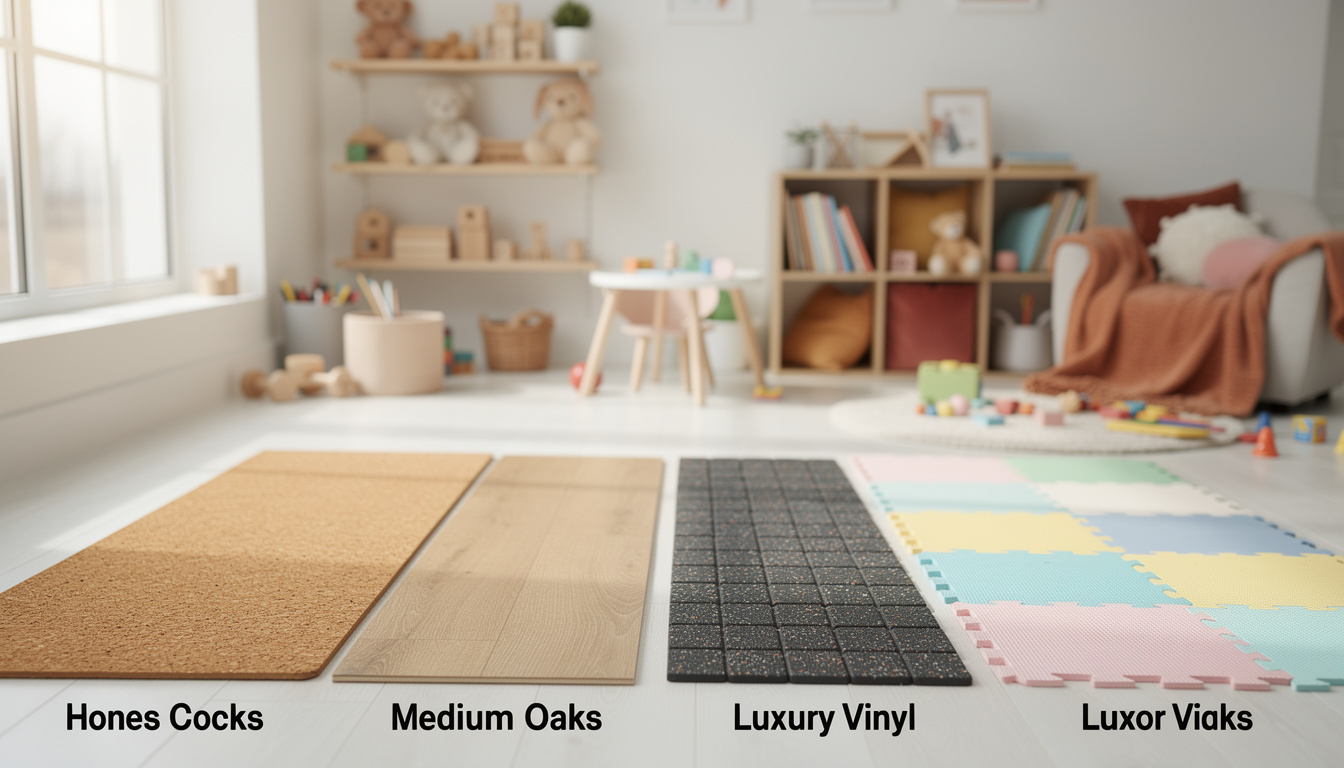
Luxury vinyl plank (LVP) and vinyl sheet: durable, water-resistant, and easy to live with
If you want one of the most practical answers to “what’s the best playroom floor?”, LVP and high-quality vinyl sheet are hard to beat. Maya and Jordan ended up leaning vinyl because their playroom doubles as a craft zone, which basically guarantees paint water, glue cups, and the occasional “I was washing my toy in the sink and… um… it overflowed.” Vinyl is typically water-resistant (and many lines are effectively waterproof on the surface), which is exactly what you want when your household treats spills like a sport.
One big perk: vinyl is easy to clean. You can sweep, vacuum, and damp-mop without the drama. For day-to-day chaos—crumbs, washable marker, sticky spots—vinyl doesn’t punish you for being human. And if you choose a product with a good wear layer, it stays stain-resistant even when snack time gets creative (hello, grape juice and tomato sauce).
Comfort is where vinyl surprises people. It isn’t carpet-soft, but it can feel more forgiving than tile or bare concrete, especially with a quality underlayment. That underlayment also helps with noise-reducing performance, which matters if the playroom sits over a home office. Jordan works from home and didn’t want to hear every toy truck “crash test” during video calls. A padded backing plus area cushions in high-impact zones gave them a calmer sound profile without turning the room into a dust-trapping rug maze.
Safety-wise, look for textured finishes and a matte look. High-gloss vinyl can be slick with socks, while a slightly grained texture tends to be more slip-resistant. Also, pay attention to seams. Sheet vinyl has fewer seams than planks, which can mean fewer places for moisture to sneak in. LVP, on the other hand, is easier to replace plank-by-plank if something truly awful happens (like a craft knife incident from an “I’m helping!” moment).
About non-toxic considerations: many reputable vinyl products now come with low-VOC certifications. Still, it’s smart to check specs for phthalate-free options and low-emission adhesives. If you’re installing in a tight space, airing out the room after installation can make the first week more pleasant.
Here’s the trade-off: vinyl is durable, but it can dent under heavy furniture or show gouges from gritty debris. Felt pads under storage units and a simple “shoes off” habit go a long way. The practical insight: vinyl is the playroom floor for people who want maximum forgiveness with minimum maintenance—and that’s a totally valid life choice.
Want to see real installs and how they hold up around kids? This helps you spot textures and finishes that read “play-friendly” rather than “slippery showroom.”
Cork flooring for playrooms: soft, comfortable, and naturally noise-reducing
Cork is the sleeper hit in playroom flooring. People think of it as “that warm-looking floor from design magazines,” but in a kid zone it earns its keep. It has a natural bounce that feels soft and comfortable underfoot, which is great for toddlers who fall a lot and for parents who sit on the floor a lot. Maya’s sister has cork in a reading-and-play corner, and it’s the one place where adults instinctively take their shoes off because it just feels good.
One of cork’s biggest superpowers is being noise-reducing. Cork absorbs impact sounds better than many hard surfaces, which can make a playroom feel calmer. If your home has echo-y rooms, cork reduces that “toy clatter soundtrack” effect. It’s not magic—dropping a metal toy will still make noise—but it softens the edges of everyday chaos.
Durability is nuanced. Cork is durable in the sense that it handles regular foot traffic well, and its cellular structure can “recover” from minor compression. But it can still get dented by sharp chair legs, pointy toys, or heavy storage units. The solution is boring but effective: wide furniture feet, pads, and thoughtful layout. Put the heavy bookshelf on a supportive base; keep the rough play zone where dents won’t break your heart.
Now the big question: is cork easy to clean and water-resistant? It can be—if it’s properly sealed. A well-finished cork floor resists spills, and quick wipe-ups are simple. But it’s not the best match for standing water or constant wet play unless you’re very diligent. If you’re building a “slime lab,” you may prefer a more waterproof surface and use cork in a quieter zone like reading, puzzles, or pretend play.
Safety considerations: cork generally has decent traction, but you still want a finish that stays slip-resistant. Avoid super glossy topcoats. Also, for families focused on non-toxic living, cork can be appealing because it’s a renewable material. Still, the finish and adhesive matter. Look for low-VOC sealants and ask installers what they’re using—this is where a good product can be undermined by a cheap glue.
To make cork work like a champ, think in zones. Maya and Jordan ended up with vinyl for the “mess zone” and considered cork for a secondary nook because that’s where cork shines: cozy, quiet, and kid-friendly without feeling like a gym mat. The key insight: cork is what you choose when you want the room to feel warm and welcoming, not just indestructible.
Rubber flooring and foam tiles: the safest soft landing for high-energy play
If your playroom is basically a mini indoor playground, rubber deserves a serious look. This is where “safe” gets very literal: rubber is soft, grippy, and forgiving. It’s naturally slip-resistant, which is huge when kids are sprinting, climbing, or doing those chaotic sideways runs that defy physics. Think of the families who have a Pikler triangle, gymnastics bar, or a little sensory swing—rubber makes that setup feel less stressful for everyone.
Rubber is also impressively durable. It’s made to handle impact, dragging, and repeated drops without chipping like tile or scuffing like some softer woods. And for upstairs rooms, it’s a strong noise-reducing choice because it dampens those “thud” sounds that travel through framing. If you’ve ever heard a wooden block hit hardwood from two rooms away, you already understand the appeal.
Cleaning rubber is usually straightforward. Most rubber floors are easy to clean with regular sweeping and a damp mop, and many are reasonably stain-resistant. The trick is choosing the right finish and color. Speckled or patterned rubber hides crumbs and scuffs better than a flat, solid color. For foam tiles, wipeability varies a lot: some feel like a sealed skin and clean easily, others have textured pores that trap grime. Foam can be wonderfully cushy, but it’s not always the most durable long-term if your kids use sharp-edged toys or if you have pets.
Non-toxic is where you should slow down and read labels. Rubber can be made from natural rubber or recycled content. Both can be fine, but odor and emissions differ by product quality. In 2026, you’ll find more options marketed for low odor and indoor use, but it still pays to choose reputable brands with clear testing/certifications. If a product smells strongly like a tire store, it’s not the vibe for a room where kids sprawl face-down doing puzzles.
Rubber and foam are also flexible design tools. You can do wall-to-wall rubber in a dedicated play zone or use interlocking tiles in a “movement area” while keeping a different floor elsewhere. Maya and Jordan tested this idea by taping a rectangle on the floor and living with it for a week—did the kids actually tumble there, or everywhere? They discovered the kids followed the toys, not the zone, so they prioritized broader coverage rather than a tiny “safe corner.” The key insight: if your playroom is high-energy, choose a floor that can take a hit and keep kids confident.
Here’s a quick comparison table you can screenshot and argue over with your partner while standing in the flooring aisle.
| Flooring option | Best for | Strengths | Watch-outs |
|---|---|---|---|
| Luxury Vinyl Plank (LVP) 🧼 | All-purpose playrooms | water-resistant, easy to clean, stain-resistant, fairly durable | Can dent/gouge; pick textured, slip-resistant finish |
| Vinyl Sheet 💧 | Craft + snack heavy rooms | Fewer seams, very water-resistant, simple cleanup | Harder to repair invisibly; subfloor needs to be smooth |
| Cork 🔇 | Reading/puzzle zones | comfortable, soft, noise-reducing, warm look | Needs good sealing for moisture; can dent under heavy furniture |
| Rubber 🛡️ | Active play, climbing, tumbling | Very safe, slip-resistant, noise-reducing, highly durable | Quality varies; confirm non-toxic/low-odor specs |
| Foam Tiles 🧸 | Babies, temporary setups | Extra soft and comfortable, easy DIY | Can tear; seams trap crumbs; not always stain-resistant |
Basement and upstairs playrooms: water-resistant setups, slip-resistant finishes, and quiet layers
The same “best flooring choices for kids’ playrooms” question gets a totally different answer depending on location. Basements and upstairs rooms are their own beasts. Basements bring moisture risk; upstairs rooms bring noise complaints. Maya and Jordan’s playroom is upstairs, but their neighbors’ playroom is in a basement that occasionally gets damp after heavy storms. Two rooms, two very different priorities.
In basements, start with moisture. Even if you’ve never had standing water, basements can have vapor coming through concrete. That’s why water-resistant (or truly waterproof) materials and a moisture strategy matter. Vinyl (plank or sheet) often wins here because it handles the “unexpected puddle” scenario without swelling. Rubber is also a solid option in basements, especially if you want a warmer feel and better traction for running kids. Cork can work, but it needs careful sealing and a dry environment; otherwise you’re inviting warping or finish issues.
Subfloor prep is where basement projects succeed or fail. A perfectly flat base makes click-lock products behave, reduces gaps, and improves the long-term durable performance. If the concrete is uneven, you’ll feel it underfoot and you’ll hear it as boards flex. Also, don’t ignore mold prevention basics: keep humidity controlled and pick products that don’t trap moisture in a way that creates musty surprises.
Upstairs playrooms are all about sound control and safety under speed. Kids running above a living room can turn family time into “why is the ceiling shaking?” time. Here, noise-reducing underlayment is your best friend. Pair it with a floor that has some resilience—padded vinyl, cork, or rubber—to cut impact noise. If you’re stuck with an existing hard floor (like hardwood), you can still improve the situation with high-quality, non-slip play rugs and a thick pad, but you’ll be managing rather than solving.
Slip risk changes upstairs too, because kids often wear socks indoors. That’s why finish selection matters. Matte surfaces and textured wear layers tend to be more slip-resistant than glossy ones. And yes, this also affects cleanability. The sweet spot is a texture that provides traction but doesn’t trap dirt, so it remains easy to clean. If you’ve ever scrubbed crumbs out of deep grooves, you know exactly what to avoid.
Materials safety still matters regardless of floor location. If you’re doing a big renovation, choose non-toxic finishes and adhesives, and ventilate the room properly after installation. Kids spend a lot of time close to the floor—building train tracks, lying on their stomachs coloring—so air quality choices feel very real, very fast.
Before you buy anything, do one simple “playroom audit”: where do spills happen, where do falls happen, where does noise bother someone, and where do you sit? Answer those, and your floor choice stops being a guessing game. Next up: how to shop smart without getting fooled by showroom lighting and marketing buzzwords.
If you like seeing how installers layer underlayment and handle tricky rooms, this search is a good starting point.
How to choose non-toxic, easy to clean playroom flooring that still looks good
Shopping for a playroom floor is basically decoding labels while your brain runs through worst-case scenarios. “Will this survive kinetic sand?” “What happens if my kid dumps a fish tank?” “Can I wipe marker off without a chemistry degree?” The trick is to translate marketing language into real-life performance, especially around non-toxic claims and maintenance promises.
Start with emissions and finishes. If a brand provides low-VOC certifications and clearly states what’s in its wear layer, adhesive, or topcoat, that’s a good sign. “Non-toxic” is often used loosely, so look for specifics: low VOC, phthalate-free (for some vinyl lines), formaldehyde-free cores (for certain composites), and water-based finishes where applicable. For families with allergies or sensitivity, these details can change how the room feels day to day.
Now, the cleaning reality check. A floor can be labeled easy to clean, but you should still ask: what cleaner does the manufacturer recommend, and do I actually want to use it weekly? The best playroom floors tolerate mild soap and water, handle quick wipe-ups, and don’t require constant resealing. Also consider texture: super smooth is wipe-friendly but can be less slip-resistant; super textured grips well but may trap grime. Aim for the middle.
Design matters too—because a playroom you enjoy looking at is a playroom you’ll keep organized (at least a little). Mid-tone colors and subtle patterns hide crumbs and scuffs better than ultra-dark or ultra-light surfaces. Wood-look vinyl can be a lifesaver here: it looks grown-up, but behaves like a kid-proof surface. Cork brings warmth that makes a room feel less like a storage space for toys. Rubber, especially speckled, can look surprisingly modern when paired with clean walls and good lighting.
Here’s a practical checklist Maya and Jordan used before they committed:
- ✅ Does it feel comfortable enough for floor reading time? 📚
- ✅ Is it slip-resistant with socks? 🧦
- ✅ Is it truly water-resistant for spills and wet crafts? 💦
- ✅ Will it stay stain-resistant around snacks and markers? 🎨
- ✅ Can we clean it fast—like, two-minute cleanup fast? 🧼
- ✅ Are the materials and finishes clearly described as low-emission/non-toxic? 🌿
- ✅ Will it help with noise-reducing so the rest of the house stays sane? 🔇
- ✅ Is it durable enough for dragging bins and riding toys? 🚗
Finally, think in layers. Even the best hard floor benefits from a small soft landing zone: a washable mat under the art table, a padded corner for building blocks, felt pads under furniture to prevent dents. Layering lets you keep the core floor simple and resilient while customizing comfort where it matters most. The insight to end on: the “best” playroom floor isn’t the fanciest—it’s the one that matches your kid’s chaos level and your patience level.
What is the most water-resistant flooring for a kids’ playroom?
Vinyl sheet and many luxury vinyl plank (LVP) products are excellent choices because the surface is highly water-resistant and routine spills won’t cause swelling. For basements or frequent wet crafts, prioritize fewer seams, a well-prepped subfloor, and manufacturer-approved installation methods to keep moisture from sneaking underneath.
Which playroom flooring is the safest for toddlers who fall a lot?
Rubber flooring and quality foam tiles provide the softest, most forgiving surface and are typically slip-resistant, which helps reduce wipeouts. If you prefer a harder floor like vinyl or cork, add targeted padding in high-fall zones (near climbing toys or where kids jump) to boost safety without covering the whole room in mats.
How do I choose non-toxic flooring for a playroom?
Look for clear low-VOC certifications and specific material disclosures (finishes, adhesives, cores). Favor products marketed for indoor air quality, and avoid options with strong persistent odors after opening. Also ask what glue or finish is used during installation—an otherwise safe product can be undermined by high-emission adhesives.
What flooring is easiest to clean after paint, slime, and snack messes?
High-quality vinyl (LVP or sheet) is usually the most easy to clean because it tolerates damp mopping and resists many stains. Rubber can also be straightforward, depending on texture and finish. Floors that require frequent resealing or special cleaners tend to become annoying in a high-mess room like a playroom.
How can I make an upstairs playroom more noise-reducing?
Choose a floor system with impact-sound control: cork, rubber, or padded vinyl paired with a proper underlayment rated for noise reduction. If you’re keeping an existing hard floor, add a quality rug pad under washable rugs in the main play area and use felt pads on storage furniture to reduce scraping sounds.