- 🏢 Durable flooring decisions hinge on traffic patterns, cleaning routines, and what “good” looks like for your brand.
- 🧼 For hygiene-first commercial spaces, resilient vinyl sheet stands out thanks to welded seams and easy disinfection.
- 🪵 For style + toughness, Luxury Vinyl Tile (LVT) delivers high wear resistance with endless design options (wood, stone, terrazzo looks).
- 💸 Long-term cost efficiency usually beats cheap installs: fewer shutdowns, fewer repairs, less frequent replacement.
- 🧍♂️🧍♀️ Safety is not a “nice-to-have”: slip resistance, transitions, and wayfinding borders reduce incidents.
- 🌿 Sustainability includes longevity, maintenance chemicals, and replacement cycles—not just buzzwords.
In busy buildings, floors aren’t just “the surface you walk on.” They’re a daily stress test. Think about a retail store that sees strollers, shopping carts, and wet shoes all day, or a clinic corridor where disinfectants hit the floor multiple times per shift. In both places, the wrong choice shows up fast: scuffs at the entry, curling at seams, stains that won’t lift, or slick spots that make everyone nervous. That’s why choosing durable flooring for commercial spaces has turned into a practical blend of engineering and common sense—how the floor is built, how it’s installed, and how it holds up under real people doing real work.
To make this feel less abstract, picture a mid-sized property group in 2026—let’s call them Northbank Facilities. They manage a medical office building, a small gym, and two ground-floor retail units. Their challenge is familiar: keep the spaces looking sharp, limit closures for repairs, and avoid “surprise” maintenance costs. The floor becomes the quiet hero (or the loud problem). Below, we’ll walk through the main flooring materials used in high-traffic environments, what they’re good at, where they struggle, and how to pick based on the reality of your site—not a showroom fantasy.
Choosing Durable Flooring for Commercial Spaces: Start With Traffic, Risk, and Reality
Before you even compare products, you want to profile the space like an investigator. Northbank learned this the hard way when a trendy surface looked amazing in a brochure but started showing “paths” within months—right where the coffee line formed each morning. High traffic isn’t just “lots of feet.” It’s rolling loads (carts, wheelchairs, housekeeping machines), puncture risk (chair legs, dropped tools), moisture exposure (entries, restrooms, break rooms), and the frequency and intensity of maintenance.
Map the building like a wear-and-tear heatmap
A simple walkthrough can reveal everything. Watch where people pause, pivot, and queue; those micro-movements grind finishes faster than straight-line walking. Entrances are brutal because grit acts like sandpaper. Elevators and corridor intersections tend to be the first places where wear resistance gets tested. If you’re managing multiple tenants, it helps to think in zones: “clean zones” (offices), “wet zones” (cafés, bathrooms), and “punishment zones” (entries, loading paths).
Safety and cleaning aren’t side issues
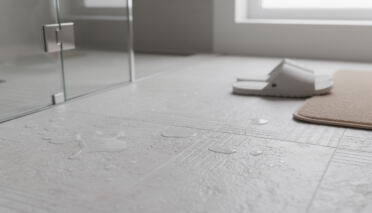
Slip-and-fall risk has a real price tag. Even if you never see a lawsuit, one incident can trigger policy changes, retraining, and reputational damage. That’s why slip resistance isn’t just a spec—it’s part of operations. Ask what happens when the floor is wet, when it’s been cleaned, and when it has residue from sanitizer or detergent.
Cleaning matters just as much as material. A floor that “technically” resists stains but needs special cleaners can sabotage cost efficiency. If your janitorial crew is juggling three different products across one building, inconsistency is guaranteed. The most successful projects usually standardize maintenance routines across similar areas.
Use a decision table to keep everyone honest
When Northbank aligned facilities, the GC, and tenants, they used a short scoring sheet instead of vibes. Here’s a practical comparison you can adapt:
| Criteria | LVT 🪵 | Vinyl Sheet 🧼 | Epoxy 🧪 | Terrazzo ✨ | Carpet Tiles 🧩 |
|---|---|---|---|---|---|
| Wear resistance (traffic + rolling loads) | High ✅ | High ✅ | Very high ✅✅ | High ✅ | Medium ⚠️ |
| Maintenance simplicity | Easy ✅ | Very easy ✅✅ | Medium ⚠️ | Demanding ⚠️⚠️ | Medium ⚠️ |
| Slip resistance options | Good ✅ | Good ✅ | Can be tricky ⚠️ | Depends on finish ⚠️ | Good when dry ✅ |
| Installation complexity | Medium ⚙️ | High (weld seams) 🔥 | High (prep + cure) 🛠️ | Very high 🧰 | Low ✅ |
| Cost efficiency over lifecycle | Strong ✅ | Strong ✅ | Strong in industrial ✅ | Strong but pricey ✨💸 | Mixed ⚠️ |
| Sustainability (longevity + replacement cycle) | Good ✅ | Good ✅ | Good when long-term ✅ | Excellent lifespan ✅✅ | Variable ⚠️ |
Once you’ve done this reality check, you’re ready to talk about the front-runners—starting with the flexible workhorse most teams end up circling back to: LVT.
Luxury Vinyl Tile (LVT): The Go-To Durable Flooring for High-Traffic Commercial Spaces
In the Northbank portfolio, LVT became the “default yes” for spaces that needed to look intentional without acting fragile. The reason is structural: LVT is built in layers, typically with a stable backing, a printed design layer, and a tough wear layer protected by a top coating. That layered build is why it handles scuffs, small impacts, and routine cleaning better than many surfaces that look similar at a glance.
Why LVT performs under pressure
LVT’s strength is that it’s engineered for busy environments. In a retail unit, it deals with constant grit at the entry and repeated chair movement near checkout. In a clinic waiting room, it handles rolling walkers and wheelchairs without instantly showing tracks. That’s wear resistance in the real world: not just “it’s hard,” but “it keeps its appearance when the building is alive.”
One overlooked win is repair strategy. If you damage a tile or plank, you can often replace just that section instead of shutting down a whole area. That keeps cost efficiency high because downtime is expensive—even when the material itself isn’t.
Design flexibility without the preciousness
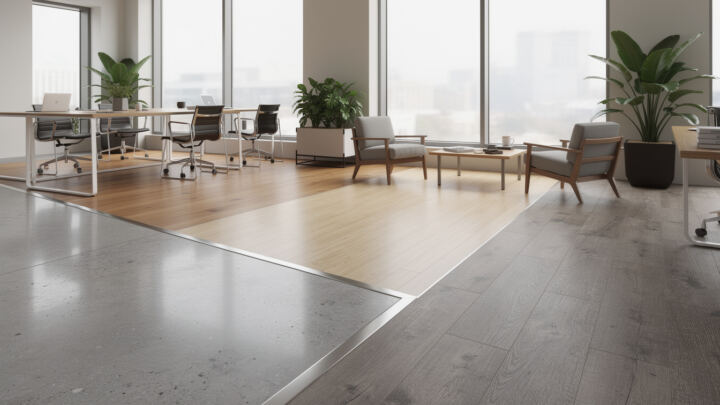
LVT is a chameleon. You can get wood looks for offices, stone visuals for lobbies, textile-like patterns for creative studios, and terrazzo-inspired designs for upscale vibes—without signing up for terrazzo-level maintenance. Northbank used a neutral wood look across an event space because it photographed well, didn’t glare under lighting, and still felt warm when the room was empty.
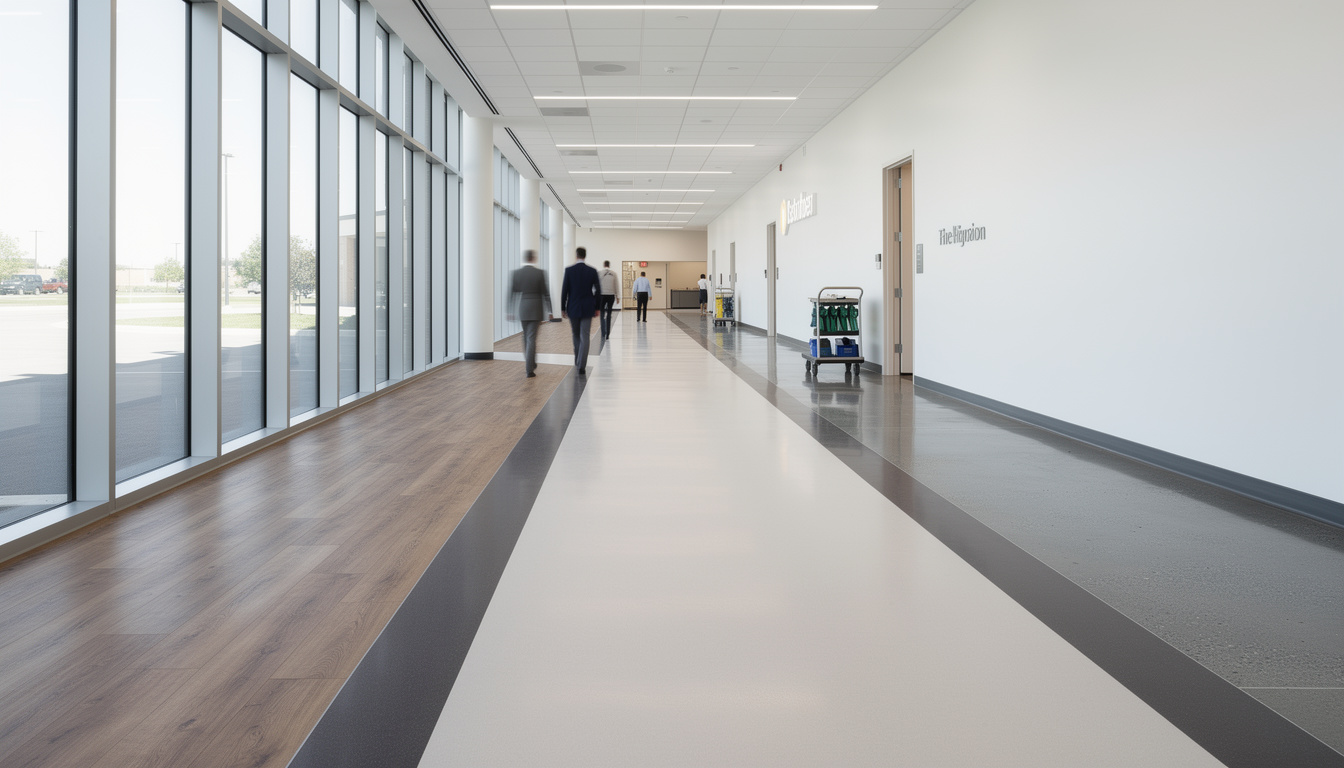
Wayfinding is another quiet superpower. You can mix tones or patterns to guide foot traffic: darker “lanes” down corridors, borders near doors, or subtle transitions that help visitors navigate. In healthcare and senior living, those cues reduce confusion and improve safety without slapping giant signs everywhere.
Maintenance that fits how buildings actually get cleaned
LVT tends to play nicely with straightforward cleaning routines: sweep, damp mop, periodic scrubbing as needed. Because it’s water resistant, it’s less prone to swelling problems that plague other products when spills or frequent mopping are part of life. That makes it popular in hospitality and healthcare where “clean” isn’t optional.
To keep it long-lasting, the key is grit control. Entry mats and regular dust mopping prevent the micro-scratches that dull the surface over time. If you want one habit that pays off fast, it’s this: treat the entry like a filter, not a doorway.
Where LVT can go wrong (and how to avoid it)
The biggest failures usually come from skipping subfloor prep or mismatching the product to the load. If heavy equipment rolls through, make sure you’re choosing a commercial-grade build designed for that abuse. Also, don’t treat installation like an afterthought. A great product installed poorly is just an expensive disappointment.
LVT is often the “balance point” between aesthetics, durability, and maintenance demands. Next up is the option that trades seams for sanitation: vinyl sheet.
If you want a quick visual rundown of LVT performance in busy buildings, this kind of walkthrough video is worth watching before you pick colors and patterns.
Resilient Vinyl Sheet Flooring: Seamless Hygiene and Easy Maintenance for Commercial Spaces
If Northbank had one rule for medical corridors and treatment areas, it was simple: fewer seams, fewer problems. That’s where resilient vinyl sheet flooring shines. Unlike tile formats, sheet goods can be installed with welded seams that help block spills and contaminants from sneaking down to the subfloor. In places where hygiene is a daily obsession—clinics, hospitals, assisted living—that detail matters.
Why “seamless” changes the game
Think about what happens when a drink spills in a corridor or a cleaning team floods a section during a deep clean. With sheet flooring and properly treated seams, you reduce the chance of moisture intrusion. That supports both maintenance and sustainability because preventing subfloor damage avoids premature replacement and demolition waste.
In education facilities and sports centers, sheet vinyl also does well because it resists scuffs and stains while staying relatively forgiving underfoot. When the cleaning schedule is intense—daily mopping, frequent disinfecting—it’s built for that rhythm.
Installation is specialized, but the payoff is real
Here’s the trade: sheet flooring often demands skilled installers who know seam welding, tight detailing at edges, and correct adhesive use. That can increase upfront installation complexity. Still, the payoff is consistency. Once it’s down and sealed, the floor behaves predictably, which facilities teams love.
Northbank’s clinic manager described it like this: “We don’t want a floor that needs babysitting.” Sheet vinyl is close to that ideal when installed correctly.
Design isn’t boring anymore
Older sheet goods had a reputation for looking institutional. In 2026, that stereotype is pretty dated. You can still get clean, calm wood tones, but also modern patterns and borders that act like built-in wayfinding. A light wood field with a darker perimeter is a classic corridor move because it subtly keeps traffic centered and protects edges where carts bump most.
Best-fit scenarios
- 🧫 Healthcare: corridors, patient rooms, treatment areas where disinfection is constant
- 🎓 Education: hallways and classrooms that need easy cleanup
- 🏋️ Sports centers: spaces that see sweat, water bottles, and frequent mopping
- 🏢 Corporate: back-of-house areas where durability matters more than “luxury” signaling
Once you’ve covered LVT and sheet vinyl, the next decision is about exceptions—places where different materials shine, and where they can quietly cause headaches.
For a practical look at seamless commercial flooring and heat-welded seams, a technical install video can clarify what you’re actually paying for.
Beyond Vinyl: Epoxy, Terrazzo, Rubber, Carpet Tiles, and Rigid Core (WPC/SPC) in Commercial Spaces
Not every area in a building should be vinyl-based. Northbank’s gym and service zones proved that. The trick is choosing alternative flooring materials for specific problems, not because they look cool on a sample board. Each of the options below has a “perfect use case” and a “please don’t do this” scenario.
Epoxy flooring: industrial toughness with a few strings attached
Epoxy is the tank of the flooring world. In labs, manufacturing, garages, and maintenance rooms, it’s hard to beat its chemical resistance and ability to take heavy loads. If forklifts, oils, or solvents are part of the story, epoxy starts making immediate sense.
The trade-offs are real. It can be expensive to install because surface prep is everything, and cure time can disrupt operations. It may also become slick when wet unless the finish is designed for slip resistance. In other words: perfect for the right back-of-house areas, often overkill (or risky) for public-facing lobbies.
Terrazzo: iconic, long-lasting, and not exactly low-effort
Terrazzo has this timeless “public building prestige” vibe—think airports, civic buildings, high-end lobbies. It can last a very long time, which is great for sustainability from a lifecycle perspective.
But it’s labor-intensive and pricey to install, and it wants ongoing polishing to keep that signature look. Many businesses love the aesthetic but not the maintenance commitment. That’s why terrazzo-look LVT has become a popular compromise: you get the visual energy of marble chips and bold patterns with simpler cleaning and fewer shutdowns.
Rubber flooring: comfort and sound control, with caveats
Rubber is a practical choice in gyms, some healthcare spaces, and areas where you want impact absorption and noise reduction. It’s comfortable underfoot and tends to offer good traction, supporting slip resistance goals.
The downsides? Rubber can cost more than expected, and some environments dislike the initial odor (that “new gym” smell). Design flexibility also tends to be more limited than LVT, so if branding and visuals are central, rubber may feel restrictive.
Carpet tiles: modular comfort that needs smart placement
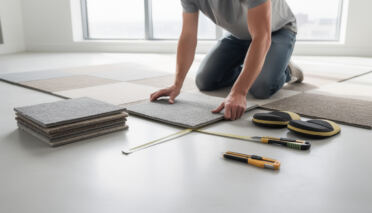
Carpet tiles are popular in offices and classrooms because they reduce noise and feel softer. And the modular format is genuinely convenient: if one tile is stained, you swap it out.
Still, in high-traffic or spill-prone zones, carpet tiles wear faster and demand more intensive cleaning. They’re also less forgiving around moisture. Northbank used carpet tiles in conference rooms (great call) but avoided them near break areas where coffee accidents were basically guaranteed.
WPC/SPC rigid core: tempting, but not always built for big commercial punishment
WPC and SPC (often called rigid core) are popular because they’re affordable and can be easier to click together in smaller areas. For residential and light commercial, they can be fine.
In large, continuous commercial footprints, these products can be pushed to their limits. Loads, temperature swings, and constant movement can expose weaknesses over time. Also, some installations require extra tools and steps that slow crews down. If a space truly needs to be long-lasting under heavy daily use, LVT and vinyl sheet often outperform rigid core options in practice.
The big insight: alternative materials aren’t “better” or “worse.” They’re tools. Use them where their strengths match the space’s pain points, and your building starts behaving like it was planned by someone who actually runs buildings.
Durable Flooring Selection Playbook: Balancing Wear Resistance, Maintenance, Cost Efficiency, and Sustainability
By the time Northbank standardized their approach, they stopped asking, “What’s the best floor?” and started asking, “What’s the best floor for this zone, with our staffing, our cleaning plan, and our budget?” That mindset is what keeps a project from turning into a patchwork of regrets.
Ask questions that force real answers
Here are the questions that tend to expose the truth fast:
- 👟 What is the peak daily foot traffic, and where does it concentrate?
- 🛒 Are there rolling loads (carts, wheelchairs, racks), and how heavy are they?
- 🧽 What cleaning products are used, how often, and by whom?
- 💦 Where do wet conditions happen routinely (entries, restrooms, beverage areas)?
- 🧯 What are your safety requirements for slip resistance in wet conditions?
- ⏱️ How much downtime can the business tolerate during installation and future repairs?
Lifecycle thinking is where cost efficiency actually lives
Upfront pricing is loud, but lifecycle costs are louder. A floor that saves money on day one can cost more after two years of constant patching, special cleaning, or early replacement. Northbank’s retail tenant cared most about “looking new,” which meant a surface that resisted visible scuffs and could be spot-repaired. Their clinic cared about hygiene and seamless cleaning. Same owner, different priorities, different winning products.
A simple way to frame cost efficiency is: materials + labor + downtime + maintenance chemicals + replacement cycle. If you can reduce shutdowns, you often win even if the product price is slightly higher.
Sustainability is practical when you define it properly
In commercial projects, sustainability isn’t only about recycled content. It’s also about choosing something that lasts, doesn’t require harsh chemical routines, and won’t need to be ripped out early. A floor that survives heavy use for years is usually a greener choice than a “green-labeled” option that fails quickly and gets landfilled.
Also think about modularity. Replaceable planks/tiles can reduce waste when localized damage happens. In the real world, that matters.
A simple zone-based recommendation (the Northbank method)
- 🏥 Hygiene-critical zones: prioritize resilient vinyl sheet with welded seams.
- 🛍️ Public-facing high-style zones: use LVT for design freedom and strong wear performance.
- 🧪 Industrial/service zones: epoxy where chemicals and heavy loads dominate.
- 🏋️ Impact/noise zones: rubber where comfort and acoustics matter most.
- 🧑💻 Quiet office zones: carpet tiles where softness and sound control are the goal.
Pick floors like you pick staff: match the role, train the routine (maintenance), and the whole operation runs smoother. Next, a few common “what about…” questions that come up on almost every commercial project.
Is LVT durable enough for heavy-traffic commercial spaces like retail and healthcare?
Yes. Commercial-grade LVT is designed for high foot traffic and rolling loads, with layered construction and protective wear layers that deliver strong wear resistance. The key is specifying the right performance tier for the space and pairing it with solid subfloor prep and a consistent maintenance routine.
When should I choose resilient vinyl sheet flooring instead of LVT?
Choose vinyl sheet when hygiene, moisture control, and easy disinfection are top priorities—especially in healthcare corridors, clinics, assisted living, and other areas where welded seams help prevent spills from reaching the subfloor. It’s also great where you want predictable, low-fuss maintenance.
How do I balance slip resistance with easy cleaning?
Start by defining where wet conditions occur (entries, restrooms, break rooms). Then select finishes rated for slip resistance in those zones and avoid coatings that become slick when wet. Finally, align cleaning chemicals and methods with the flooring manufacturer’s guidance so residue doesn’t reduce traction over time.
Are WPC/SPC rigid core floors good for commercial spaces?
They can work in light commercial or smaller areas, especially where quick installation is valued. In large, continuous high-traffic commercial spaces, they may not hold up as well as LVT or vinyl sheet under heavy rolling loads and constant use, so evaluate the specific site conditions before committing.
What’s the most cost-efficient commercial flooring over the long term?
The most cost-efficient option is usually the one that minimizes downtime, repairs, and early replacement. For many commercial spaces, that ends up being LVT or resilient vinyl sheet because they combine durability, straightforward maintenance, and strong long-lasting performance—provided installation is done correctly.