In busy homes and even busier storefronts, flooring is basically the silent employee that never clocks out. It catches every muddy boot, every rolling suitcase, every chair scrape, and every “oops” spill—then gets judged for how it looks afterward. Choosing the best flooring for high-traffic areas isn’t about chasing a trend; it’s about picking a surface with real durability, legit traffic resistance, and the kind of easy maintenance you can actually keep up with on a Wednesday night. The tricky part? A floor that’s tough enough for daily wear and tear doesn’t have to look like a gym locker room anymore. In 2026, you can get waterproof planks that convincingly pass for oak, tiles that look like poured concrete, and finishes designed to hide scuffs without looking “matte and boring.”
To make this feel real, let’s follow a fictional (but very relatable) household: the Carters. Two kids, one big dog, constant visitors, and a kitchen that doubles as homework station and snack bar. Their entryway is basically a grit distribution system. Their hallway is a racetrack. Their basement is “the everything room.” If you’re in the same boat, you don’t need marketing buzzwords—you need a practical way to compare flooring materials, understand performance ratings, estimate longevity, and avoid rookie mistakes during installation. That’s exactly what we’re doing here, room by room and spec by spec, without pretending one product magically fits every space.
- 🚪 High-traffic zones fail fast without real scratch resistance and moisture protection—entryways and hallways are the usual troublemakers.
- 💧 If spills, wet boots, or pets are part of life, prioritize waterproof cores or non-porous surfaces (LVP and porcelain are the usual front-runners).
- 📏 Learn the specs that actually matter: vinyl wear layer (mils), tile PEI class, laminate AC rating, and slip resistance for safety.
- 🧼 The best “long-term deal” is often cost-effectiveness over time, not the cheapest price today—maintenance and repairs add up.
- 🛠️ Great materials still fail with bad installation; subfloor flatness and moisture barriers are non-negotiable.
- 🎥 Picking looks is easier when you think in formats (plank vs large tile) and finishes (matte vs glossy) that disguise daily wear and tear.
Choosing the Best Flooring for High-Traffic Areas: What “Durable” Really Means in Real Life
People toss around “tough” and “family-proof” like they’re official certifications, but durability is really a bundle of behaviors. A floor can be hard yet annoying to live with, or soft and comfy but prone to dents. The Carters learned this the hard way when their old floor looked fine for six months, then started showing a sad little trail of scratches from the dog’s nails and gritty shoes. The lesson: high-traffic performance is about how a surface handles repeated stress, not one dramatic accident.
Start with abrasion. When shoes bring in tiny particles—sand, salt, little bits of gravel—those act like sandpaper. If the top layer is weak, you’ll see a dull pathway in your main routes. That’s the everyday version of wear and tear. Next is impact: dropped keys, chair legs, kids playing, even a heavy grocery bag landing on one spot. Then moisture: not just floods—think melted ice from boots, dog water bowl splash-outs, or the “I swear it didn’t leak” plant pot.
Durability metrics you can actually use (and not get scammed by)
Spec sheets are full of jargon, but a few ratings do most of the heavy lifting. For laminate, the AC rating (Abrasion Class) typically runs AC1 through AC5. In a high-traffic home, AC3 is the baseline; AC4–AC5 is where you start seeing commercial-style resilience. For tile, the PEI rating (Class 1–5) matters more than the sales pitch. If you’re putting tile on a floor that sees constant foot traffic, PEI 4 or 5 is the move.
For vinyl plank or tile (LVP/LVT), wear layer thickness is the number you circle in red. It’s measured in mils (one-thousandth of an inch). Around 12 mil is a decent start for busy households, but 20 mil and up is where scratch resistance starts feeling “relax, it’s fine.” Think of it as a screen protector—thicker means fewer visible regrets.
Slip resistance and comfort: the stuff nobody thinks about until someone slips
High-traffic areas also tend to be high-slip areas because they’re where wet stuff happens: entryways, kitchens, mudrooms. A floor with great traffic resistance but poor traction is a problem disguised as a design choice. Textured finishes, matte surfaces, and smart rug placement can make a huge difference. Comfort matters too: tile is hard and cool, vinyl is warmer and slightly forgiving, and wood sits somewhere in the middle depending on underlayment.
Before you even compare products, decide what you’re optimizing for: water messes, claw marks, rolling traffic, or quick cleaning. That clarity makes the next choices way easier.
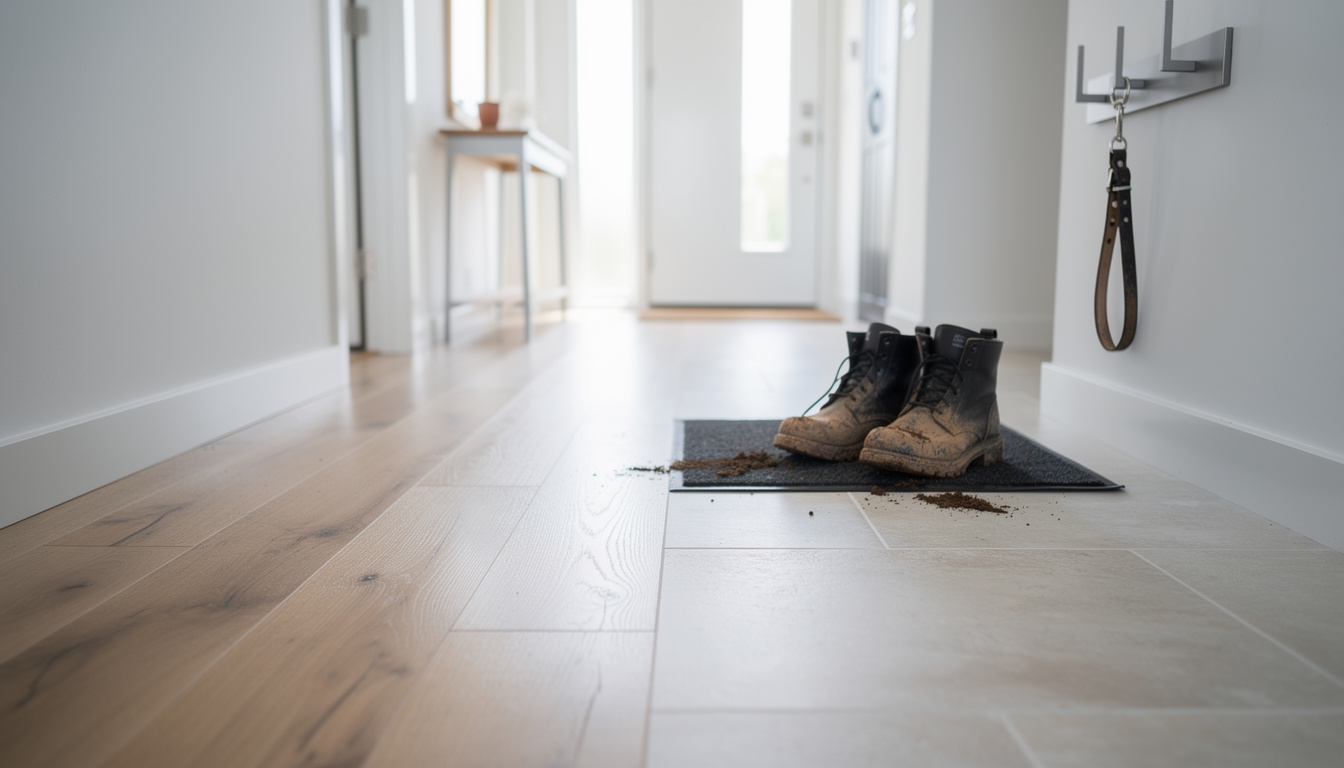
Luxury Vinyl Plank (LVP) vs Porcelain Tile for High-Traffic Areas: The Two Workhorses Head-to-Head
If you hang around contractors or flooring showrooms long enough, the debate for high-traffic zones usually narrows to two heavy hitters: Luxury Vinyl Plank (LVP) and porcelain tile. They both bring serious durability and strong moisture performance, but they behave differently in day-to-day living. The Carters ended up using both—because a hallway doesn’t live the same life as a mudroom. Why force one solution everywhere?
Why LVP wins so many busy homes (especially with kids and pets)
LVP is built in layers: a stable core, a printed design layer (wood/stone look), and a protective wear layer. That top coat is what shields it from scuffs and stains. In high-traffic homes, LVP’s big flex is being waterproof (in many modern products) while staying warmer and quieter underfoot than tile. If your basement is a playroom, it matters that it doesn’t feel like an ice rink in socks.
Another practical perk: LVP is forgiving. If someone drops a cup or a toy, it’s less likely to chip than a brittle surface. And for easy maintenance, it’s hard to beat: sweep, vacuum, damp-mop, done. No sealing schedules, no grout drama.
Why porcelain tile is basically the “set it and forget it” champion
Porcelain is dense, hard-fired, and non-porous. In real terms, that means it shrugs off water and resists scratches in a way that makes pet owners breathe easier. It’s the floor you choose when your entryway is a battle zone—mud, salt, grit, dripping umbrellas, the whole mess. With a high PEI class (4 or 5), it’s built for foot traffic that never seems to stop.
The trade-off is comfort and complexity. Tile is harder, cooler, and your joints will notice. It also depends heavily on proper installation: a poorly prepped subfloor can mean cracked tiles or failing grout lines later. Tile can last 50+ years, but only if it’s installed like someone cared.
Side-by-side comparison for busy households (Carter-style reality check)
| Category | Luxury Vinyl Plank (LVP) | Porcelain Tile |
|---|---|---|
| Durability 🛡️ | Excellent, depends on wear layer (aim 20 mil+) | Outstanding, especially with PEI 4–5 |
| Waterproof performance 💧 | Often fully waterproof (check core + seams) | Non-porous tile is waterproof; grout needs care |
| Scratch resistance 🐾 | Very good with thick wear layer; can gouge under sharp grit | Excellent; very hard surface resists claw marks |
| Easy maintenance 🧼 | Sweep + damp mop; minimal fuss | Tile is easy; grout maintenance adds effort |
| Longevity ⏳ | Commonly 15–25 years (quality matters) | Often 25–50+ years with solid installation |
| Cost-effectiveness 💸 | Strong value, faster install, lower labor typically | Higher upfront cost; long lifespan can justify it |
If your main issue is cold, wet, gritty traffic, tile is the “armored” choice. If you want comfort, speed, and a softer landing for daily life, LVP is the crowd-pleaser. Next up: the other materials that can still make sense when you match them to the right rooms.
To see how pros talk through these choices, it helps to watch real installs and reviews—especially around subfloor prep and transitions.
Best Flooring Materials Beyond LVP and Tile: Engineered Wood, Laminate, Stone, Carpet Tiles, Epoxy
Not every high-traffic area has the same job. A hallway needs traffic resistance. A kitchen needs spill survival. A retail back room needs load tolerance. So while LVP and porcelain tile are the usual stars, the supporting cast matters—especially if you want a particular look, sound profile, or budget target.
Engineered hardwood: real wood vibes with more stability
Engineered wood gives you a real wood veneer on top of a layered core designed to reduce movement from humidity swings. In places with seasonal changes, that stability is a big deal. It’s not magically immune to scratches, though. If your dog does daily “zoomies,” you’ll still want rugs in key lanes and pads under furniture.
Where engineered wood shines is “high-traffic but not high-mess” areas—living rooms, dining rooms, upstairs hallways. If you choose harder species and a strong factory finish, you can get a warm look with respectable longevity. Just be realistic: it’s not the same as porcelain for abuse tolerance.
Laminate: great for scratch resistance, but watch moisture like a hawk
Modern laminate can be impressively tough, especially at AC4–AC5. It handles scuffs well and can look convincingly like wood. The downside is water. Some newer lines are water-resistant, but “resistant” is not the same as waterproof. Prolonged moisture can still cause swelling at seams, which is why laminate is a risky bet for mudrooms and bathrooms.
Natural stone: premium, long-lasting, and maintenance is the price of entry
Stone floors—granite, quartzite, marble—can deliver serious durability and a timeless look. The catch is sealing and the right cleaners. Stone can stain if neglected, and some polished surfaces get slippery when wet. Stone can absolutely be a long-haul choice (often 50+ years), but it’s a commitment, not a casual fling.
Carpet tiles: the quiet hero for offices and modular replacement
In commercial settings, carpet tiles show up for a reason: acoustic comfort and easy spot replacement. If a section gets trashed, you swap a few tiles instead of ripping up an entire floor. They’re not ideal where spills are constant, but for corridors, meeting rooms, and workspaces, they can be surprisingly cost-effective over time.
Polished concrete and epoxy: seamless, modern, and brutally practical
If you want a surface that laughs at heavy use, polished concrete and epoxy coatings belong in the conversation. Epoxy is especially popular over concrete in garages and workshops, but it also works in basements and home gyms. It’s seamless, non-porous, and simple to clean—prime easy maintenance territory. The drawback is comfort: it’s hard underfoot, and the finish needs to be chosen carefully to avoid slipperiness.
Want to see what epoxy and polished concrete look like in real homes (not just glossy showroom photos)? Watching walkthroughs helps you decide if the vibe fits your space.
Installation and Maintenance for High-Traffic Flooring: How to Keep Wear and Tear From Winning
Here’s the unglamorous truth: the best flooring materials can fail fast if the installation is sloppy. High-traffic areas amplify every weakness—uneven subfloors, missing expansion gaps, bad grout work, cheap transitions. The Carters’ neighbor learned this with an LVP install that looked great on day one, then started separating at the seams because the subfloor wasn’t flat enough. A “good deal” turned into a redo.
Subfloor prep: the step that decides your floor’s future
LVP usually needs a flat, clean substrate so planks lock tightly and don’t flex under footsteps. Tile needs even more discipline: proper underlayment, correct thinset, and movement joints where required. When tile cracks, it’s often not because tile is weak—it’s because the system underneath was wrong.
Moisture testing matters too, especially on concrete slabs and basements. If moisture is migrating up, you need the right barrier or coating system, or you’ll end up with problems that look like “mystery stains” and smell like regret.
Maintenance routines that actually work for busy households
Most high-traffic damage is grit-related. The cheapest “upgrade” is a solid doormat strategy and regular dry cleaning (vacuum/sweep). That’s what keeps abrasive particles from grinding down finishes and reducing longevity. Then you add material-specific care: grout sealing for tile, approved cleaners for stone, and avoiding harsh chemicals that can dull wear layers on vinyl.
- 🧽 Use entry mats outside and inside to trap grit before it becomes wear and tear.
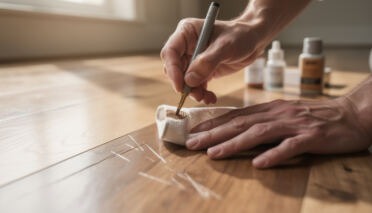
- 🪑 Add felt pads under chairs and tables to boost scratch resistance in real life.
- 💧 Wipe spills fast—especially on laminate and engineered wood, where “later” becomes damage.
- 🧴 Stick to manufacturer-approved cleaners to protect finishes and keep warranties intact.
- 🧱 For tile and stone: seal grout/stone on schedule so stains don’t become permanent roommates.
Cost-effectiveness isn’t the sticker price—it’s the decade-long story
High-traffic flooring is where budgeting gets sneaky. A cheaper floor that needs replacement in 7–10 years can cost more than a pricier option that runs strong for decades. Also, downtime counts: in a business, closing a space for repairs is expensive. In a home, it’s the chaos tax—moving furniture, dust, noise, and living around contractors.
If you’re torn between two options, compare total ownership: purchase + labor + maintenance + likely repair/replacement timeline. That’s where cost-effectiveness becomes obvious instead of theoretical.
Aesthetics That Survive High-Traffic Areas: Design Choices That Hide Scuffs Without Looking Boring
Durable doesn’t have to mean dull. In 2026, the design side of high-traffic flooring is honestly kind of fun—because the visuals have caught up to the performance. Wood-look LVP can show realistic grain and tone variation. Porcelain can mimic stone, terrazzo, even concrete. The trick is choosing styles that don’t highlight every speck of dirt or tiny scuff.
Matte, textured, and patterned: the “looks clean longer” trio
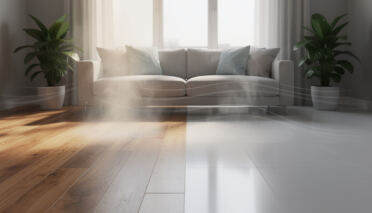
Glossy floors can look amazing for about five minutes, then they start reflecting dust, paw prints, and streaks like a spotlight. Matte finishes and light texture reduce glare and hide everyday marks better. Pattern variation helps too: floors with subtle color shifts and grain movement are forgiving in the exact places where traffic concentrates.
This is where the Carters made a smart call: they avoided very dark, solid-color floors in the entry hall. Those show every scratch and crumb. Instead, they chose a mid-tone, multi-variation wood look that kept the space looking “put together” even when life was happening.
Big tiles, fewer grout lines: practical modern style
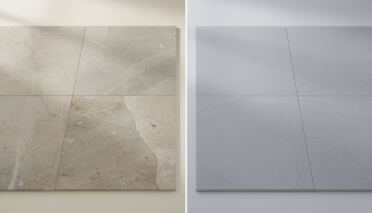
If you’re leaning tile, large-format porcelain reduces grout lines—less scrubbing, fewer stain-prone grooves, and a cleaner look. A 24×48-inch format can make a small space feel bigger and more modern. Just remember: larger tile demands a flatter subfloor, so the installation quality has to be on point.
Room-by-room vibe matching (so your house doesn’t feel like a patchwork)
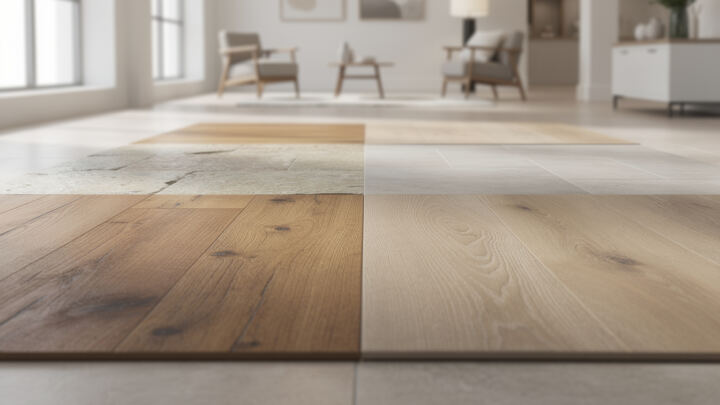
A high-traffic strategy doesn’t have to turn into five unrelated floors. Use transitions thoughtfully and keep undertones consistent. For example, pair a warm wood-look LVP in the hallway with a warm gray porcelain in the mudroom. Or keep plank widths similar across spaces so the flow feels intentional.
Style that lasts is really about making choices that can handle daily abuse without constantly reminding you they’re working hard. That’s the sweet spot: performance you don’t have to think about, and a look you don’t get tired of.
What’s the best scratch-resistant flooring for homes with dogs in high-traffic areas?
Porcelain tile is the top pick for scratch resistance because it’s extremely hard and resists claw marks well. If you prefer planks, choose high-quality LVP with a thick wear layer (ideally 20 mil or more) and use entry mats to reduce grit that can cause surface scuffing.
Is laminate a smart choice for high-traffic areas like entryways and kitchens?
Laminate can handle traffic well when it’s rated AC4–AC5, but it’s not truly waterproof. In entryways and kitchens where water sits on the floor (wet boots, spills), laminate can swell at seams over time. It’s better in busy, dry zones like hallways or living areas if you’re disciplined about spill cleanup.
What wear layer should I choose for LVP in high-traffic areas?
For busy households, 12 mil is a reasonable minimum, but 20 mil or higher is the safer bet for stronger durability and better long-term scratch resistance. If you have large pets, lots of visitors, or rolling traffic (strollers, carts), prioritize the thicker wear layer for improved longevity.
Why does professional installation matter so much for tile and LVP?
High-traffic floors magnify small installation issues. LVP needs a flat subfloor to prevent flexing, gaps, and lock failures. Tile needs proper underlayment, correct mortar coverage, and movement accommodation to avoid cracks and grout problems. Good installation protects warranties and keeps your floor performing under real wear and tear.
Which flooring is the most cost-effective over the long run for heavy traffic?
It depends on your space, but many homeowners find LVP highly cost-effective due to waterproof performance, easy maintenance, and simpler installation. Porcelain tile often wins on longevity (frequently decades), making it a strong long-term value where moisture and heavy use are constant—if you budget for proper installation and grout care.