En bref
- 🧱 Appearance: natural stone looks one-of-a-kind; ceramic tiles can mimic almost anything with consistent patterns.
- 💸 Cost: stone usually hits harder on material + labor; ceramics stay friendlier for most budgets.
- 🧼 Maintenance: many stones need sealing; most ceramics are low-fuss and easy to wipe down.
- 👣 Durability: hard stones like granite/quartzite handle abuse; porcelain ceramic can be extremely tough too, but edge chips can happen.
- 🔥 Resistance: stone tends to love heat; ceramic is strong but grout/thermal shock details matter.
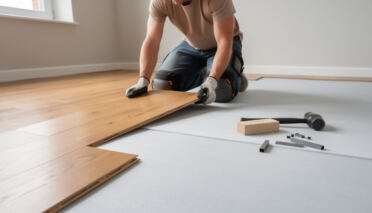
- 🧩 Installation: stone needs more planning (weight, leveling, sealing); ceramics are usually simpler and more predictable.
- 🧊 Texture & slip resistance: finishes matter more than material—polished can be slick, matte/textured improves grip.
If you’ve ever stood in a tile showroom feeling like every option is “the one,” you’re not alone. Natural stone and ceramic tiles dominate floors, showers, backsplashes, and countertops because they look good, last a long time, and can match pretty much any vibe—from minimalist apartments to old-school townhouses with personality. But here’s the twist: what looks similar on a display board behaves very differently once it meets real life. Think muddy shoes in an entryway, a hair dye accident in a bathroom, a dropped cast-iron pan in a kitchen, or a rental tenant who “forgets” to wipe spills. That’s where things like durability, maintenance, cost, appearance, installation, and everyday resistance (to water, heat, stains, and wear) stop being buzzwords and start being deal-breakers.
To make this feel less theoretical, we’ll follow a simple thread: a fictional couple, Mina and Jordan, renovating a small city home with a busy kitchen, a compact bathroom, and a front hall that gets wrecked by weather. Their choices—and the tradeoffs they hit—mirror the exact decisions most homeowners and designers are making right now. Ready to pick the material you’ll still like after the first year of real use?
Natural stone vs ceramic tiles: what they are and why they behave so differently
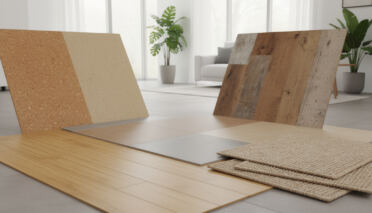
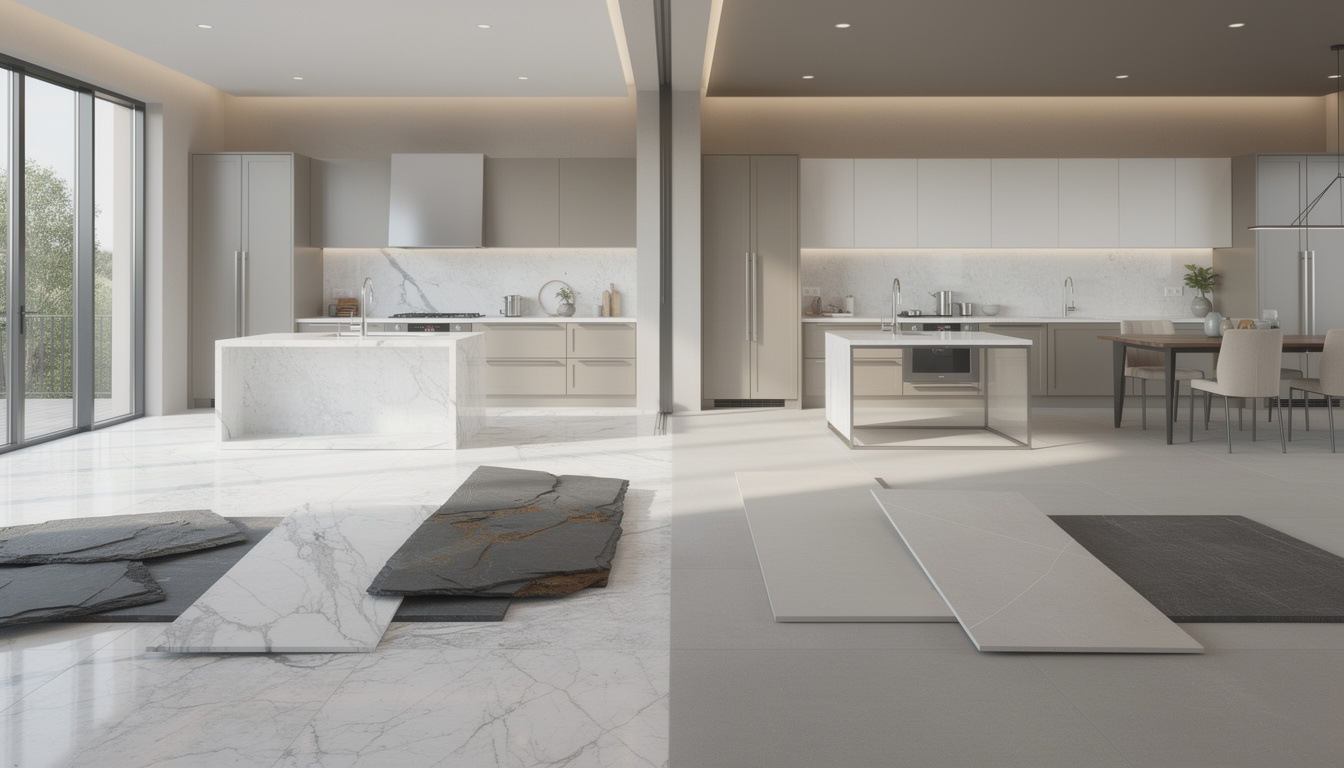
At a glance, both options are “tile,” but the DNA is totally different. Natural stone is cut from the earth—marble, granite, limestone, slate, travertine, quartzite—each with its own mineral makeup. That’s why you get that unmistakable variation in veining, speckles, fossils, and color shifts. Ceramic tiles, including porcelain, are manufactured: clay and minerals (often including feldspar) are shaped, dried, and kiln-fired. Because it’s engineered, you get consistency—same size, same shade, same pattern run after run.
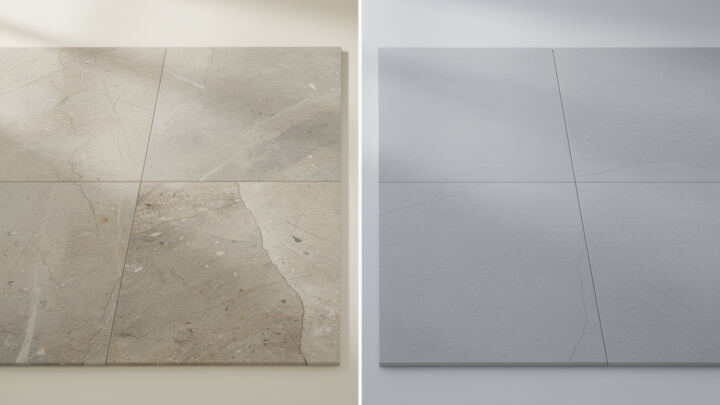
That difference shows up fast when Mina orders samples. The marble tiles she loves online look dreamy in photos, but in person each piece has different movement. Jordan likes the authenticity; Mina worries the room will feel visually “busy.” With ceramics, they can pick a stone-look porcelain where every tile matches the showroom panel almost perfectly. That predictability makes planning easier—especially for larger walls or open-plan floors where repetition can either look clean or look fake, depending on the print quality.
Appearance, pattern variation, and the “real vs replicated” vibe
Appearance is where stone wins hearts. Even people who don’t care about design can tell when something looks genuinely geological. Marble has depth, slate has character, granite has that natural crystalline sparkle. On the flip side, ceramic printing and glazing has gotten wild by 2026—high-definition scans, better ink layers, and more convincing texture mapping. You can now find ceramic that mimics limestone pores or wood grain so well you’ll want to touch it.
The tradeoff is that ceramics can repeat patterns. Good manufacturers reduce repetition by mixing faces (different printed variations), but if you install a big area with only a few faces, your eye catches the loop. Natural stone repeats too—just not in a predictable way, which is why it reads as premium.
Core material traits: porosity, density, and what that means at home
Many stones are porous. Limestone and some marbles can absorb moisture and stains unless sealed. Granite and quartzite are generally denser and less absorbent, which is why they’re popular in kitchens and high-traffic areas. Ceramic and especially porcelain tend to be less absorbent overall, which is why they’re such a go-to for showers and backsplashes.
This isn’t just technical trivia: porosity dictates how stressful your life will be when spaghetti sauce splashes, when shampoo bottles leak, or when a guest forgets to use a coaster. The material choice is basically you choosing your future habits.
Durability and resistance: real-life performance on floors, showers, and countertops
Durability is where people assume stone automatically wins. Sometimes it does—sometimes it doesn’t. The truth depends on the specific stone type, the tile body, the finish, and how the space is used. Mina and Jordan’s front hall is basically a testing lab: rain, grit, winter salt, and constant foot traffic. Their kitchen sees heat, knives, and dropped pans. Their bathroom sees standing water and cleaning chemicals. Same house, three different battlefields.
High-traffic floors: abrasion, chipping, and long-term wear
Hard stones like granite and quartzite can take a beating and still look good years later. Slate is also a classic for entryways because it hides dirt and handles traffic well. Some softer stones—certain marbles and limestones—can scratch or etch more easily, especially if grit gets tracked in. That’s not “bad,” it’s just a different kind of patina that not everyone enjoys.
With ceramic tiles, porcelain in particular can be extremely tough and abrasion-resistant. But ceramics can chip at edges if something heavy lands just right, especially on sharp corners. The good news is that if you keep a few spare tiles, swapping one out is usually easier than repairing a damaged stone surface.
Heat, water, and stain resistance: the kitchen-and-bath reality check
Resistance to heat is a major reason people love granite and quartzite on countertops. A hot pan is less likely to shock or discolor stone than many other materials. That said, sealers and resins (if present) can change how forgiving the surface feels. Ceramic surfaces handle heat well too, but the weak links can be grout, movement joints, and installation quality rather than the tile face itself.
In wet zones, porcelain ceramics shine because they’re typically less absorbent. For stone showers, you can absolutely do it beautifully, but you’re signing up for proper waterproofing, good slope to drains, and ongoing care. If the stone is porous, it’s not “ruined,” it just needs a routine: seal it, clean it gently, and avoid leaving bottles that trap moisture.
Slip resistance and finish selection (polished vs matte vs textured)
Slip resistance isn’t a stone-vs-ceramic debate as much as a finish debate. Polished marble can be slick when wet, and glossy ceramic can be slippery too. If you’re doing a bathroom floor or pool-adjacent patio, matte or textured finishes are your friend. Textured slate often feels naturally grippy, while many ceramics offer structured surfaces designed for wet traction.
Jordan jokes that he doesn’t want their bathroom to feel like an ice rink. That single line basically decides their finish choice: they go matte underfoot, and save glossy surfaces for walls where traction isn’t a safety issue.
Next up is where most renovations either stay chill or spiral: maintenance and cleaning habits.
Maintenance and cleaning: sealing, grout, texture, and the stuff nobody posts on Instagram
This is the section people skip… and then regret skipping. Maintenance is the day-to-day relationship you’ll have with your surfaces. It’s not only about how often you clean, but what happens when life gets messy. If you have kids, pets, roommates, or short-term rentals, your tolerance for fuss matters more than your mood board.
Sealing natural stone: what it solves (and what it doesn’t)
Many natural stone choices—especially porous ones like marble and limestone—benefit from periodic sealing. Sealer doesn’t make stone “bulletproof,” but it slows absorption so spills don’t immediately become stains. It also helps with moisture management in splash-prone areas like vanity backsplashes or shower walls.
Mina learns this the practical way: she tests lemon juice on a marble sample. The stone doesn’t stain, but it can etch—meaning the surface gets a dull spot where the acid reacts with the calcium. Sealer doesn’t always prevent etching, because etching is a chemical reaction, not absorption. That’s why stone care is partly about product choice (pH-neutral cleaners) and partly about expectations (a little patina might be part of the charm).
Ceramic tiles: easy mode—until grout enters the chat
Ceramic tiles are typically simpler: wipe, mop, done. Glazed surfaces resist many stains, and they don’t need sealing the way porous stones do. The catch is grout. Grout lines can discolor, especially in light colors in kitchens and showers. The tile might look brand new while the grout looks tired.
One workaround is choosing a grout color that’s not brutally white, or using better stain-resistant grouts. Another is using larger-format tiles (fewer grout lines) where it makes sense. Mina likes the idea of a 300×600 mm wall tile in the bathroom because it reduces grout maintenance and looks cleaner visually. In smaller spaces, a 245×450 mm format can be easier to handle and cut, especially with lots of corners or niches.
Texture and cleaning: why “natural” can mean more scrubbing
Texture is a double-edged sword. Textured slate or tumbled travertine can hide dust and look amazing, but they can also trap soap residue or grime in the micro-relief. Smooth, glossy ceramic wall tiles clean fast, but show water spots more easily. Matte finishes hide smudges better but can hold onto oily residues if you’re not using the right cleaner.
Jordan’s rule becomes: smooth on walls where splashes happen, textured where traction matters, and nothing too high-relief in the shower unless they’re okay with a bit more effort. That’s a grown-up renovation choice.
Once you know how much care you’re willing to do, the next question is unavoidable: what’s the cost of getting the look you want?
Cost and value: upfront pricing, installation realities, and resale impact
Cost isn’t just the price tag on the tile. It’s material + delivery + waste + labor + setting materials + long-term upkeep. This is where people get surprised, because a tile that seems “only a bit more expensive” can become a lot more expensive once you factor in installation complexity and ongoing care.
Material and installation costs: why stone usually climbs faster
Natural stone is typically pricier than ceramic in both material and labor. Stone is heavier, may require extra prep, and often needs careful selection and layout so the best pieces land in the most visible areas. Cuts can be slower, and some stones demand specific adhesives or handling to avoid staining or warping. If the substrate isn’t flat, stone makes that problem obvious, so installers spend more time getting things right.
Ceramics are generally more predictable: consistent thickness, consistent sizing, and easier planning. That doesn’t mean ceramic is “cheap”—high-end porcelain can be premium—but it often remains easier to quote and control in a renovation schedule.
Value over time: repairs, replacements, and the resale conversation
There’s a reason real estate listings still brag about stone: it reads as upscale. Homes with well-chosen stone surfaces often feel more premium, which can support resale appeal. But that value only shows up if the stone looks good—neglected stone can look dull, stained, or patchy, and then it does the opposite of “luxury.”
With ceramics, the value play is reliability. A clean, modern porcelain floor with good grout lines and a cohesive layout makes buyers feel like they won’t inherit a maintenance project. That peace-of-mind is a kind of value too, even if it’s less glamorous.
Comparison table: performance and budget tradeoffs at a glance
| Factor | Natural stone | Ceramic tiles |
|---|---|---|
| 💸 Cost (material + labor) | Often higher; varies by stone type and grade | Often lower to mid; premium porcelain can be comparable |
| 🧱 Appearance | Unique veining and variation; truly one-of-a-kind | Huge design range; consistent look; great stone-look options |
| 👣 Durability | Excellent for hard stones; softer stones can scratch/etch | Porcelain is very tough; some risk of edge chipping |
| 🧼 Maintenance | May need sealing; careful cleaner choices for some stones | Usually low maintenance; grout care is the main task |
| 🧩 Installation | More demanding: weight, flatness, layout, sometimes sealing | More straightforward and predictable for most installers |
| 🧊 Slip resistance | Depends heavily on finish; textured slate can be grippy | Depends heavily on finish; many anti-slip surface options |
| 🔥 Resistance (heat/water) | Great heat tolerance; water/stain depends on porosity/sealing | Great water tolerance (esp. porcelain); systems matter in wet areas |
Money decisions get easier when you match materials to rooms instead of trying to force one “perfect” surface everywhere. That’s where we’re heading next: room-by-room strategies that actually work.
Room-by-room picks: matching material to lifestyle, not just looks
Trying to choose one winner for the entire house is how people end up overspending or over-cleaning. Mina and Jordan stop asking “Which is better?” and start asking “Which is better here?” That shift solves most debates instantly.
Kitchens: countertops, backsplashes, and the hot-pan test
For countertops, dense natural stone like granite or quartzite is popular because it handles heat well and takes daily use. If you cook a lot, that heat resistance can feel like freedom—no panic when a hot tray lands briefly on the surface. Marble looks stunning, but if you’re messy with citrus, wine, or acidic sauces, you’ll see etching sooner. Some people love that lived-in look; others hate it.
For backsplashes, ceramic tiles often make life easier. A glossy or satin ceramic wall tile wipes clean fast, and you can choose formats that reduce grout lines. A 300×600 mm glossy wall tile, for example, gives you a smooth reflective surface that’s quick to clean after frying or simmering. If you prefer something more muted, matte finishes keep glare down and still look modern.
Bathrooms: wet zones, grout strategy, and safer floors
In showers, porcelain ceramics are the low-drama choice because they resist water well and don’t need stone-style sealing routines. If you want stone in the shower, it can be gorgeous, but pick thoughtfully: some stones darken when wet, and textured stones can hold soap residue. Waterproofing and slope are non-negotiable regardless of tile type, but stone punishes sloppy work faster.
On bathroom floors, prioritize slip resistance. Matte or lightly textured surfaces help. If you love the look of polished marble, consider using it on walls and going with a safer finish underfoot. It’s not about fear—it’s about avoiding that one awkward slip that ruins your morning.
Entryways and living areas: grit, chairs, pets, and daily wear
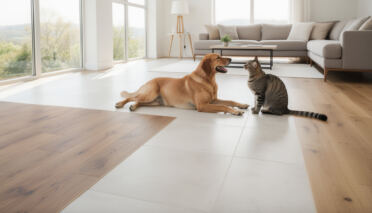
Entryways see grit, which is basically sandpaper. That’s why harder stones (granite, slate) or durable porcelain makes sense. In living areas, chairs scraping and pet claws become the daily stress test. Porcelain ceramics often handle this extremely well, plus you can choose wood-look planks if you want warmth without worrying about water.
A practical checklist before you buy
- 🧪 Test a sample with water, coffee, and lemon to understand resistance and potential etching.
- 👟 Think about foot traffic and whether texture will trap dirt or make cleaning annoying.
- 🧼 Be honest about maintenance: are you actually going to reseal stone on schedule?
- 🧩 Ask your installer about substrate flatness, transitions, and grout width—installation quality decides the final look.
- 💸 Budget for waste cuts (especially in small rooms with lots of corners) so cost doesn’t surprise you.
Once you’ve matched materials to rooms, the final step is making sure the install details support the look—because even the best tile can look rough if it’s poorly set.
Is natural stone always more durable than ceramic tiles?
Not automatically. Hard stones like granite, slate, and quartzite can be extremely durable, but softer stones (some marbles and limestones) can scratch or etch. High-quality porcelain ceramic tiles are also very durable for floors and wet areas, though edge chipping can happen if heavy items drop on corners.
Do ceramic tiles need sealing like natural stone?
Usually no for the tile surface, especially if it’s glazed or porcelain. The main thing to watch is grout: depending on the grout type, it may benefit from sealing or using a stain-resistant formulation to reduce discoloration and simplify maintenance.
What’s the best choice for slip resistance in a bathroom?
Focus on finish rather than only material. Matte or textured surfaces generally improve slip resistance on wet floors. Polished stone and glossy ceramic can be slippery when wet, so they’re often better on walls than on floors in bathrooms.
Which one is cheaper when you include installation?
Ceramic tiles are often cheaper overall because the material is typically less expensive and installation is more predictable. Natural stone tends to cost more due to heavier material, more careful layout, potential sealing, and additional labor to handle variation and surface flatness requirements.
Can ceramic tiles realistically match the appearance of natural stone?
Yes—many modern ceramics (especially porcelain) mimic stone very convincingly in appearance and texture. The key is choosing a product with enough pattern variation (“faces”) and a finish that matches the look you want, so large surfaces don’t show obvious repetition.