En bref
- 🧭 Start with your real life: pets, kids, cooking habits, and how you actually use each room drive smart floor selection.
- 💧 Match moisture to the right floor materials: bathrooms, basements, and kitchens need water-smart choices.
- 🛠️ Don’t underestimate installation: your subfloor, transitions, and door clearances can make or break the result.
- 💸 Balance cost with long-term value: the cheapest floor can get pricey fast if maintenance is intense or durability is low.
- 🎨 Build a consistent style: pick finishes that make your lighting, wall color, and furniture look better (not just a sample board).
- 📋 Compare floor types side-by-side before you commit—especially for resale and comfort underfoot.
Choosing flooring is one of those home improvement decisions that feels simple until you’re staring at fifty “warm oak” samples that all look identical… right up until you bring them home. The floor isn’t just a backdrop; it’s the surface your life rubs against every day—muddy shoes, rolling chairs, spilled coffee, dog zoomies, holiday dinners, and that one heavy plant you swear you’ll move “next weekend.” The good news is you can make a confident choice without turning into a full-time researcher. The trick is to stop thinking in generic terms (“I want something nice”) and start thinking in room-by-room realities: moisture, sunlight, foot traffic, sound, and how much cleaning you’re willing to do when you’re tired.
To keep things grounded, we’ll follow a fictional homeowner, Maya, who’s renovating a 1990s house with a busy kitchen, a creaky upstairs, and a basement that gets a little humid in summer. Her goal is pretty relatable: a floor that looks great, lasts, and doesn’t demand constant babying. Along the way, we’ll compare floor materials, talk real numbers, and get into the unglamorous stuff like subfloors and transitions—because that’s where a “wow” renovation often quietly succeeds or fails.
How to choose flooring by room: moisture, traffic, and real-life routines
If you want your floor selection to feel effortless later, start by being brutally honest about each room. Maya’s kitchen is basically mission control: cooking, homework, friends standing around the island, and frequent spills. That instantly puts durability and water resistance ahead of “soft and cozy.” Meanwhile, her bedroom is calm and low-traffic, so comfort and warmth matter more than scratch resistance.
A practical way to think about flooring is to map your home into “zones.” Wet zones (bathrooms, laundry rooms, sometimes basements) punish the wrong product fast. High-traffic zones (entryways, hallways, kitchens) chew through weak wear layers. Quiet zones (bedrooms, offices) benefit from sound control and comfort underfoot. Once you label zones, a lot of choices narrow themselves.
Wet and humid areas: keep water from becoming your enemy 💧
Bathrooms and laundry rooms are where many beautiful floors go to die. For these rooms, Maya prioritizes floor materials that don’t swell, cup, or delaminate. Porcelain tile is a classic for a reason, and modern tile can convincingly mimic wood grain without the panic every time someone splashes water.
In basements, humidity can be the silent problem. Even if you never see puddles, moisture vapor can mess with certain products over time. That’s why resilient surfaces like luxury vinyl (LVP/LVT) or properly installed tile tend to perform well. If Maya wants a warmer feel, she can add area rugs that can be cleaned or swapped out rather than gambling on a moisture-sensitive surface.
High-traffic and entry zones: scratches, grit, and chair wheels 🐾
Think of entryways like sandpaper factories. Grit sticks to shoes, then gets dragged across the floor day after day. If Maya has a dog, add nail taps and occasional skids. Here, the best floor types are the ones that don’t show every little micro-scratch and are easy to clean—because the cleaning will happen whether you like it or not.
Texture and finish help more than most people expect. A super glossy surface can look amazing in a showroom, then look “dirty” in real life because it highlights dust and scuffs. A matte or lightly textured finish hides daily chaos better while still looking premium. The insight: choose the floor that forgives your routine, not the one that demands a new routine.
Next up, once rooms are mapped, the big question becomes: which product family actually fits your budget, lifestyle, and design goals without surprises?
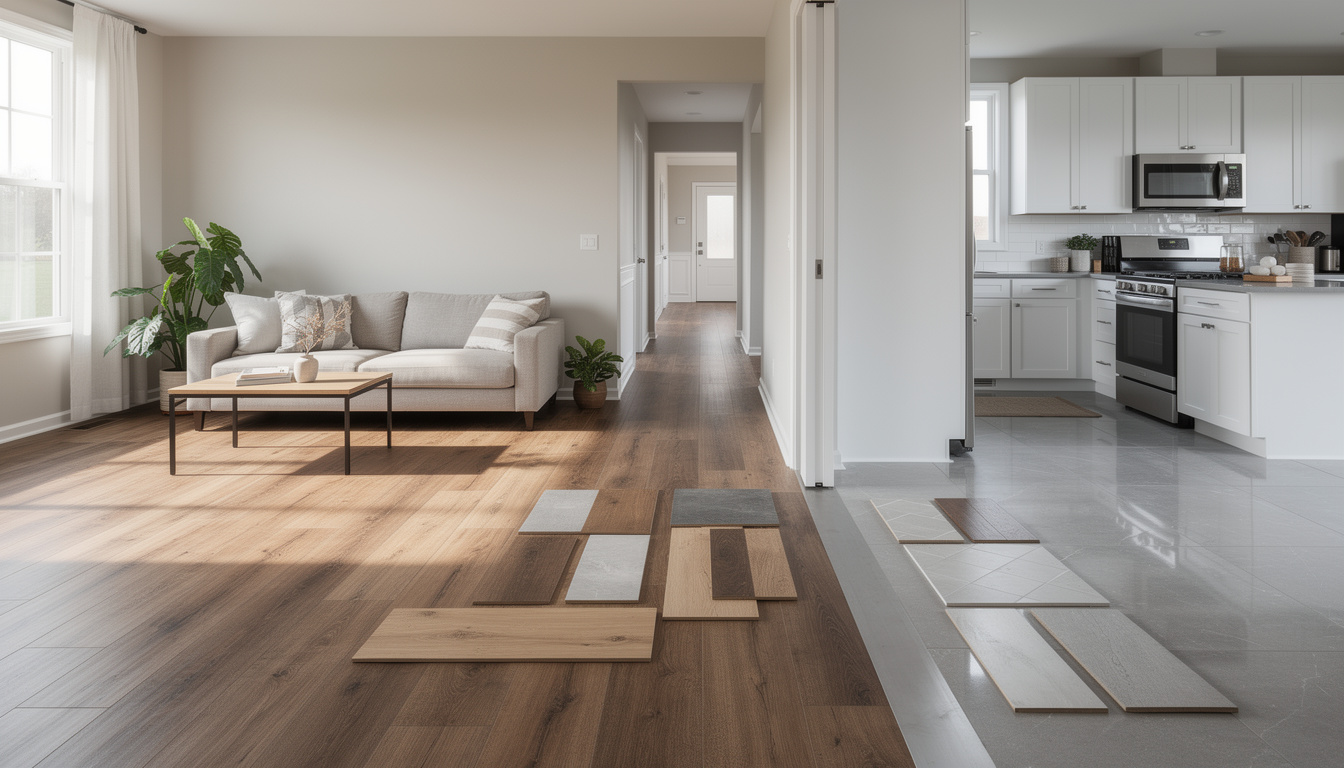
Comparing floor types and floor materials: what you gain, what you give up
When people say “I want wood,” they often mean “I want that warm, natural look.” That opens the door to several floor types that deliver a similar vibe with very different trade-offs in cost, maintenance, and installation complexity. Maya’s approach is to compare options like a menu: what’s the best match for each room’s reality and her tolerance for upkeep?
Below is a side-by-side table she uses to keep decision-making sane. It doesn’t replace seeing samples at home (lighting changes everything), but it’s great for filtering out mismatches early.
| Floor type | Best rooms | Durability | Maintenance | Typical cost vibe |
|---|---|---|---|---|
| Engineered hardwood 🌳 | Living, dining, bedrooms | High (depends on top layer) ✅ | Moderate (careful with water) 🧽 | Mid to high 💸 |
| Solid hardwood 🪵 | Main floors, bedrooms | High, refinishable ✅ | Moderate to high (humidity-sensitive) 🌦️ | High 💸💸 |
| Luxury vinyl plank (LVP) 🛡️ | Kitchens, basements, rentals | Very high ✅✅ | Low (easy wipe) 🧼 | Low to mid 💸 |
| Porcelain tile 🧱 | Bathrooms, kitchens, entryways | Very high ✅✅ | Low to moderate (grout care) 🧽 | Mid (can go high) 💸 |
| Laminate 📌 | Living, offices (dry areas) | High (wear layer matters) ✅ | Low (avoid standing water) 🚫💧 | Low to mid 💸 |
Wood options: beautiful, but they have opinions about humidity
Wood floors—solid or engineered—bring a timeless style that plays well with almost any decor. Maya loves the way oak warms up her space, especially in the living room where sunlight hits in late afternoon. The catch is that wood moves. Seasonal humidity swings can cause gaps or subtle cupping if the product and the home’s conditions aren’t aligned.
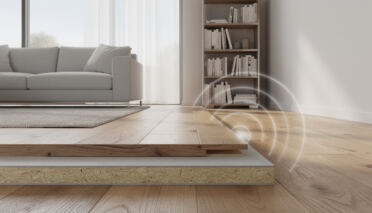
Engineered hardwood often handles change better than solid planks because it’s built in layers. That doesn’t make it waterproof, though. For Maya’s kitchen, she’s cautious: wood can work, but it means being disciplined about wiping spills quickly and choosing a finish that won’t look wrecked after one year of real life.
Resilient floors: the “I have a life” choice
LVP has earned its popularity because it’s tough, water-friendly, and generally forgiving. For Maya’s basement family room, it’s a no-drama option that still looks sharp. The main watch-outs are product quality (thin wear layers can scuff) and the feel underfoot—some vinyl can feel a bit “hard plastic” if you choose the cheapest version.
Laminate has also improved a lot, and many new lines look surprisingly realistic. Still, standing water is its kryptonite unless you buy a water-resistant line and keep seams protected. The insight: pick the material that matches your personality—if you hate fussing, don’t buy a floor that needs constant vigilance.
Now that the material families are clearer, the next step is where budgets get real: how cost adds up, what you can DIY, and what’s worth paying a pro for.
Cost, durability, and maintenance: making flooring decisions you won’t regret later
Sticker price is only the first chapter. Maya learns quickly that cost includes underlayment, trim, transitions, delivery, demo, disposal, and sometimes fixing a subfloor that’s less “flat” and more “wavy ocean.” If you’re doing home improvement on a real house (not a showroom box), plan for the unsexy line items.
A helpful mindset is “total cost of ownership.” A floor with a higher upfront price can be cheaper over 10–15 years if it survives daily life without needing replacement. Likewise, an inexpensive surface can become costly if it demands constant specialty cleaning, refinishing, or early replacement in high-use rooms.
Budgeting beyond the plank: the hidden add-ons that matter
Maya sets a per-room budget, then adds a buffer for surprises. For example, tile might be mid-range in material price, but labor can push it up because it’s time-intensive. Hardwood can be expensive per square foot, plus installation, plus finishing (if unfinished). LVP can be quicker to install, but stair parts and transitions can spike the bill.
Here’s a practical checklist Maya uses when comparing quotes:
- 🧾 Demo and disposal: are old floors being removed, and where do they go?
- 📏 Subfloor prep: leveling compound, patching, squeak fixes—priced or “as needed”?
- 🧩 Transitions and trim: reducers, T-molds, baseboards—who supplies them?
- 🧵 Underlayment: required for warranty, sound control, or moisture barrier?
- 🚪 Door clearance: will doors need trimming after installation?
- 🛡️ Warranty details: what voids it (mopping method, humidity range, pads)?
Durability vs. maintenance: choose your “annoyance level” 😅
Two floors can be equally tough but feel totally different to live with. Tile is extremely durable, but grout can be a maintenance magnet in busy kitchens. Hardwood ages gracefully, but it asks for care—felt pads, controlled humidity, quick spill cleanup. Vinyl is easygoing, but cheap versions can dent from heavy furniture or look less authentic up close.
Maya’s rule: in high-traffic rooms, she prioritizes low-fuss maintenance. In low-traffic rooms, she allows a little more upkeep if the style payoff is big. That’s how she avoids the classic regret: putting a precious floor in the one room that gets abused daily. The insight: the best durability isn’t just hardness—it’s how well the floor fits your habits.
Once budget math is under control, the next piece is the one people forget until it’s too late: what your house can physically support and how installation choices shape the final look.
Installation and subfloor reality checks: what pros look for (and what DIYers miss)
Installation is where a great product can become a great floor—or a daily reminder of rushed decisions. Maya toured a friend’s renovation where the vinyl planks looked fine from across the room, but up close you could see uneven seams because the subfloor wasn’t properly leveled. That’s not the floor’s fault; it’s the foundation it sat on.
Before you pick a surface, it helps to know your subfloor type (plywood, OSB, concrete) and condition. Flatness matters for click-lock products. Moisture matters for anything installed over concrete. And squeaks matter for your sanity.
Subfloor prep: the “boring” step that makes the whole thing look expensive
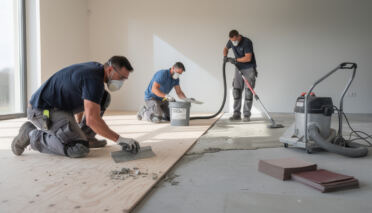
Pros spend time on prep because it prevents callbacks. Maya learns to ask contractors how they check flatness (straightedge? laser?) and what their plan is if they find dips or high spots. For floating floors, unevenness can lead to flexing, which can lead to joint failure over time.
For tile, prep includes backer boards or uncoupling membranes to reduce cracking risk. For wood, acclimation is a real thing—materials should sit in the home so they adjust to humidity before they’re fastened down. Skipping that can cause gaps or buckling later, and then everyone starts blaming everyone.
Transitions, stairs, and sightlines: where floors actually “show”
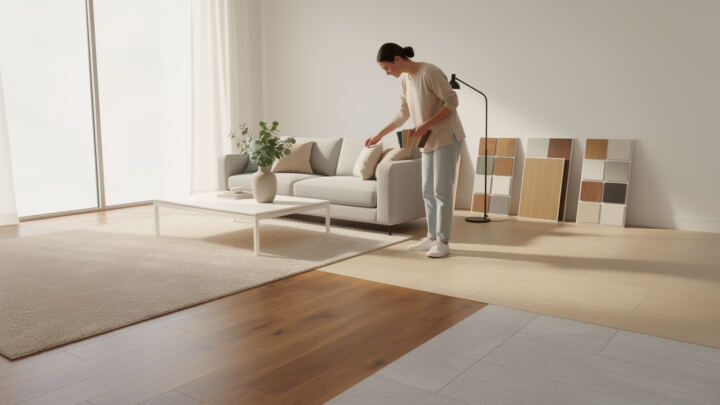
Open-plan homes make flooring choices more visible. If Maya uses different materials—say tile in the mudroom and engineered wood in the living area—she needs a clean transition that doesn’t look like an afterthought. This is also where color undertones matter: a floor that reads “warm honey” in the store might go orange next to cool gray paint at home.
Stairs are another truth serum. Many materials require special stair noses or trims, and that can affect both budget and appearance. If you want one continuous look, plan stair parts early, not after the main floor arrives. The insight: a floor isn’t finished at the planks—it’s finished at the edges.
With the technical side covered, the final big lever is aesthetics: getting the right vibe without falling for trends that age badly in your specific lighting.
Style choices that last: color, texture, and matching flooring to your home’s personality
Style can feel subjective, but there are practical ways to make it less guessy. Maya’s living room gets warm afternoon light, while her hallway is dim most of the day. The same flooring sample looks totally different in each space, which is why she tapes large samples down and watches them for a few days.
A good design choice also considers scale. Wide planks can make a space feel modern and calm, but they can overwhelm a small, busy room. Strong grain patterns can be gorgeous, but they can also compete with patterned rugs or loud countertops. The goal isn’t “neutral at all costs”—it’s cohesion.
Undertones and lighting: the sneaky reason people return samples
Undertones are the quiet drama of floor selection. Two “light oak” floors can lean pink, yellow, or gray depending on stain and finish. Maya holds samples next to her sofa fabric and kitchen cabinets because those are the fixed elements she’s not changing. She also checks the floor under different bulbs—warm LEDs can turn neutrals creamy, cool LEDs can make warm woods look oddly green.
If you’re unsure, look at your home’s existing “temperature.” Lots of red brick, warm metals, and creamy walls tend to like warm wood tones. Sleek black accents and crisp whites often pair well with cooler or more neutral woods. The insight: match the floor to your light first, your Pinterest board second.
Texture, sheen, and the “lived-in” look
High sheen can read formal, but it shows scratches and dust. Matte and satin finishes feel more relaxed and hide wear better—great for real households. Texture matters too: hand-scraped looks can disguise small marks, but heavy texture can trap dirt in kitchens.
Maya chooses a satin finish with a subtle texture for her main floor. It still looks refined, but it doesn’t scream for attention every time a chair moves. That’s the sweet spot for a lot of modern home improvement projects: polished, but not precious.
What flooring is best if I have pets and want low maintenance?
For many homes, luxury vinyl plank is a strong pick because it handles scratches and accidents well and has easy cleanup. Look for a thicker wear layer, a textured/matte finish to hide scuffs, and use felt pads plus a good entry mat to reduce grit damage.
Is engineered hardwood a safer choice than solid hardwood?
Often, yes. Engineered hardwood tends to be more stable with humidity changes, which helps in wider planks and homes with seasonal swings. It still isn’t waterproof, so it’s better in living spaces and bedrooms than in bathrooms or damp basements.
How do I compare cost fairly between different floor types?
Compare total installed cost, not just material price. Include demo/disposal, subfloor leveling, underlayment, trim/transitions, stair parts, and any required moisture barrier. Also factor long-term maintenance and how likely you are to replace it early in high-traffic rooms.
What’s the biggest installation mistake homeowners make?
Skipping subfloor evaluation and prep. Uneven or damp subfloors cause gaps, joint failure, cracked tile, and squeaks. Ask how flatness and moisture will be tested, what prep is included, and how the installer handles transitions and door clearances.