En bref
- 🧹 Build a simple routine: sweeping daily-ish, gentle mopping weekly, and fast drying every time.
- 🧴 Pick the right products: pH-neutral cleaners beat harsh chemicals for consistent floor care.
- 🧽 Tackle spills fast: smart stain removal is mostly about timing and using the least aggressive method first.
- 🚪 Prevent damage: felt pads, doormats, and chair mats are underrated protective measures.
- 📈 Make it last: good maintenance habits can noticeably extend your floor lifespan.
Vinyl plank flooring is basically the “busy life” champion: it looks like wood, shrugs off a lot of daily chaos, and doesn’t demand the kind of pampering that natural hardwood does. But here’s the twist—most of the complaints people have (“Why does it look dull?” “Why are there streaks?” “Why do I have scratches already?”) don’t come from the floor being fragile. They come from small cleaning choices that quietly pile up over time: the wrong mop head, too much water, a cleaner that leaves residue, or grit that acts like sandpaper under shoes. And once that cycle starts, you end up cleaning more often but getting worse results, which is honestly rude.
To keep vinyl looking sharp, you need a rhythm: remove grit, wash gently, rinse if needed, and make sure the surface doesn’t stay wet. That’s the whole game. The rest is details—useful details, like how to handle sticky kitchen spots, what to do when a black scuff line appears, or how to protect high-traffic lanes so they don’t age faster than the rest of the room. Let’s get into the real-world version of cleaning and care that actually fits normal households.
Daily and Weekly Cleaning for Vinyl Plank Flooring (Sweeping, Mopping, Drying)
Think of routine cleaning as damage prevention disguised as housekeeping. With vinyl plank flooring, the #1 enemy isn’t water or spills—it’s tiny particles of grit. A little sand tracked in from outside can leave micro-scratches that make the finish look cloudy over time. That’s why sweeping (or vacuuming with a hard-floor setting) is the foundation of smart floor care. If you only do one thing consistently, do this one.
I like to frame it the way a property manager would. Meet Maya, who manages a small co-living building with vinyl in hallways and apartments. She learned quickly that tenants didn’t “ruin” floors with spills; the real issue was dirt dragged in daily. When she added a quick sweep to the staff’s routine and placed better entry mats, the shine stayed longer and complaints dropped. Less drama, same floors.
How to sweep or vacuum without scratching
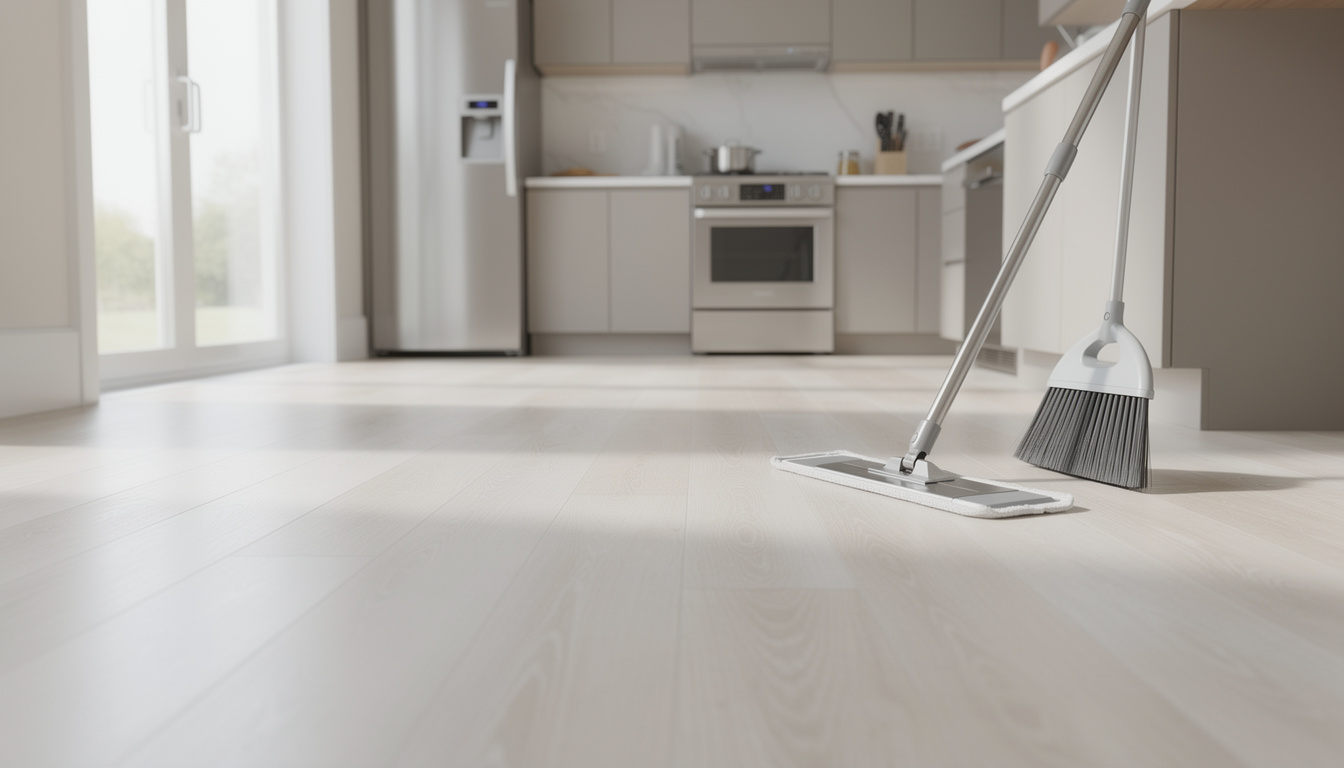
Use a soft-bristle broom or a microfiber dust mop. If you vacuum, turn off the beater bar—those spinning brushes are great for rugs and terrible for resilient floors. Hit the edges where crumbs and dust like to hide, because that’s where gritty buildup turns into scuffing when someone drags a chair.
One more trick: if you’re in a snowy or sandy area, treat the entryway like a “decontamination zone.” Shoes bring in salt crystals and grit that are way more abrasive than normal dust. A 60-second sweep of the entry path saves you from that slow, dulling wear.
Weekly mopping that won’t leave streaks
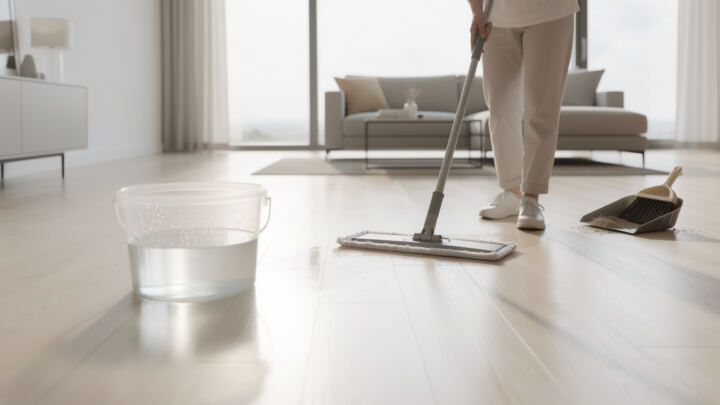
For mopping, less water is more. A damp microfiber mop (not dripping) is the sweet spot. Mix a pH-neutral vinyl-safe cleaner according to the label—doubling the concentration doesn’t double the clean, it just doubles the residue. Residue is what makes floors feel tacky and look hazy in certain light.
Work in sections, especially in kitchens. Go with the “two-bucket mindset” even if you don’t literally use two buckets: one for cleaning solution, one for rinsing the mop head. If the mop water turns gray fast, you’re basically redepositing dirt. That’s how you get that “why is it still grimy?” feeling.
Drying: the step people skip (and then regret)
Drying is what keeps water from sneaking into seams or sitting long enough to soften grime into a film. After you mop, do a quick pass with a dry microfiber pad or towel in the highest-traffic area. It takes two minutes and makes the finish look instantly better.
In Maya’s building, they started doing “dry-lane first”: after mopping, they towel-dry the main hallway path where everyone walks. That one tweak cut down on footprints, streaking, and the need for re-cleaning.
Insight: If your vinyl looks worse right after you clean it, the fix is usually not “stronger cleaner”—it’s better rinse habits and faster drying.
Product Choices and Maintenance Rules That Protect the Finish
Cleaning is only half the story; maintenance is where you decide whether your floor stays crisp-looking or slowly turns into a dull patchwork. Vinyl plank flooring has a protective wear layer, and your job is to avoid stripping it, scratching it, or coating it with gunk that attracts more dirt. Easy in theory, surprisingly easy to mess up in practice.
A big misconception is that “shiny” equals “clean.” Many shine-enhancing products leave a film that looks good for a week, then starts trapping dust and showing footprints. Then you clean more aggressively, which can create even more haze. It’s a cycle. If you want consistent looks, prioritize “no residue” over “extra gloss.”
Cleaner do’s and don’ts (the non-dramatic version)
Do: Use a pH-neutral vinyl floor cleaner or a manufacturer-approved solution. These are designed to lift oils without attacking the wear layer. If you like DIY, a very diluted mild dish soap can work in a pinch, but you need to rinse well so it doesn’t leave a slippery film.
Don’t: Use abrasive powders, steel wool, or highly alkaline/acidic cleaners. Also skip steam mops unless your specific product explicitly allows them. Heat and moisture forced into seams can cause edge swelling or adhesive issues on some installations.
Residue control: why your floor feels “sticky”
That sticky feel after cleaning is usually leftover cleaner, not leftover dirt. The fix is boring but effective: do a rinse pass with plain water using a clean microfiber pad, then dry. If you’ve been using too much product for months, you may need two rinse passes the first time to reset the surface.
Maya had one tenant who insisted on using a heavy “all-purpose” cleaner. The hallway outside their unit always looked cloudy. After switching to a neutral cleaner and doing one rinse mop, the cloudiness faded within two cleanings. Same floor, different chemistry.
A practical maintenance schedule you’ll actually follow
Keep it simple enough that it survives real life. Here’s a straightforward routine that balances cleaning with long-term floor care:
- 🗓️ 2–4x/week: quick sweeping or dust mopping in high-traffic zones
- 🧼 1x/week: damp mopping with a neutral cleaner
- 🚿 1–2x/month: rinse mop (plain water) to control residue
- 🧽 As needed: spot-clean spills immediately + targeted stain removal
Insight: The best products are the ones you can use consistently without buildup—your floor doesn’t need a miracle, it needs a steady routine.
To make product decisions less vague, here’s a quick reference you can screenshot mentally:
| Need 🧩 | Best choice ✅ | Avoid 🚫 | Why it matters 🎯 |
|---|---|---|---|
| Everyday cleaning | pH-neutral vinyl cleaner | Bleach mixes, ammonia-heavy sprays | Protects wear layer and reduces haze |
| Dust and grit | Microfiber dust mop | Rough broom, stiff brushes | Less micro-scratching = longer floor lifespan |
| Sticky spots | Damp microfiber + tiny drop of mild soap | Oily polishes | Soap lifts grime; polish can trap dirt |
| Drying | Dry microfiber pad/towel | Letting puddles air-dry | Prevents seams from staying wet too long |
Next up: the messy stuff—coffee rings, marker, scuffs, and mystery stains that show up right before guests arrive.
Stain Removal on Vinyl Plank Flooring: Real-Life Spills, Scuffs, and Sticky Messes
Stain removal on vinyl is mostly about using the gentlest method that works—and not letting a spill turn into a chemistry experiment. Vinyl plank flooring is resilient, but the wear layer can still be dulled by abrasives, and certain solvents can soften or discolor the surface if you go too hard. The goal is to lift the stain, not sand it off.
Maya keeps a small “spot kit” for turnovers between tenants. It’s not fancy, but it’s consistent: microfiber cloths, a neutral cleaner, isopropyl alcohol, a soft plastic scraper, and melamine foam (used carefully). The trick is having the right options before you’re panicking.
The escalation ladder (start mild, then level up)
Use this order so you don’t accidentally cause damage while chasing a stain:
- 🧻 Blot and wipe with warm water (don’t rub grit around)
- 🧼 Add neutral cleaner and wipe with microfiber
- 🧽 For sticky residue: mild soap solution, then rinse
- 🧴 For ink/marker or dye transfer: small amount of isopropyl alcohol on cloth, quick wipe, then rinse
- 🪄 For scuffs: a damp melamine foam, light pressure, then rinse and drying
This keeps you from jumping straight to harsh chemicals. And yes, rinsing matters—especially after alcohol—because it prevents streaks and removes dissolved residue.
Common stains and what actually works
Grease near the stove: Grease is sneaky because it attracts dust and turns into a dull film. Use a neutral cleaner first. If it’s stubborn, use a tiny bit of mild dish soap, wipe, then rinse well and dry. Avoid leaving soapy water sitting there.
Coffee and wine: Wipe quickly with water and microfiber. If a faint shadow remains, neutral cleaner usually finishes the job. The longer it sits, the more it can tint microscopic texture on the surface.
Rubber marks (shoes, mats, furniture feet): These look like stains but behave like transfer. A little alcohol on a cloth works fast. Don’t pour it directly—control is everything.
Paint drips: If it’s water-based paint and fresh, warm water can lift it. If it’s dried, carefully use a soft plastic scraper at a low angle to pop it off, then clean residue with neutral cleaner. Metal tools are a scratch invitation.
When “scrubbing” backfires
If you scrub aggressively, you can burnish the finish—basically polishing one spot differently than the rest. That’s when you see a shiny patch or a dull patch depending on the direction of the light. The fix is to stop early, rinse, dry, and reassess. Sometimes the best move is letting a cleaner dwell for 60 seconds (staying damp, not soaked) rather than applying more force.
Insight: Fast response beats harsh products—most vinyl “stains” are just residue that didn’t get removed gently and completely.
Now that the stains are under control, it’s time to talk about the stuff that prevents stains and scratches from showing up in the first place.
Protective Measures That Make Vinyl Plank Flooring Last Longer
The cleanest floor in the world can still look tired if it’s getting physically beaten up every day. That’s why protective measures are a big part of maintenance. You’re not just cleaning after damage—you’re reducing the damage so cleaning stays easy.
Maya’s rule is simple: protect against grit, protect against furniture, and protect against rolling loads. The building’s vinyl looked “newer” not because they cleaned harder, but because they controlled the causes of wear.
Entryway strategy: stop grit at the door
Use a two-mat setup if you can: a coarse outdoor mat to knock off debris and a softer indoor mat to catch finer dust. If you’ve got pets, an extra runner near the door helps catch that “outside to inside” trail. Even in an apartment, a small mat reduces how much abrasive stuff gets ground into the surface.
If you live where roads get salted in winter, wipe paws and shoes. Salt crystals scratch, and the dampness can create streaks that look like “bad cleaning.” It’s not glamorous, but it’s effective.
Furniture protection that doesn’t look ugly
Felt pads under chairs and tables are the easiest win. Replace them when they get gritty—old felt can trap sand and turn into a sanding disc. For heavy furniture, use wide, non-staining floor protectors designed for resilient flooring. If you’re rearranging a room, lift and carry instead of dragging. Dragging is how you get those long, faint lines that only appear in afternoon sunlight.
For office chairs, a hard-floor chair mat or soft rubber casters saves the day. Rolling friction in one spot creates “traffic lanes” that age faster than the rest of the room, even with perfect cleaning.
Sunlight, temperature, and the “dull strip” problem
Vinyl can fade slightly with intense UV exposure depending on quality and pigments. If one side of your room gets blasted by sun, use blinds or UV-filtering film. Also, rotate rugs occasionally so you don’t get a visible outline where one area aged differently.
Temperature swings matter too. If you have large windows or a sunroom, keep indoor conditions stable. Extreme heat can soften some vinyl surfaces, making them more prone to scuffs until they cool.
Small habits that pay off big
- 🚫 Skip shoes indoors when possible (or at least avoid gritty outdoor shoes)
- 🐾 Trim pet nails to reduce random scratch marks
- 🧴 Wipe spills quickly so you’re not forced into aggressive stain removal
- 🪑 Use chair mats in work-from-home zones
- 🧻 Always finish wet cleaning with quick drying in busy paths
Insight: The easiest way to extend floor lifespan is to treat wear like a “traffic engineering” problem, not a cleaning problem.
With protection in place, the last piece is handling edge cases: deep-clean resets, dullness, and what to do when your routine stops working.
Deep Cleaning, Troubleshooting Dullness, and Long-Term Floor Care for Maximum Floor Lifespan
Even with solid weekly habits, vinyl plank flooring can hit a point where it looks “off.” Usually it’s not permanent damage—it’s a buildup issue: cleaner residue, airborne oils (hello, cooking), or fine grime in texture. A smart deep clean resets the look without turning into an all-day ordeal.
Maya schedules deep cleans after tenant move-outs or twice a year in common areas. The goal isn’t to soak the floor; it’s to remove films that normal mopping can leave behind if the water gets dirty too fast.
A safe deep-clean method (no drama, no harsh chemicals)
Step one: dry clean thoroughly. That means slow, detailed sweeping or vacuuming, including edges. If you skip this, you’ll just smear grit around with a damp mop.
Step two: use a neutral cleaner at the recommended dilution and change mop water often. Work in small zones and keep the mop damp, not wet. After cleaning each zone, do a rinse pass with clean water. Then do quick drying with a towel or dry microfiber pad.
If you’ve used a “shine” product in the past and the floor feels tacky, expect to do two rinse passes. It’s not overkill; it’s removing the film that keeps grabbing dirt.
Fixing haze, streaks, and footprints
Haze: Usually residue. Rinse with plain water and a clean pad, then dry. If haze persists, reduce cleaner concentration going forward.
Streaks: Often caused by dirty mop pads or hard water minerals. Swap pads more frequently and consider using distilled water for the rinse if your water is very hard.
Footprints right after cleaning: That’s typically product film. Do one rinse-clean cycle and don’t add polish or wax (most vinyl doesn’t want it).
What about scratches and gouges?
Light scuffs that look like scratches sometimes come off with gentle cleaning or a melamine foam. Actual scratches are different—cleaning won’t undo missing material. For small marks, a manufacturer-approved repair kit can help blend the appearance. For plank damage, individual plank replacement is sometimes the cleanest fix, especially with click-lock systems.
The practical approach: don’t chase perfection with aggressive scrubbing. If a mark is structural, address it as a repair problem, not a cleaning challenge.
Long-term mindset: keeping your routine sustainable
The best floor care plan is the one you’ll still do when you’re busy. Keep tools handy: a microfiber dust mop you can grab in 30 seconds, a small spray bottle of neutral cleaner for spot jobs, and a stack of washable pads. Make it frictionless.
Maya’s building even labels a small closet shelf “2-minute reset”: broom, dustpan, microfiber, and a vinyl-safe spray. Tenants actually use it because it’s obvious and convenient.
Insight: When your cleaning setup is easy to access, your maintenance becomes consistent—and consistency is what protects floor lifespan.
Can I use a steam mop for vinyl plank flooring?
Only if your specific vinyl plank flooring brand explicitly approves it in writing. Steam can force heat and moisture into seams, which may lead to edge swelling or adhesive issues on some installations. A damp microfiber mop with a pH-neutral cleaner is the safer everyday option.
Why does my floor look dull even after cleaning?
Most of the time it’s residue from too much cleaner, a “shine” product film, or dirty mop water being spread around. Do a rinse pass with clean water, then drying with a microfiber towel. Going forward, reduce cleaner concentration and change pads/water more often.
What’s the quickest way to handle spills and prevent stains?
Blot fast, wipe with a damp microfiber cloth, then use a small amount of neutral cleaner if needed. Finish with drying so water doesn’t sit in seams. Quick response reduces the need for aggressive stain removal later.
Do I need wax or polish to protect vinyl plank flooring?
Usually no. Many polishes create a film that attracts dirt and causes haze or footprints. Focus on protective measures like entry mats, felt pads, and regular sweeping, plus gentle mopping with a residue-free cleaner.
How can I extend floor lifespan in high-traffic areas?
Control grit with mats and frequent sweeping, use chair mats or soft casters for rolling chairs, add felt pads under furniture, and keep up with consistent maintenance (light weekly mopping + quick drying). Preventing abrasion is the biggest factor in long-term durability.