Your home can look totally different just by changing what’s under your feet. And right now, floating floors are the go-to choice for people who want a fresh look without signing up for a weeks-long renovation. The reason is simple: instead of nailing or gluing boards down, you build a tight, interlocked surface that sits on top of the subfloor and moves as one unit. That “floating” behavior is exactly what makes the installation feel approachable—even if you’re new to DIY flooring. Still, the jobs that turn out beautifully aren’t the ones where you rush the planks out of the box and start clicking away. The wins come from a few unsexy but critical habits: smart floor preparation, careful moisture checks, and staying obsessed with straight lines and expansion gaps. If that sounds like contractor talk, don’t worry—I’ll keep it real and practical.
Over the years, I’ve watched people nail this project in a weekend and I’ve also walked into “why is the floor bouncing?” disasters. The difference usually isn’t talent—it’s whether you respect the basics: floor leveling, the right underlayment, and using the correct tools for flooring so the click joints don’t get chewed up. Below, you’ll get a clean set of easy steps plus the little field-tested tricks that keep your floor quiet, flat, and good-looking for the long haul. And yes, we’ll talk about laminate flooring, LVP, and engineered wood—because the “easy” route depends on what you’re installing and where.
En bref
- 🧩 Floating floors lock plank-to-plank (not to the subfloor), so expansion and contraction happen as one sheet.
- 📏 Floor leveling matters more than almost anything else—aim for about 3/16 inch over 6 feet tolerance for most products.
- 💧 Moisture is the silent troublemaker: check wood subfloors for roughly 6%–12% moisture content, and manage concrete vapor properly.
- 🧰 The right tools for flooring (tapping block, pull bar, spacers) prevent busted edges and loose joints.
- 🧻 Don’t skip underlayment: it helps with sound, comfort, and moisture protection depending on the type.
- 🧱 A click lock system goes fast, but only if your first row is dead straight and your expansion gap stays consistent.
- 🚪 Finish strong with transitions + baseboards/quarter round so the floor can still move without showing gaps.
Floating Floor Installation Basics: How Floating Floors Actually Work
Let’s strip the idea down to what matters. Floating floors are built plank-to-plank, creating one connected “raft” that sits on the subfloor. You’re not bonding it permanently with nails or glue, which is why so many homeowners pick it for DIY flooring. The boards hold together through a click lock system (or similar tongue-and-groove geometry), and that’s what keeps everything tight underfoot.
Here’s the part people miss: the floor isn’t “loose.” It’s stable because the joints create a single surface, and the baseboards/trim hide the perimeter gap so the field can expand and shrink with seasonal humidity. When you see buckling, it’s often because someone pinned the floor down—like installing baseboard so tight it clamps the planks, or forgetting spacers and leaving no room for movement.
Why floating beats glue-down for many homes
If you’ve ever tried scraping adhesive off a subfloor, you already know why floating systems are popular. For a lot of rooms, floating wins on speed, mess, and future flexibility. Want to change the look later? A floating install can be removed with less drama than a glued floor. Renters also love certain floating products because they can sometimes be installed over existing surfaces (as long as the manufacturer allows it and the prep is done right).
Another big advantage is forgiveness. A traditional nail-down hardwood install demands a very specific subfloor and fastening pattern. Floating systems, when paired with the right underlayment and proper floor leveling, handle minor substrate quirks better. Not “ignore the subfloor” better—just “don’t panic if you have an older house” better.
Picking material: laminate, engineered wood, or LVP
Laminate flooring is the budget-friendly chameleon. It’s basically a layered product with a printed design layer that can mimic oak, walnut, stone, you name it. It’s durable in living spaces, but moisture can be its kryptonite if water gets into the seams. In 2026, a lot of laminates have improved edge sealing, but the rule stays the same: don’t treat it like it’s waterproof unless it’s explicitly rated that way.
Engineered hardwood is real wood on top with a stable core beneath. It gives you the warmth and “real” look people want, with fewer movement issues than solid hardwood. It still hates chronic moisture, though—so it’s better for bedrooms, offices, and living rooms than for a bathroom that sees daily steam.
Luxury Vinyl Plank (LVP) is the low-stress option for kitchens, entries, laundry rooms, and other splash zones. Many LVP products are truly waterproof (again, check the specs), and the surface is tough against scratches. If you’ve got kids, pets, or a habit of dropping pans, LVP is the “why didn’t I do this earlier?” pick.
A quick comparison table to keep decisions sane
| Material | Best for | Watch-outs | DIY friendliness |
|---|---|---|---|
| 🪵 Laminate flooring | Living rooms, bedrooms, budget refresh | 💧 Moisture at seams; needs good floor preparation | ✅ Very friendly with a click lock system |
| 🌳 Engineered hardwood | Higher-end look, stable wood feel | 💧 Still sensitive to damp conditions | ✅ Friendly, but cuts must be cleaner |
| 🧱 LVP | Kitchens, basements, busy homes | 📏 Subfloor flatness still matters a lot | ✅ Usually the easiest “fast install” option |
If you want a floor that looks pro, acts quiet, and doesn’t separate at the seams, the real game starts before you lay the first plank—so next up is your pre-install reality check.
Floor Preparation for Floating Floors: Levelness, Moisture, and Subfloor Reality Checks
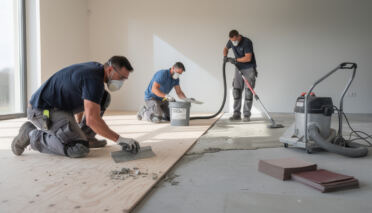
Before any installation begins, you’ve got to figure out what you’re installing over. This is where “easy” becomes genuinely easy… or turns into a squeaky, bouncy mess. I like to explain it with a quick story: my fictional neighbor, Sam, bought a gorgeous plank floor and installed it in one long Saturday. By Monday, it sounded like popcorn underfoot. The planks weren’t the problem—Sam laid them over a subfloor that dipped like a skateboard ramp and skipped proper floor leveling.
The goal of floor preparation isn’t perfection for perfection’s sake. It’s about giving the locking joints a fair chance. Floating systems distribute load across joints; when the substrate has sudden highs and lows, the floor flexes, joints take stress, and you get noise, separation, or premature wear. So yes, the prep is boring, but it’s also the part that makes the rest feel smooth.
How to check flatness (and what “acceptable” really means)
Grab a long level—6 feet is a sweet spot—and a straight edge. Check multiple directions: along the length, across the width, and diagonally. You’re hunting for gaps under the straight edge (dips) and rocking points (high spots). A common target is around 3/16 inch variation over 6 feet. Some products allow a bit more or less, so always confirm with the manufacturer. But as a practical rule, if you can feel it under a level, you’ll probably hear it later.
If you’ve got a larger space, a laser level can save time and reduce guesswork. It’s not mandatory, but it’s one of those “wow, that was easier than I expected” tools once you use it.
Moisture testing: the step people skip (then regret)
Moisture is the quiet villain of floating installs. Wood subfloors should typically sit in a reasonable band—often around 6% to 12% moisture content depending on region and season. Concrete should be dry enough for the product, and many installs require a vapor barrier system or a specific underlayment with a built-in moisture layer. A moisture meter is the adult move here; it’s cheaper than replacing a whole floor.
Also, don’t only test one spot. Check near exterior walls, plumbing lines, and anywhere you’ve had leaks or dampness. In modern homes, appliances like dishwashers and fridge water lines are frequent culprits. Fix the cause first, then build the floor.
Subfloor triage: what to fix and how far to go
Not every flaw means demolition. Think in tiers. Small shallow dips can often be filled with a self-leveling compound (or patch product matched to the subfloor). High ridges can be sanded or ground down. Cracks and holes should be patched so the surface is continuous and supportive.
If you find rot, delamination, or soft spots in plywood/OSB, stop and replace those sections. Floating floors aren’t magic carpets—they can’t stiffen a subfloor that’s structurally compromised.
A practical prep checklist you can actually follow
- 🧹 Clear the room fully so you can measure and move fast.
- 📏 Map flatness with a long level; mark dips/highs with pencil.
- 🧱 Fix dips with leveling compound; grind/sand peaks carefully.
- 🕳️ Patch cracks/voids so the underlayment sits smooth.
- 💧 Measure moisture in multiple zones (not just the middle).
- 🚰 Check for leaks around plumbing and appliances before covering anything.
Once the surface is clean, flat, and dry, you’re ready to lay the layer that makes floating installs feel more solid and quieter: the underlayment. That’s where we’re heading next.
Want a visual walkthrough before you start mixing patch compound? This search will pull up solid contractor-style demos.
Underlayment and Tools for Flooring: The Setup That Makes Easy Steps Actually Easy
People love talking about plank color and pattern, but the hidden heroes are underlayment and the right tools for flooring. Get those right and your DIY flooring project feels controlled. Get them wrong and you’ll fight the floor the whole time—planks won’t seat, seams will look sloppy, and the room will sound hollow.
Underlayment does three big jobs: it can help manage moisture, reduce sound, and smooth tiny imperfections. It’s not a substitute for floor leveling, but it can take the edge off micro-texture so your floating surface sits evenly. The “right” underlayment depends on what you’re installing and what you’re installing over.
Choosing the right underlayment for your room
Foam is common and affordable. It’s widely used under laminate flooring and some LVP products, but you still need to confirm compatibility—some LVP has an attached pad and doesn’t want extra cushion underneath, because too much softness can cause joint movement.
Cork underlayment is great for sound and feels a little more premium underfoot. If you’re doing an upstairs room or a condo where footsteps matter, cork can be a sanity-saver. Combination products include a built-in moisture barrier layer, which is often the move over concrete slabs.
The installation itself is straightforward: roll it out, trim it, tape seams per the product instructions. Keep it flat, keep it clean, and don’t leave wrinkles. The floor will mirror whatever you leave underneath.
The small tool kit that prevents big mistakes
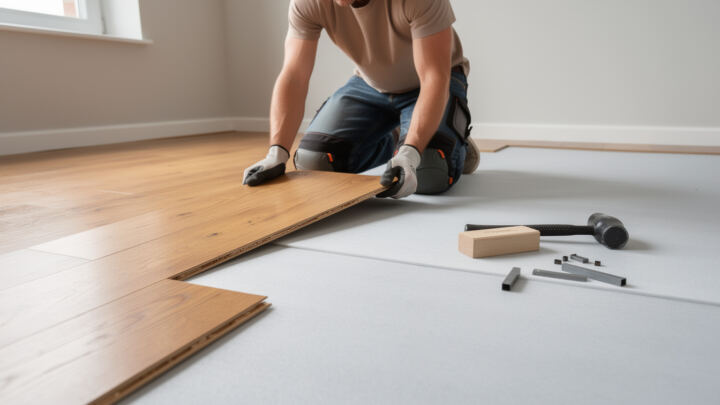
A proper click lock system is strong, but the edges can chip if you hammer directly on them. That’s why you use a tapping block. Spacers keep expansion gaps consistent so the field can move. A pull bar helps you snug the last row without wrecking the tongue. Knee pads aren’t “extra”—they’re the reason you can still walk the next day.
For cutting, pick what fits your material and comfort. A miter saw is fast and accurate for straight cross-cuts. A circular saw works well too with the right blade. A jigsaw is perfect for notches around door jambs, vents, and odd angles. Sharp blades matter more than people think; dull blades tear edges and make joints look messy.
A no-drama tools and supplies list
- 🪚 Saw (miter or circular) + sharp blade for clean plank cuts
- 🧩 Tapping block to protect edges while seating joints
- 🪝 Pull bar for tightening the last row near walls
- 📐 Spacers for consistent expansion gaps
- 📏 Measuring tape + pencil for accurate cut marks
- 🔪 Utility knife for trimming underlayment
- 🧯 Safety glasses + dust mask (cutting dust is no joke) 😷
- 🧎 Knee pads so you don’t hate this project halfway through
- 🚪 Transition pieces + trim/baseboards for a finished edge
Budgeting time like a normal person
For an average bedroom or living room, many homeowners can handle the main installation in a day if the prep is already done. If you’re doing floor preparation from scratch—patching, leveling, moisture mitigation—add time. That’s not failure, that’s just reality. The “easy” version is always the version where you respect drying times and don’t rush the foundation.
Next up is the part you came for: the actual easy steps to install floating floors, with layout tricks that make the whole thing look intentional instead of random.
If you like watching the flow of plank placement (especially the first two rows), this search usually brings up clear, close-up demos.
How to Install Floating Floors Easily: Easy Steps for a Clean Click-Lock Installation
Now we’re in the fun zone. But I’m going to be that person and say it: the first row is the whole job. If your first row wanders, every row after it will fight you. If it’s straight and your joints are tight, the rest feels like stacking wins. Let’s walk through a set of easy steps that works for most floating floors (always double-check your product manual for any special rules).
Step-by-step workflow that stays beginner-friendly
- 🧮 Measure and plan the layout: Measure the room, decide plank direction (often parallel to the longest wall for a more open look), and avoid ending with a tiny sliver row if you can. A quick dry layout calculation can save a lot of ugly cuts.
- 📦 Acclimate the flooring: Leave unopened boxes in the room for about 48–72 hours so the material adjusts to temperature and humidity. This reduces later gapping or buckling.
- 🧻 Install underlayment: Roll it out cleanly, tape seams as required, and keep it flat. No ridges, no debris underneath.
- 📏 Mark a starting reference: Pick your straightest wall. Snap a chalk line if needed so the first row stays true.
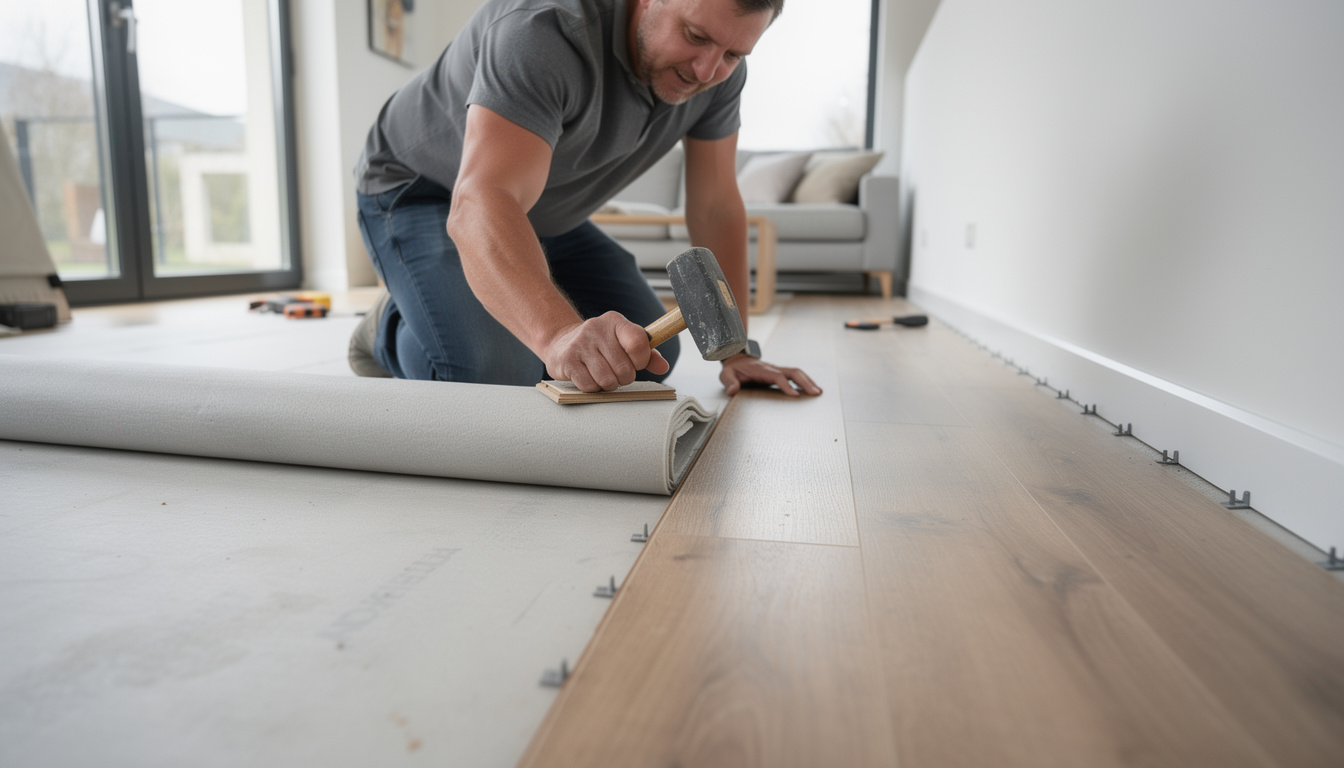
- 🧱 Start the first row with spacers: Use spacers to maintain a consistent expansion gap (commonly 1/4″ to 3/8″, but follow your product). This gap is not optional.
- 🧩 Lock planks together using the click lock system: Angle, click, and gently seat. If it resists, check for debris in the groove rather than forcing it.
- 🪵 Stagger end joints: Offset seams at least about 6 inches (or per manufacturer). This improves strength and looks more natural.
- 🪚 Cut around obstacles: Measure twice, cut once. Use a jigsaw for curves and notches. Keep cuts clean because the eye goes straight to sloppy edges at doorways.
- 🚪 Add transitions where needed: Use T-molding, reducers, or end caps depending on height changes and doorways. Secure transitions properly without trapping the floating field.
- 🧼 Finish trim and clean up: Remove spacers, install baseboards or quarter round attached to the wall (not the floor), vacuum, then do a light damp clean if your product allows it.
Real-world tricks that keep the floor tight and quiet
Mix planks from multiple boxes as you go. Even with modern manufacturing, slight tone variation happens; blending prevents one corner from looking like it came from a different planet. Also, keep checking your rows for drift—every few rows, sight down the seams and verify you’re still square. Small errors get loud by the time you reach the far wall.
If you hit a stubborn joint, don’t rage-tap it into submission. Most of the time there’s a tiny chip, a bit of dust, or the plank is slightly mis-angled. Take it apart carefully and re-seat it. The joints are the structural system; protect them like it’s your job.
Mini case: Sam’s redo (and why it worked)
Remember Sam with the popcorn floor? The fix wasn’t fancy: we pulled up the bouncy area, addressed the low spot with leveling compound, let it cure fully, and reinstalled that section with fresh attention to spacing and straightness. The squeaks disappeared because the floor stopped flexing. Same product, same room—better floor leveling and calmer technique.
Even with a perfect method, things can still pop up—gaps, squeaks, and moisture surprises—so the next section is all about quick troubleshooting without spiraling.
Troubleshooting Floating Floors Installation: Fix Gaps, Squeaks, and Bouncy Spots
Floating installs are forgiving, but they’re not immune to the laws of physics. When something feels off, it usually points back to one of three roots: subfloor flatness, moisture movement, or a joint that didn’t fully lock. The good news is you can often diagnose the issue fast if you know what to look for. The bad news is ignoring it usually makes it worse, not better.
Bouncy areas: what they mean and what actually fixes them
If the floor feels springy in a specific zone, that’s typically a flatness problem—usually a dip that wasn’t corrected during floor preparation. Underlayment won’t “bridge” a real low spot; it just compresses. The fix is rarely cosmetic. You generally need to remove planks back to the area, correct the substrate with a leveling product, and reinstall. It’s annoying, but it’s also the fix that lasts.
Gaps between planks: installation technique vs. environment
Gaps show up when the locking edges weren’t fully seated, when the product wasn’t acclimated, or when humidity swings are extreme. First attempt: use a tapping block to snug the joint if the system allows it and if you can do so without damaging the edge. If gaps persist, pull back to the area and re-click the boards, checking for debris in the groove.
If your home is very dry in winter and humid in summer, expect some seasonal movement. That’s exactly why the expansion gap exists. What you don’t want is random gaps in the middle of the field—that’s usually a seating issue, not “normal movement.”
Squeaks: the sound of friction and flex
Squeaking can come from plank edges rubbing, underlayment shifting, or the subfloor itself moving. If the noise is clearly coming from below, check whether the subfloor has loose panels or fasteners. Tighten that first. If the noise is between planks, a tiny amount of dry lubricant like powdered graphite (used carefully and sparingly) can help in some cases—but the long-term fix is still: stable substrate, clean joints, and correct gap management.
Moisture red flags you should not “wait and see” on
Buckling, warping, or any musty odor needs immediate attention. Find and fix the moisture source (leak, slab vapor, poor ventilation), remove affected material, and dry the area fully before reinstalling. If you’re over concrete, confirm the vapor control strategy matches your product: sometimes the right move is upgrading the moisture barrier layer rather than hoping a basic foam pad will handle it.
Quick “symptom to likely cause” cheat sheet
- 🔊 Squeak in one spot → subfloor movement or a localized dip causing flex
- 📉 Bounce near a seam → low spot; needs floor leveling
- 🧩 Persistent plank gap → joint not seated, debris, or skipped acclimation
- 💧 Edge swelling (especially laminate) → moisture exposure; fix source fast
- 🚪 Problems at doorways → transition installed too tight, trapping the floor
Once you know how to correct the usual problems, you can install with way more confidence—because you’re not afraid of “what if.”
Can I install floating floors over existing flooring?
Often yes, but only if the existing surface is flat, stable, and allowed by the manufacturer. Avoid installing over thick, soft materials like carpet. Good floor preparation still applies: clean thoroughly, correct height issues at transitions, and confirm door clearances before you start.
What’s the most common reason floating floor installations fail?
Skipping floor leveling and moisture checks. A click lock system depends on a flat, dry subfloor so joints stay fully engaged. If you rush prep, you usually pay later with squeaks, gaps, or buckling.
Do I always need underlayment?
Usually, yes—but the type depends on your product. Some LVP includes an attached pad and may not want extra underlayment. Laminate flooring often needs a specific underlayment for sound and moisture management. Always match the underlayment to the flooring and subfloor conditions.
How big should the expansion gap be around the edges?
Many floating floors use roughly 1/4 inch to 3/8 inch, but you must follow your flooring brand’s instructions because plank thickness, room size, and material can change the requirement. Use spacers so the gap stays consistent, then cover it with baseboard or quarter round attached to the wall—not the floor.
What tools for flooring make the biggest difference for beginners?
Spacers, a tapping block, and a pull bar—those three protect the joints and keep the floor tight without damaging edges. Add a quality saw blade and knee pads, and your DIY flooring day goes from frustrating to genuinely manageable.