Wooden floors look like they can handle anything—until water shows up and quietly starts a slow-motion disaster. One forgotten ice cube under the fridge, a dog-bowl splash zone that never really dries, or a “tiny” toilet leak you ignore for a week… and suddenly the boards start cupping, the seams darken, and the finish gets that dull, thirsty look. The tricky part is that water damage isn’t always dramatic like a flood; more often, it’s sneaky moisture that creeps into joints, under baseboards, or through worn finish. And once wood swells, it doesn’t politely shrink back into place without consequences. The good news is you can stack the odds in your favor with smart floor protection: the right water-resistant finish, better daily habits, humidity control, and a real plan for kitchens, baths, and entryways. Think of it less like “making wood waterproof forever” and more like building layers of defense so spills and damp air don’t get a chance to move in.
- 🧽 Spill prevention is the fastest win: blot fast, don’t smear water into seams.
- 🛡️ A durable floor sealant (often polyurethane) is your main waterproofing shield.
- 🌡️ Stable humidity protects boards from swelling, cupping, and gaps.
- 🚪 Entry mats + area rugs reduce tracked-in water and grit (which scratches finishes).
- 🔧 Leaks under sinks and appliances are “small” only until they aren’t—check them often.
- 🧱 A hidden moisture barrier under flooring matters in high-risk rooms and over slabs.
Understanding Water Damage in Wooden Floors: How Moisture Actually Wrecks the Boards
Let’s get one thing straight: wood isn’t fragile, but it is hygroscopic, meaning it trades moisture with the air around it. When humidity rises or liquid sits on the surface, boards absorb water and swell. When conditions dry out again, they shrink. That constant expansion-and-contraction cycle is what leads to gaps, squeaks, cupping (edges higher than the center), crowning (center higher), and that annoying “why does this board look taller now?” feeling under bare feet.
A friend-of-a-friend story that’s basically a classic: Maya, who runs a small home-staging business, had gorgeous oak wooden floors in a renovated loft. The space photographed like a dream—until a mini leak from the dishwasher supply line dripped behind the kickplate. No puddle, no obvious mess. But after a month, the boards near the cabinets turned darker and slightly wavy. That’s the nightmare scenario: slow water exposure that bypasses your attention and goes straight to the joints.
There are a few “flavors” of water damage, and knowing which one you’re dealing with changes how you prevent it. Surface spills are usually manageable if the finish is in good shape. Chronic dampness (think: wet boots at the entry all winter) slowly breaks down the protective layer. Then there’s water coming from below—concrete slabs, crawl spaces, or a bathroom where moisture migrates under the flooring. That’s where a moisture barrier becomes the hero you never see.
What early warning signs look like (so you don’t notice it too late)
People often miss the early clues because they expect a dramatic stain. Instead, you might see subtle finish haze, tiny ridges at plank seams, or a “bubbly” feel in reflected light. You might smell a faint mustiness near baseboards. If you run your hand across the grain and it feels rougher than usual, that can be moisture lifting fibers or the finish wearing thin.
Another tell: chairs start catching on slightly raised edges. If you’ve got a rolling desk chair that suddenly “rattles” in one spot, don’t just blame the wheels—check the boards. Catching this early is the difference between simple floor maintenance and a major repair bill.
Water vs. humidity: the boring villain that does the most damage
Spills are obvious, but humidity is persistent. High indoor humidity makes boards swell and can push them upward against each other, while overly dry conditions can open gaps that later become entry points for water. The goal is stability. In many homes, comfort and wood stability overlap nicely when humidity stays in a moderate range, but the real win is avoiding huge swings from season to season.
Once you understand how moisture behaves, choosing the right protective strategy stops being random—and starts feeling like a system. Next up: building that system with finishes and sealants that actually hold up in real life.

Waterproofing Wooden Floors with the Right Finish: Choosing a Floor Sealant That Matches Your Life
If you want the big lever for waterproofing, it’s the finish. Not because it makes wood invincible, but because it creates a sacrificial, protective layer that buys you time. A good floor sealant turns “panic” into “okay, I can wipe this up.” The wrong product—or a worn finish—turns a minor spill into a stain that sinks between boards.
Here’s the vibe check: are you protecting a busy family kitchen, a quiet bedroom, or a rental where tenants mop like they’re washing a car? Your finish choice should match the chaos level.
Polyurethane: the workhorse water-resistant finish
Oil-based polyurethane tends to deliver that tough, classic durability people love. It usually builds a thicker-feeling coat and can handle wear well. The trade-offs are real: longer curing time and stronger odor during application. If you’ve ever tried to sleep in a home while it’s curing, you already know the struggle.
Water-based polyurethane is popular because it dries faster and smells less intense. It keeps the wood looking a bit more natural (less ambering), which is a big deal in lighter, modern interiors. It’s still a solid water-resistant finish, especially when applied in proper coats and maintained on schedule.
Penetrating oils: beautiful, but they demand commitment
Penetrating oil options like tung or linseed soak into the fibers and create internal resistance rather than a thick film on top. They can make wood look rich and deep, like it’s glowing from within. But they’re not the “set it and forget it” choice. You’ll need periodic reapplication, and your wood care routine becomes more hands-on.
For some people, that’s not a downside. If you like the ritual of caring for your home—kind of like maintaining a leather bag—oils can feel satisfying. If you want low effort, pick a film-forming finish.
A practical comparison table (so you can pick fast)
| Option | Best for | Upside | Watch-outs |
|---|---|---|---|
| 🛡️ Oil-based polyurethane | High-traffic homes, pets, busy hallways | Very durable barrier against moisture | ⏳ Longer cure time, stronger smell |
| 💧 Water-based polyurethane | Quick projects, lighter/modern aesthetics | Fast dry, lower odor, clear look | 🔁 May need more attentive recoat planning |
| 🌿 Penetrating oil | Natural look lovers, easy spot refresh | Enhances grain, repairs can be localized | 🧴 Regular reapplication is part of the deal |
Application basics that matter more than brand names
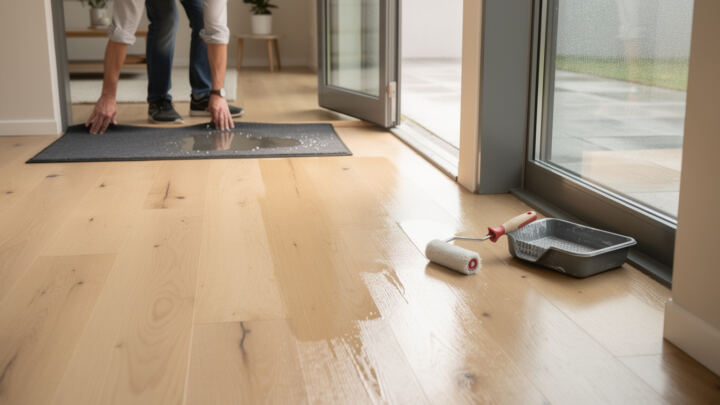
Even the best finish fails when applied badly. Dust nibs, missed edges, or rushing dry times create weak points where water can slip through. The simplest rule: thin, even coats and enough time to cure. If you’re refinishing, sanding prep and cleanliness are everything—because sealing dirt is basically laminating future problems into your floor.
And if you’re wondering whether this is overkill: it’s not. A strong finish is the foundation. Once it’s in place, your daily habits and room-by-room strategy can finally do their job.
If you want a visual walkthrough of refinishing basics and common mistakes, this kind of demo helps you spot what “good prep” looks like.
Daily Floor Maintenance and Spill Prevention: Small Habits That Stop Big Repairs
You can install the fanciest finish on the planet and still lose the battle if day-to-day habits are messy. The real secret sauce is boring but powerful: floor maintenance that keeps water from lingering and grit from grinding away your finish. Think of grit like sandpaper—once it scratches the surface, water gets more chances to sneak in.
Let’s follow Maya again. After her dishwasher leak incident, she didn’t just repair; she changed routines. A tray under the sink area, a rule that wet shoes don’t cross the entry, and a microfiber mop schedule. The loft stopped being a “delicate museum” and became a manageable space with a system.
Spill prevention that works in real life (not in perfect-people fantasy)
The move is to blot, not wipe. Wiping spreads liquid across a larger area and can push it into seams. Keep a couple of absorbent cloths where accidents happen: kitchen drawer, near pet bowls, by the entry. It sounds basic, but it’s the fastest way to reduce water damage risk.
Also: don’t let “just water” fool you. Melted ice, plant overflows, and humidifier drips are still moisture. If water sits long enough, it can dull finish and stain tannin-rich woods.
Cleaning routines that protect instead of sabotage
Vacuuming matters because it removes abrasive dust. For mopping, the key phrase is “damp, not wet.” A soaking mop is basically an uncontrolled spill. Microfiber mops are popular for a reason: they lift dirt efficiently with minimal water, and you can control how much liquid hits the boards.
If you’re using a floor cleaner, stick to products designed for finished wood. Harsh detergents or steam mops can break down a floor sealant over time. Steam feels “dry,” but it’s still moisture plus heat, and that combo can stress finishes and joints.
Strategic rugs and mats as floor protection (decor that fights back)
Mats aren’t just for looks—they’re frontline floor protection. Entryways need a two-step setup: one mat outside to knock off wet grit, and one inside to absorb leftover moisture. In dining areas, a rug under the table catches spills before they hit seams. In kitchens, a washable runner in front of the sink turns daily splashes into a laundry problem instead of a flooring problem.
- 🚪 Entrance mats: reduce tracked-in rain, snow melt, and mud.
- 🍽️ Area rugs: defend high-risk zones like dining tables and kids’ snack spots.
- 🚰 Water-absorbent kitchen mats: catch repetitive splashes near sinks and dishwashers.
- 🐾 Pet bowl trays: contain “the drip radius” around water bowls.
Recoat timing: keeping the shield intact
Finishes don’t last forever, especially in busy households. Many homeowners plan a refresh every few years depending on traffic. The practical approach: look for dull paths, discoloration, or areas that feel rougher. Spot problems early and you avoid full-scale sanding later. That’s wood care with a budget-friendly mindset.
These habits are the daily layer. Next comes the environmental layer: controlling humidity and stopping water that comes from behind walls or under floors.
Want a checklist-style maintenance routine you can copy? This video search usually pulls up simple weekly/monthly plans.
Humidity Control and Moisture Barriers: The Hidden Side of Waterproofing Wooden Floors
If surface water is the obvious threat, humidity is the slow burn. You might wipe every spill and still see movement in your wooden floors if indoor air swings wildly between sticky summers and bone-dry winters. The goal is a steady environment, because stability is what keeps boards from fighting each other at the seams.
This is also where people misunderstand waterproofing. You’re not just sealing the top; you’re managing the whole moisture ecosystem—air, subfloor, plumbing, and room usage.
Dehumidifiers, air conditioning, humidifiers: picking the right tool
In humid climates, a dehumidifier helps keep moisture from loading into the wood. Air conditioning also pulls humidity from the air, which is one reason floors often feel more stable during cooled months. On the flip side, winter heating can dry air so much that boards shrink and gaps open; a humidifier can reduce that stress and keep things comfortable for humans, too.
A simple mental model: when you control humidity, you reduce the wood’s “mood swings.” Less movement means fewer cracks, fewer weak points, and less opportunity for water to sneak under a finish.
Moisture barriers under the floor: boring, essential, and often skipped
A moisture barrier is especially important when flooring sits above concrete slabs or in rooms with higher moisture loads. You’ve got two common options: liquid-applied membranes and sheet membranes. Liquid products roll on and create a seamless layer. Sheet products come in rolls and get laid down before installation. Either way, the purpose is the same: stop moisture migrating upward into the wood from below.
If you’ve ever seen a floor that looks fine on top but feels “soft” or smells musty near an exterior wall, subfloor moisture is a prime suspect. That’s why people who remodel kitchens and baths often treat underlayment like insurance.
Sealing gaps and cracks: stopping water at the seams
Over time, small gaps appear. Filling tiny cracks with color-matched wood filler can keep water from settling where it shouldn’t. For larger problems, sanding and refinishing may be the cleaner fix because it restores a uniform protective layer. The point isn’t perfection; it’s reducing pathways for moisture intrusion.
One more underrated detail: baseboards and trim. If moisture is creeping at the edges, you may need to check caulk lines or ensure splash zones (like near tubs) aren’t sending water behind trim where it can’t evaporate easily.
Plumbing vigilance: the “quiet leak” problem
A slow leak can do more damage than a one-time spill because it keeps wood wet for longer. Make a habit of checking under sinks, behind toilets, and around appliance supply lines. If you’re in a condo or older home, this is not paranoia—it’s smart ownership.
When you combine steady indoor humidity, a proper moisture barrier where needed, and quick plumbing fixes, you’re not just reacting to damage—you’re preventing it with a system. That sets up the next question: what about choosing wood that naturally fights moisture in the first place?
Room-by-Room Floor Protection and Water-Resistant Wood Choices (Kitchens, Bathrooms, Entryways)
Not all rooms ask the same things of a floor. A bedroom might only deal with humidity shifts, while a kitchen deals with splashes, spills, and appliance leaks. A bathroom is basically a moisture stress test. So instead of one generic plan, it’s smarter to tailor floor protection to each zone.
Entryways: where water and grit team up
Entryways are brutal because you get moisture plus abrasive dirt. That combo scratches finishes, and scratches make it easier for water to penetrate. The fix isn’t complicated: mats, a shoe routine, and occasional checks for finish wear along the path people naturally walk.
If you live somewhere with snowy winters, road salt is another issue. Salt residue can dull finishes and attract moisture. A damp microfiber wipe in winter (again: damp, not soaked) can keep salt from building up.
Kitchens: the land of “tiny accidents”
Kitchens deliver constant low-level exposure: sink splashes, dishwasher steam, spills you notice later. A washable runner and a reliable spill prevention habit go a long way. Also, place a small drip tray under the sink cabinet if you’ve had leaks before—it’s not fancy, but it’s effective.
If you’re renovating, consider adding a membrane under the floor in the kitchen, especially near dishwashers and sinks. This is the kind of invisible upgrade that pays off the first time a hose clamp loosens.
Bathrooms: decide how brave you want to be
Wood in bathrooms can work, but it needs respect. Use water-absorbent mats at the shower/tub exit, and don’t let wet towels sit on the floor. Ventilation matters a lot here—run the fan long enough to clear humidity after showers. If you’re installing new flooring, a robust moisture barrier under the boards is almost non-negotiable.
Choosing naturally water-resistant wood species
Species choice can help. Dense, oily woods tend to handle moisture better. Teak is famous for its natural oils and has a long history in marine environments, which is a pretty strong résumé. Ipe is another dense hardwood that resists moisture and pests, often used outdoors. Ebony is dense and naturally oily too, though it’s usually a premium, design-forward choice rather than a whole-house default.
This isn’t a license to ignore maintenance. Even water-tough species still need a water-resistant finish and smart habits, because surface protection is what prevents staining and slows absorption.
Making it all feel doable: a simple zone plan
Here’s the mindset that keeps you consistent: treat high-risk areas like you’re managing weather, not fighting emergencies. Mats and runners handle daily splashes. Finishes handle short-term contact. Humidity control reduces long-term movement. And plumbing checks prevent the stealth disasters.
Do that, and your wooden floors stop feeling “precious” and start feeling like the durable, livable feature they’re supposed to be.
What’s the fastest way to prevent water damage on wooden floors after a spill?
Blot immediately with an absorbent cloth (don’t wipe), then dry the area fully. This simple spill prevention habit keeps water from being pushed into seams and reduces the chance of staining under the finish.
Which floor sealant is best for waterproofing: oil-based or water-based polyurethane?
Both can provide a strong water-resistant finish. Oil-based polyurethane is often tougher and more traditional, but it takes longer to cure and smells stronger. Water-based polyurethane dries faster and stays clearer, making it popular for modern looks and quicker projects.
Do I really need a moisture barrier under wooden floors?
If you’re over a concrete slab, in a humid region, or installing in moisture-prone rooms like kitchens or bathrooms, a moisture barrier is a smart layer of floor protection. It helps stop moisture from migrating up from below and reduces long-term swelling and cupping.
How often should I plan floor maintenance like reapplying finish?
It depends on traffic, pets, and cleaning habits, but many homeowners refresh the protective layer every few years. Watch for dull walk paths, rough texture, or areas that darken easily—those are signs the water-resistant finish is wearing thin.
Are some wood species naturally better at resisting water damage?
Yes. Dense, oily species like teak and ipe are more moisture-tolerant than many common hardwoods. Still, they need proper wood care: a good finish, spill prevention, and stable humidity to keep water damage risks low.