En bref
- 🪵 Engineered wood is built in layers for better moisture resistance, while solid wood is one single piece of timber from top to bottom.
- 🏠 For tricky spaces (basements, condos, homes with radiant heat), engineered often wins on installation options and stability.
- 💪 On durability, solid can be refinished many times; engineered depends on the thickness of its top wear layer.
- 💸 Cost isn’t just the plank price—subfloor prep, glue, underlay, and labor can flip the math.
- 🧽 Maintenance is similar day-to-day, but long-term repairs and refinishing paths are very different.
- 👀 Appearance can be stunning for both; the “best-looking” choice often comes down to plank width, grade, and finish rather than the category.
Wood flooring is one of those home choices that feels emotional and practical at the same time. You’re picking the surface you’ll live on—where your coffee spills happen, where pets skid around corners, where sunlight slowly shifts the tone year after year. And right at the start, most people hit the same fork in the road: engineered wood or solid wood. They can look almost identical in a listing photo, and yet they behave very differently once they’re nailed, glued, or clicked into place.
To make this less abstract, let’s follow a fictional homeowner, Maya, renovating a 1920s townhouse while juggling a busy job and a dog that treats hallways like a racetrack. Her contractor is pushing engineered for stability; her neighbor swears by solid because “it’s real wood.” Both are right in their own way. The difference isn’t about what’s “real” but about how the material is built, how it handles moisture and movement, what refinishing looks like, and how the full project budget shakes out. Let’s break it down like you’re actually going to buy it.
Engineered Wood vs Solid Wood Flooring: How They’re Built (and Why It Matters)
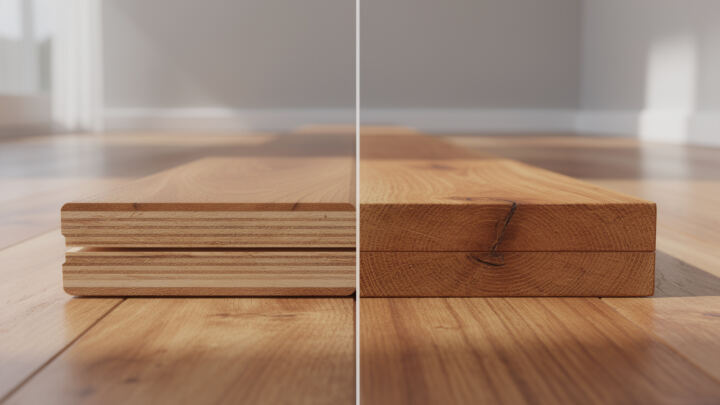
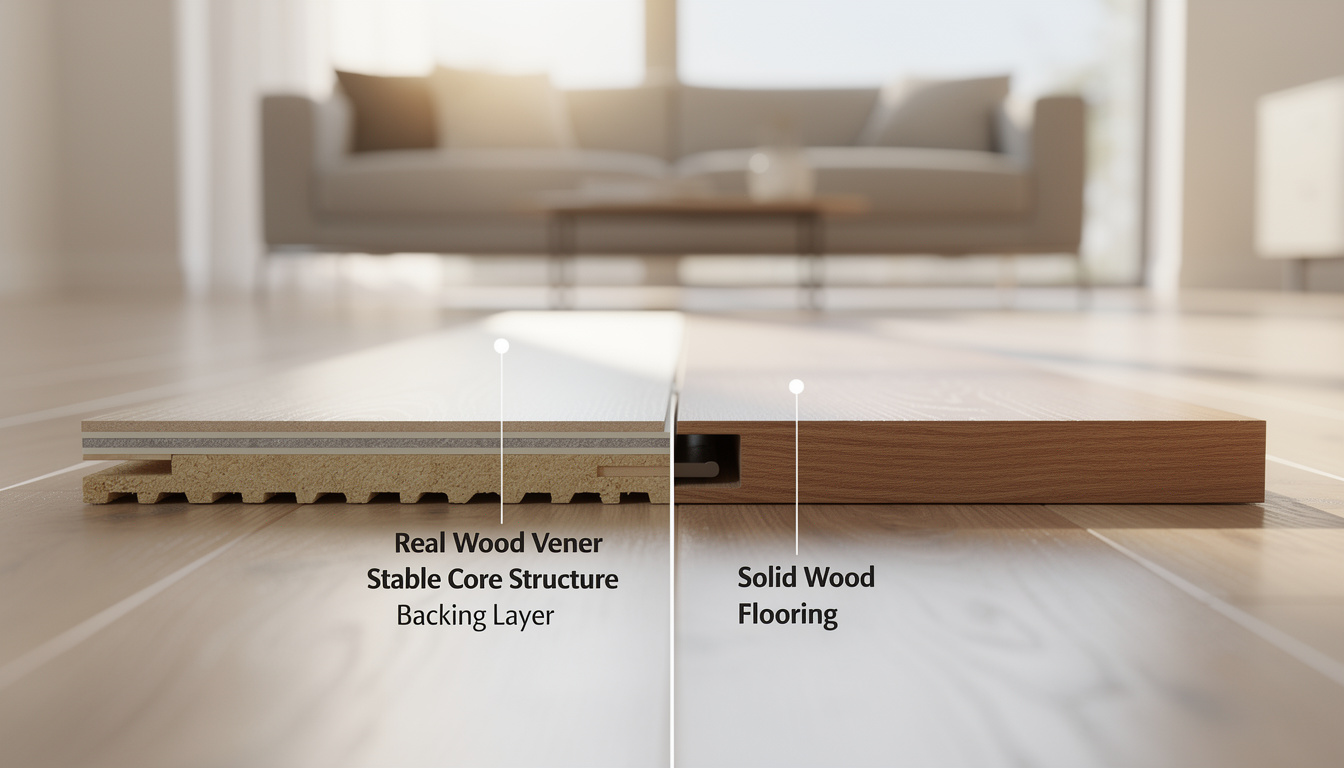
The core difference is structural. Solid wood flooring is exactly what it sounds like: each plank is one piece of hardwood throughout its thickness. If you cut it in half, it’s wood all the way down. That simplicity is part of the appeal, and it’s why solid has a long history in older homes—think pre-war apartments or century houses where floors have already been refinished a few times and keep going.
Engineered wood, on the other hand, is a sandwich. The top is a real hardwood veneer (oak, walnut, maple—whatever species you choose). Under that, you’ve got a core made from plywood or high-density fiberboard arranged in cross-grain layers. Those crisscrossing layers are the whole trick: they reduce how much the plank expands and contracts when humidity changes. That’s why engineered tends to stay flatter and calmer in environments where solid might cup or gap.
What “layers” actually do in real homes
Wood moves. That’s not a defect; it’s nature. In a humid summer, boards swell. In a dry winter, they shrink. With solid, that movement happens mostly across the width of the plank, and it can show up as seasonal gaps or slight cupping. In Maya’s townhouse, the first floor sits over a slightly damp crawlspace; her contractor worries that solid will react more dramatically during spring and fall.
With engineered, the cross-laminated layers resist that side-to-side movement. So while engineered isn’t “immune” to climate, it’s generally more forgiving. This is especially relevant in regions with big swings—hot humid summers and dry heated winters—where flooring stability becomes a lifestyle issue, not a theoretical one.
Appearance: the look is real, the feel is nuanced
Here’s the part that surprises people: the surface of engineered can be the same species and grade as solid, because it often is. That’s why the appearance can be nearly indistinguishable once installed. The differences show up in subtler ways—like edge profiles, how “heavy” the plank feels in hand, and sometimes how it sounds underfoot depending on underlayment and subfloor.
Maya samples a 7.5-inch wide white oak in both types. Visually, both are gorgeous. The deciding factor becomes not the grain, but what’s underneath: subfloor condition, expected humidity, and how much disruption she can tolerate during installation. That’s the theme you’ll keep seeing: the build drives behavior.
Insight: If you only judge by a photo, you’ll miss the point—construction is what determines how your flooring behaves over time.
Durability and Lifespan: Refinishing, Wear Layers, and Real-World Abuse
People love to ask, “Which one lasts longer?” The honest answer: it depends on what kind of long you mean. Day-to-day durability—resisting dents, scratches, and scuffs—has a lot to do with the species (oak vs maple), the finish (aluminum oxide vs oil-based), and the hardness rating, not just whether it’s engineered or solid. But long-term recoverability is where the categories separate.
Solid wood can typically be sanded and refinished multiple times because the entire plank is the wear layer. If your dog destroys a section, or if you hate the stain color in ten years, you have options. It’s the classic “reset button” floor. In older neighborhoods, it’s common to see solid floors that have been refinished three or four times and still have life left.
Engineered wood can also be refinished, but the limit is the thickness of the top veneer (often called the wear layer). Some engineered products have a thick sawn veneer that handles one to three refinish cycles. Others are thinner and are basically “screen and recoat” only—meaning you refresh the finish without heavy sanding. If you’re shopping engineered, this is not a minor spec; it’s a future-proofing decision.
Case study vibe: Maya’s dog, the rolling chair, and the hallway
Maya’s hallway gets hit hardest: claws, gravel from shoes, and a rolling desk chair that always ends up in the same track. A solid white oak floor will take the same surface abuse as an engineered white oak floor with the same finish, but the repair path differs. With solid, she can sand deeper to remove damage. With engineered, she needs to know whether she has enough veneer to do that safely.
In practice, many families don’t refinish often. They live with patina and do area rugs. But if you’re the type who wants the floor to look “new” every decade, solid gives you more runway.
Moisture resistance isn’t just about spills
Moisture resistance is a loaded phrase. Neither type loves standing water, and both can be ruined by a dishwasher leak if it sits long enough. The difference is how they handle ongoing humidity and slight moisture exposure. Engineered’s layered core tends to be more dimensionally stable, while solid is more reactive.
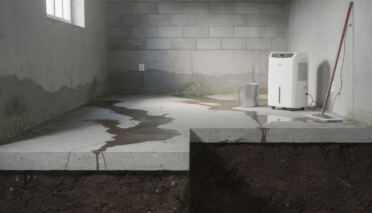
That means engineered is often the safer bet in basements, slab-on-grade homes, or spaces where you can’t guarantee perfect humidity control. Maya’s contractor points out that her front entry gets humid in spring; engineered is less likely to gap dramatically in winter and swell in summer if indoor humidity isn’t perfectly managed.
Insight: For true longevity, think beyond scratches—your future refinishing options and your home’s moisture profile matter more than most showroom conversations.
If you’re wondering how all this affects the actual install day (and the week after), that’s where things get really practical.
Installation Differences: Subfloor, Tools, Time, and How Messy It Gets
Installation is where engineered often feels like the “modern” choice. Solid wood is traditionally nailed or stapled to a wood subfloor. That’s a proven method, but it’s not always compatible with every home—especially condos with concrete slabs, basements, or radiant heating setups.
Engineered wood is flexible: it can be nailed, glued, or floated (click-lock systems). Floating floors can be faster and sometimes cheaper on labor, and they’re common in renovations where you want less disruption. Glue-down engineered is popular over concrete because it avoids building a plywood subfloor system—though glue-down can be messy and demands careful prep.
Subfloor prep: the invisible line item that changes everything
Here’s a budget and sanity tip: subfloor condition can dominate the project. If the subfloor is uneven, squeaky, or damp, your floor—engineered or solid—will suffer. Maya’s townhouse has some slope (old-house charm, until you install flooring). Her installer explains that self-leveling compound and moisture testing might be needed either way, but the tolerance and approach differ depending on the install method.
Solid nailed down can sometimes “bridge” minor imperfections, but it can also telegraph bumps and create squeaks if the subfloor isn’t tight. Floating engineered needs a flatter surface, or you’ll feel bounce and hear clicks. Glue-down engineered needs the right adhesive and a clean, properly primed substrate, or you risk bond failure. None of that is glamorous, but it’s where good installs are won.
Radiant heat and basements: where engineered usually shines
Radiant heat systems cycle temperatures, which can dry wood and increase movement. Engineered’s layered construction makes it a frequent recommendation in these setups. Basements (even finished ones) tend to have higher ambient humidity and occasional moisture events; engineered again tends to be chosen for better stability, though you still need vapor mitigation if the slab is emitting moisture.
Solid wood in a basement? It’s not automatically impossible, but it’s a higher-stakes decision that requires serious moisture control, acclimation, and a very competent installer. That’s a lot to ask of a busy household.
Quick comparison table (with the “yeah, but…” context)
| Category | Engineered wood | Solid wood |
|---|---|---|
| Installation options 🛠️ | Glue, nail, or float ✅ | Mainly nail/staple to wood subfloor 🔩 |
| Moisture resistance 🌧️ | Better stability from cross layers 👍 | More movement with humidity swings 🌡️ |
| Durability over decades 💪 | Refinish depends on veneer thickness 📏 | Multiple full refinish cycles possible ♻️ |
| Cost factors 💸 | Material varies; labor can be lower with floating ⏱️ | Material can be higher; labor depends on site conditions 🧾 |
| Appearance 👀 | Can match solid when using same species/grade ✨ | Classic look and feel; broad plank options 🌳 |
| Maintenance day-to-day 🧽 | Similar cleaning habits; avoid soaking 🚫🪣 | Similar cleaning habits; watch seasonal gaps 🧼 |
Insight: The best floor on paper can become the worst floor if it doesn’t match your subfloor and your home’s moisture reality.
Next up: the money side—because the invoice is never just “price per square foot.”
Cost Breakdown: Material, Labor, Underlayment, and the Sneaky Long-Term Math
Talking cost is where people get burned, mostly because they focus on the plank price and ignore everything orbiting it. Two floors can both be “$6 per square foot” and still end up thousands apart once you factor in subfloor prep, underlayment, trim, transitions, adhesive, delivery, waste factor, and labor rates in your area.
Engineered wood spans a huge price range. Entry-level engineered can be cheaper than solid, but premium engineered (wide planks, thick wear layer, high-end finishes) can cost as much or more. Meanwhile, solid wood is often priced higher for certain species, but it can also be surprisingly competitive in classic red oak or maple, especially in standard widths.
Where engineered can save money (and where it doesn’t)
Engineered can reduce labor costs when the install method is faster—like click-lock floating systems in a straightforward space. If you’re installing over concrete, engineered can also avoid the cost of building a plywood subfloor, which can be a major line item. That’s why builders and renovators reach for engineered so often: it solves constraints without turning the project into a construction saga.
But engineered can also add costs. Glue-down installs require adhesive (not cheap), moisture barriers, and extra time. Some premium engineered products demand very specific adhesives and strict site conditions to keep warranties valid. If your slab needs moisture mitigation, that’s another expense—though solid would face similar or worse challenges there.
Long-term math: refinishing, replacements, and resale vibes
This is where Maya gets practical. She plans to stay for at least 12 years. If she installs solid, she’s paying for a floor that can be sanded multiple times, which could be a financial advantage if she wants to refresh before selling. If she installs engineered with a thick wear layer, she may still get at least one full refinish—enough for her timeline. If she chooses thin-veneer engineered, she might be locking herself into replacing planks or the whole floor if heavy wear shows up.
Resale value is nuanced. Some buyers love the phrase “solid hardwood,” but most respond to what they see: condition, style, and consistency. A beat-up solid floor isn’t magically better than a pristine engineered one. The real win is choosing a product that will look good with normal life happening on it.
A practical checklist to avoid budget surprises
- 📐 Measure accurately and add a waste factor (often 7–12%, higher for herringbone).
- 🧱 Ask what subfloor prep is included (leveling, squeak fixing, moisture tests).
- 🧴 For glue-down, price the adhesive and moisture barrier system upfront.
- 🚪 Don’t forget trims, transitions, vents, and thresholds—small stuff adds up fast.
- 📜 Check warranty conditions (humidity range, approved underlayments, cleaning rules).
Insight: The cheapest square foot rarely wins; the best value is the floor that fits your site conditions without triggering expensive “fixes” later.
With the budget clearer, the next question is how you actually live with the floor—cleaning, repairs, and the everyday habits that keep it looking sharp.
Maintenance and Appearance Over Time: Patina, Repairs, and Keeping It Looking Good
Maintenance sounds boring until you realize it’s basically the difference between “this floor always looks great” and “why does it look tired already?” The good news: engineered and solid hardwood have pretty similar daily care needs. The finish is the frontline defense, and most modern finishes are tough when treated correctly.
The basics are consistent: vacuum with a soft brush, use felt pads under furniture, and wipe spills quickly. Avoid soaking the floor with water, steam mops, or harsh cleaners that leave residue. If you want to keep it casual, think of it like caring for a nice pair of leather shoes—regular light care beats occasional panic-cleaning.
Patina: the “lived-in” look isn’t the enemy
Both types will develop patina. Sunlight changes color, especially in species like cherry or walnut. Traffic lanes show micro-scratches. That’s normal. The trick is picking a finish and texture that hides wear gracefully. Wire-brushed or matte finishes can camouflage daily scuffs better than glossy, mirror-like coatings.
Maya chooses a matte finish because she knows her dog will leave tiny marks no matter what. She’d rather have a floor that looks consistently good than one that looks perfect for two months and then drives her crazy.
Spot repairs: engineered vs solid in the real world
Minor scratches are often fixable with repair kits, regardless of type. Deeper damage is where differences show. With solid wood, you can sand and refinish a larger area more aggressively, which can make blending easier. With engineered wood, you may be limited to lighter sanding, meaning plank replacement becomes more common when damage is severe.
That said, plank replacement can be straightforward if you have spare material and the floor is floating. Glue-down plank replacement is possible too, but it’s more surgical and typically costs more in labor.
How to choose for your vibe (not just specs)
Appearance is not just species—it’s plank width, grade, and how consistent you want the look to be. If you like a clean, modern aesthetic, you might prefer a more uniform grade with fewer knots. If you want character, you’ll like rustic grades with more variation. Both engineered and solid offer those looks.
One underrated factor: sound and feel. Floating engineered floors can sound slightly more hollow if the underlayment is cheap or the subfloor isn’t flat. A well-installed floor—engineered or solid—feels grounded. If sound matters, invest in better underlayment or consider glue-down in certain spaces.
Insight: The best-looking wood flooring isn’t the one with the fanciest label—it’s the one whose finish, texture, and repair path match your daily life.
Can engineered wood be refinished like solid wood?
Yes, but it depends on the thickness of the top wear layer. Thick-veneer engineered wood can handle one or more full refinishes, while thin-veneer products are usually limited to a light screen-and-recoat. Solid wood can typically be sanded and refinished multiple times because it’s wood all the way through.
Which is better for moisture resistance: engineered wood or solid wood?
Engineered wood usually has better moisture resistance in the sense that it’s more dimensionally stable thanks to its cross-grain layers, so it’s less likely to warp or gap with humidity swings. Neither type likes standing water, so leaks still need fast cleanup and proper moisture control.
Is solid wood flooring always more expensive?
Not always. Cost varies by species, plank width, finish, and local labor. Solid can be competitive in common species (like red oak), while premium engineered wood can be pricey. The total project cost also depends on subfloor prep, installation method (glue, nail, float), and accessories like underlayment and trim.
What installation method is easiest for a DIY project?
Many homeowners find click-lock engineered wood easier because it can be installed as a floating floor with fewer specialized tools. Solid wood usually requires nailing or stapling and careful acclimation and subfloor work. For any flooring, getting the subfloor flat and dry is the real make-or-break step.