In a quiet home, you don’t “hear” the space—you hear what you choose to hear. But in most real-life apartments and open-plan houses, sound has a way of spilling everywhere: a neighbour’s footsteps overhead, a TV that feels louder than it should, a dining room that turns into an echo chamber the minute friends start talking. The sneaky part is that flooring sits right at the crossroads of all that, shaping room acoustics inside a space and influencing how much noise travels between levels. It’s not just décor; it’s physics, comfort, and sometimes even neighbour diplomacy.
What makes this topic surprisingly practical is that you don’t need a recording studio mindset to get big improvements. A thoughtful mix of floor materials, smart floor design, and the right layers underneath can sharpen clarity in a home office, calm down a lively living room, and deliver meaningful noise reduction in multi-unit buildings. The goal isn’t “silence” (that’s unrealistic); it’s sound insulation where it matters, plus vibration damping where it counts—so everyday life feels less chaotic and more comfortable.
En bref
- 🔊 Home acoustics depends a lot on what your floor does with sound: reflect it, absorb it, or pass it on.
- 👣 Two big enemies: airborne noise (voices, music) and impact noise (footsteps, dropped items).
- 🧩 A floor is a system: finish + subfloor + underlayment. The underlayment often delivers the biggest “wow” for noise reduction.
- 📏 Look for acoustic performance metrics: STC for airborne sound, IIC for impact sound—aiming around 50+ is common for multi-family comfort.
- 🪵 Hard surfaces can look amazing but increase reflections; softer/resilient options usually improve vibration damping and comfort.
- 🎬 For media rooms and open-plan spaces, combining rugs, panels, and the right floor choice beats chasing “perfect” soundproofing.
How Flooring Shapes Home Acoustics: Reflection, Absorption, and Transmission
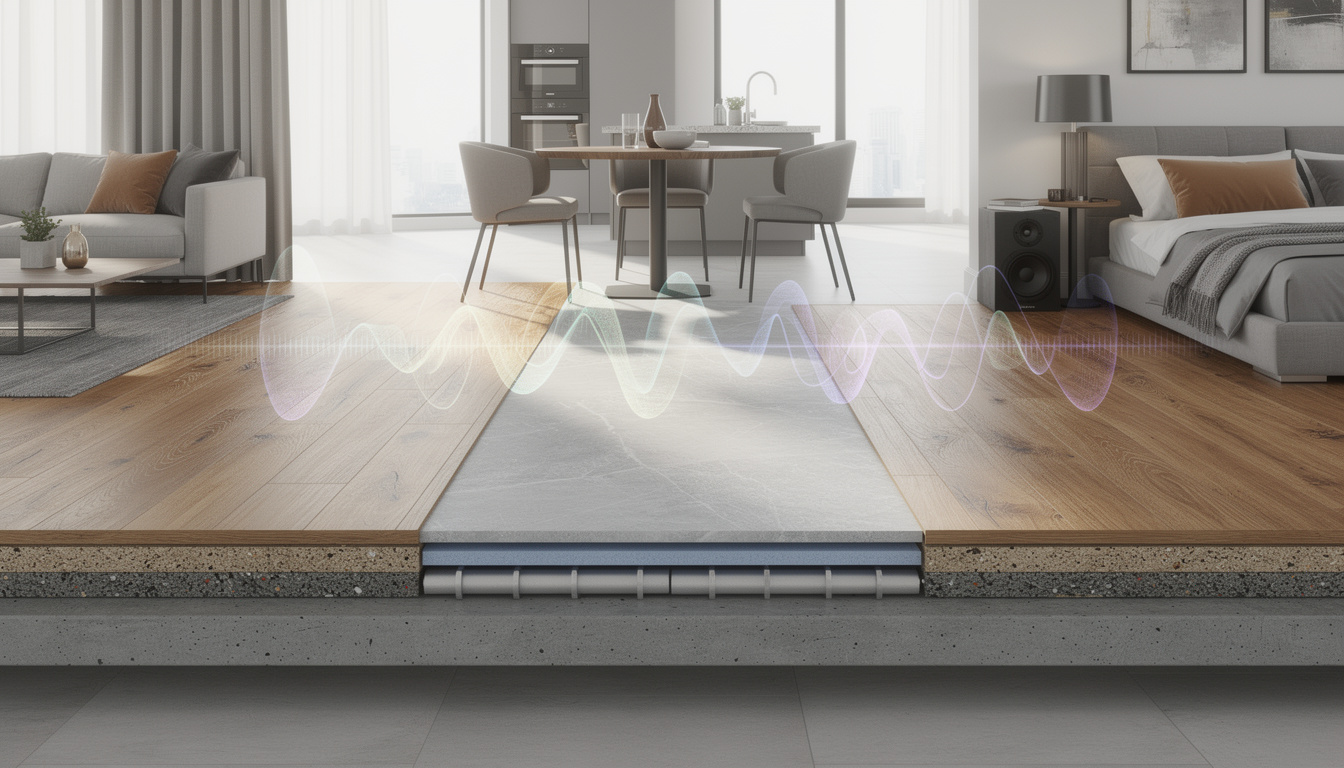
Think of a room like a small sound arena. Every time someone speaks, sound waves hit surfaces and do three things: they bounce back, they get soaked up, or they push through into the structure. That’s why home acoustics isn’t only about speakers and curtains—it’s also about what’s under your feet. The same conversation can feel crisp and intimate in one living room, and harsh or “shouty” in another, even with identical furniture, simply because the floor materials behave differently.
Hard surfaces—tile, polished concrete, stone, many hardwood installs—tend to reflect more energy. That reflection can make a room feel lively, which is great for a party, but it can also create a noticeable flutter echo in empty or minimalist spaces. Softer surfaces, on the other hand, typically absorb more energy, reducing the buildup of reflections and smoothing out harshness. This is why a bedroom with carpet often feels calmer, while a bare-tile living room can sound like it’s adding a “reverb effect” to daily life.
Airborne noise vs. impact noise: why the floor is blamed for both
Most people talk about noise like it’s one big thing, but floors deal with two different problems. Airborne noise is what travels through the air—voices, TV audio, music, traffic sneaking in through windows. Floors affect this by changing how much sound reflects back into the room and by contributing (a bit) to how much sound passes through the floor assembly.
Impact noise is the stompy stuff: footsteps, a kid dropping a toy, a chair scraping. This is where floors get the worst reputation in apartments because the sound doesn’t just stay in your unit; it turns into vibration that travels through the building structure. If you’ve ever heard the upstairs neighbour’s “heel strike” like it’s in your own ceiling, you’ve met the impact problem firsthand.
Material properties that decide acoustic performance
The performance comes down to a few traits. Density helps block certain transmissions, but density alone doesn’t solve impact issues. Hardness affects how much the surface “rings” and how quickly it returns energy back as sound. And elasticity is the star for impact control: more “give” usually means better vibration damping. Texture also plays a role; a slightly textured finish can scatter reflections and soften the perceived sharpness in room acoustics.
Here’s a quick example from a fictional resident: Maya, who works from home in a compact apartment. She swapped a glossy tile living area for a resilient plank floor, and the biggest change wasn’t even neighbour noise—it was the way her Zoom calls sounded. The room stopped “throwing” her voice back at her, and the space felt less tiring. That’s a real-life reminder: floor design affects how you feel in a room, not just what you hear.
Next up, we’ll get more practical: how to read the numbers and specs that separate marketing from real sound insulation.
Acoustic Ratings That Actually Matter: STC, IIC, and Real-World Soundproofing
If you’ve ever shopped for acoustic products, you’ve seen big claims: “quiet,” “silent,” “premium soundproofing.” In practice, meaningful soundproofing needs measurements. For floors, two ratings show up again and again because they map to the two noise types people complain about in apartments and multi-story homes.
STC (Sound Transmission Class) describes how well a floor/ceiling assembly reduces airborne sound. It’s about speech bleeding through, or music turning into muffled background noise in the unit below. IIC (Impact Insulation Class) describes how well the assembly resists impact sound—those footsteps and dropped objects that become structure-borne vibration. In multi-family projects, “good” performance is often discussed around 50+ for both, because below that, complaints tend to spike.
Why a floor is a “system,” not a surface
This is where people get tricked: a single plank or tile doesn’t carry an STC/IIC rating by itself in a meaningful way. Ratings usually apply to a tested build-up: subfloor + underlayment + finish + ceiling below (and sometimes insulation in the cavity). So when you compare options, compare systems, not just the top layer.
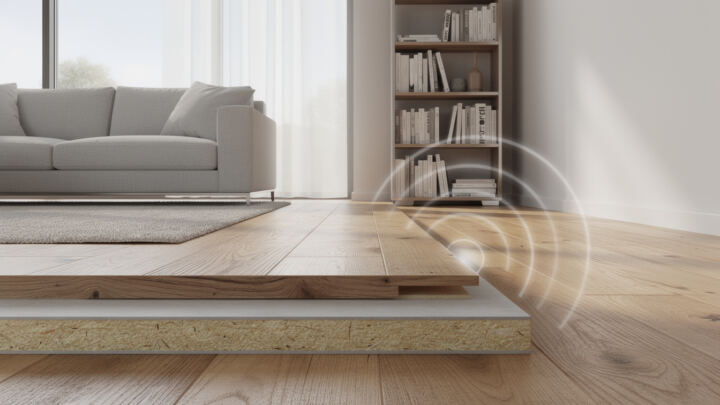
That’s also why two identical floors can sound totally different. One installer might glue directly to concrete with a thin adhesive layer. Another might float the floor on a resilient underlayer that decouples it from the slab. That “decoupling” is a fancy way of saying: vibrations have a harder time crossing the boundary, boosting vibration damping and reducing impact transfer.
A table you can actually use when shopping
| Metric 📏 | What it measures 🔊 | “Good” target in apartments ✅ | Main everyday win 🏠 |
|---|---|---|---|
| STC 🎧 | Airborne sound blocking (speech/music/TV) | 50+ (commonly used comfort benchmark) | More privacy and less “heard-through-the-floor” noise |
| IIC 👣 | Impact sound reduction (footsteps/drops) | 50+ (common multi-family goal) | Fewer complaints about stomping and dragging chairs |
A quick case: the “hollow laminate” problem
Let’s bring Maya back. Her neighbour installed laminate without a proper acoustic layer, and the result was that classic “click-clack + hollow drum” effect. The laminate wasn’t evil; it was the missing underlayment and the wrong installation method for the building. When the neighbour later added a better acoustic underlayer during a renovation, the improvement was obvious—especially in IIC-type noise, because the floor stopped injecting as much vibration into the slab.
So yes, numbers matter—but only if you connect them to the system you’re building. Now we can talk about materials with less hype and more clarity: which floor materials typically help, and where their weaknesses show up.
For a deeper visual explanation of STC and IIC, it helps to watch a walkthrough before you buy anything.
Best Floor Materials for Noise Reduction: Vinyl/SPC, Wood, Laminate, and Beyond
When people ask for the “best” floor for noise reduction, they’re usually really asking: “How do I stop hearing my neighbours and stop my neighbours hearing me?” The honest answer is that every finish has trade-offs. Some options naturally soften impact energy. Others look gorgeous but need help from layers below to avoid turning into a giant soundboard.
Resilient flooring (vinyl and SPC): the impact-friendly crowd-pleaser
Resilient options like luxury vinyl and SPC (stone-plastic composite) have become popular partly because they can feel quieter underfoot than hard tile. Their multi-layer construction and slight “give” can improve vibration damping, especially for footfall noise. In real apartments, that often translates to fewer sharp heel clicks and less chair-scrape drama.
They also tend to be water resistant and forgiving in kitchens and entryways—useful if you don’t want acoustic comfort to come with constant maintenance stress. The catch is that thinner products may still benefit massively from a dedicated acoustic layer, especially if the subfloor is uneven or if the building is prone to structure-borne noise.
Engineered wood vs solid timber: warm look, careful detailing
Wood floors bring a natural warmth that a lot of people love. In room acoustics, wood can add a pleasant “liveliness,” but it can also increase reflections compared to softer finishes. Engineered wood, because of its layered build, often pairs nicely with acoustic underlays in floating installations. Solid timber is dense and can help with some airborne transmission, but if it’s installed in a way that couples it tightly to the structure, impact noise can still travel.
If you want the wood vibe without the “tap-tap echo” vibe, the secret usually isn’t the wood species—it’s the assembly: underlayment choice, perimeter isolation gaps, and avoiding rigid bridges that carry vibration into walls.
Laminate: affordable, durable, but picky about what’s underneath
Laminate is popular because it’s cost-effective and tough against scratches. Acoustically, it’s the classic “middle ground” that can swing either way. With a weak foam layer, it may sound hollow and bright. With a serious acoustic underlayment designed for higher IIC performance, laminate can feel dramatically more civilized.
One practical tip: if you’re choosing laminate in an apartment, budget for the underlayer as if it’s part of the floor, not an optional accessory. It’s the difference between “this looks nice” and “this feels good to live with.”
Outdoor composite decking: not an indoor fix, but it changes the soundscape
Composite decking on balconies or patios won’t magically solve indoor sound insulation, but it can reduce outdoor reverberation and footstep noise on exterior slabs. For ground-floor units or homes where the balcony is basically an extra room, that can make the overall sound environment feel calmer—less slap-back from hard concrete, and fewer sharp impacts when people walk outside.
Want to see common flooring assemblies and what makes them quieter? This kind of visual demo helps you spot the small details that matter.
Next, we’ll zoom into the real MVP: the underlayment layer that often decides whether your floor “sounds expensive” or “sounds annoying.”
The Underlayment Effect: The Unsung Layer That Boosts Sound Insulation
If flooring is the outfit, underlayment is the tailoring. People skip it because it’s invisible, then spend years living with clacky steps and neighbour complaints. In apartments, adding an acoustic underlayer between the subfloor and the finish is one of the most reliable ways to upgrade acoustic performance without redesigning the whole space.
What underlayment actually does (in normal-person terms)
An acoustic underlayer acts like a buffer. It absorbs a chunk of impact energy so your footstep doesn’t turn into a vibration that shoots through concrete, joists, and ceiling boards. That’s vibration damping in action: less structural shake, less transmitted thud.
It can also support airborne control indirectly by improving the overall assembly and sealing small inconsistencies, though its biggest “headline” benefit is usually impact control (IIC). The result is a home that feels less reactive—fewer sudden noises, less sharpness, less fatigue.
Where underlayment pays off the most
- 👟 High-traffic corridors: repeated footsteps add up fast, especially in long hallways.
- 🪑 Dining areas: chair movement is constant and surprisingly loud on hard surfaces.
- 🏢 Home offices: less footfall noise improves focus and call clarity—an underrated win.
- 🧒 Kids’ zones: dropped toys are basically impact-noise generators.
A mini story: the “quiet sanctuary” renovation that didn’t require a miracle
Maya’s cousin Arjun renovated a BTO-style apartment (the kind where neighbour noise can become a daily topic). He assumed he needed thick carpet everywhere, but he didn’t want the look or the upkeep. The compromise was a resilient plank floor with a proper acoustic underlayment rated for strong impact reduction, plus strategic area rugs where sound tended to bounce (near the sofa and under the dining table).
The result wasn’t absolute silence—because buildings are buildings—but the “thump and tremor” feeling from upstairs softened noticeably. More importantly, Arjun stopped tiptoeing around his own home at night, which is a pretty good quality-of-life metric if you ask anyone who’s lived in close quarters.
Installation details that quietly make or break soundproofing
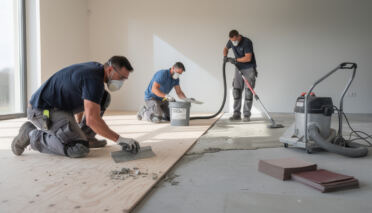
Even the best underlayment can be sabotaged by sloppy details. Rigid connections at the edges can create sound bridges. Gaps, uneven subfloors, and compressed patches can create noisy “hot spots.” A good installer treats the perimeter carefully, keeps the assembly consistent, and respects expansion gaps so the floor doesn’t bind and transmit vibration.
With the underlayer handled, the next step is matching flooring choices to specific rooms—because a home theater, an open-plan kitchen, and a bedroom don’t want the same acoustic personality.
Room-by-Room Flooring Strategy for Better Room Acoustics in Real Homes
Most homes aren’t acoustically uniform. You don’t use your kitchen like a library, and you don’t want your bedroom to feel like a train station. The trick is to treat floor design like a room-by-room decision, not a one-choice-for-everywhere rule. That’s where you get better home acoustics without compromising your style.
Open-plan living: controlling sound travel without killing the vibe
Open layouts are great for light and flow, but they also let sound roam freely. Hard flooring across a big open space can turn conversation into a constant wash of reflections. A resilient floor can reduce the “sharpness,” but you often need zoning: rugs, runners, and furniture placement that breaks up reflections and reduces the sense of echo.
A practical approach is to keep a consistent finish for visual continuity, then use textiles and soft furnishings to tune the room. That way you get the look you want, while the acoustics feel less chaotic during gatherings.
Home theater and listening rooms: clarity beats dead silence
For media rooms, the goal isn’t to absorb everything. You want controlled reflections so dialogue stays intelligible and bass doesn’t smear. Carpet can help, but so can resilient flooring paired with thick rugs placed strategically. If you go with hardwood or laminate for aesthetics, you’ll want to counterbalance with acoustic panels or heavy curtains—because a reflective floor can push the room into “too live” territory.
One underrated tactic is isolating the seating area acoustically: a big rug with a dense pad, plus soft elements on first reflection points. It’s not about turning your living room into a studio; it’s about avoiding that distracting “echo-on-everything” effect.
Bedrooms: where sound insulation is basically self-care
Sleep and noise are enemies. Bedrooms benefit from finishes and layers that reduce footfall noise and soften in-room reflections. Resilient floors can work well, and adding a rug by the bed is a simple move that pays off immediately. If the bedroom sits under a neighbour’s living room, prioritizing IIC improvements in your ceiling/floor assembly (where possible) is even more important—but within your unit, floor underlayment still helps reduce how much noise you create, which matters in shared buildings.
Radiant floor heating: acoustic choices still matter
Homes with radiant heating add another constraint: you want materials and underlayers compatible with heat transfer. That doesn’t erase acoustic needs; it just means you select underlayments designed for the system so you don’t trade thermal performance for noise control. The best outcomes come from treating heating, durability, and soundproofing as one integrated plan.
To wrap the practical side, people always end up asking the same few questions when they’re choosing materials and trying to avoid buyer’s remorse—so let’s answer them cleanly.
What flooring is best for impact noise in apartments?
For impact noise (footsteps, dropped items), resilient options like vinyl/SPC paired with a quality acoustic underlayment usually perform well because they improve vibration damping. The underlayment choice and installation method often matter as much as the finish.
Does hardwood automatically make a room echo more?
Hardwood tends to reflect more sound than softer surfaces, so it can increase perceived echo in minimalist rooms. You can balance it with rugs, curtains, soft furniture, and thoughtful layout so room acoustics stay comfortable.
How do I know if an underlayment is actually good for sound insulation?
Look for tested ratings tied to a full floor/ceiling assembly, especially IIC for impact control and STC for airborne sound. Marketing terms are less useful than lab-tested data and a clear description of the intended installation (floating vs glued, concrete vs joists).
Can laminate be quiet enough for multi-unit living?
Yes, but it’s sensitive to what’s underneath. With a high-performance acoustic underlayment and correct installation, laminate can reduce the hollow sound and improve impact performance. Without it, laminate often amplifies footfall noise.