En bref
- 🔥 Warm woods and earth tones are replacing cool grays for a cozier, more lived-in vibe.
- 🌱 sustainable materials (FSC-certified timber, cork, reclaimed boards, low-VOC finishes) are becoming the default, not the “extra.”
- 🧩 floor patterns like herringbone, chevron, and updated checkerboard are back, especially in smaller “statement” rooms.
- 💧 Performance matters: vinyl planks, porcelain tile, and engineered wood win in busy homes with kids, pets, and spills.
- 🪵 Natural character is in: texture, grain, and texture and finish choices (matte/satin) that hide scuffs beat glossy perfection.
- 🎯 The smartest upgrades mix style + function: zoning with mixed surfaces, seamless transitions, and sample testing in real light.
Floors don’t just sit there and “match the walls.” They set the emotional temperature of a home—how calm a bedroom feels at night, how confident an entryway feels when guests walk in, how forgiving a kitchen is when real life happens. That’s why the current wave of modern flooring choices is less about chasing a single look and more about building a vibe that holds up: warm, tactile, durable, and a little personal. In the last couple of years, homeowners have started treating the floor like a design anchor rather than a background decision, and it shows in everything from wider wood boards to bolder tile layouts.
What’s interesting now is how flooring trends blend “pretty” with practical. People still want the romance of wood flooring and stone, but they also want floors that can survive wet boots, rolling desk chairs, and a dog doing laps at 7 a.m. That’s where high-performing options like vinyl planks, engineered wood, and new laminate flooring lines step in—less precious, more realistic. Layer in the push for eco-friendly floors and healthier indoor air, and you’ve got a category that’s suddenly full of real choices, not just styles.
Top Modern Flooring Trends: Natural Materials, Real Texture, and That “Lived-In” Look
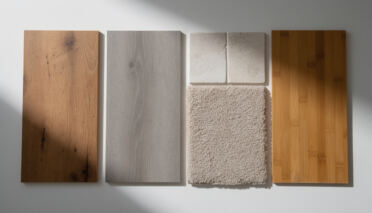
One of the biggest shifts in contemporary design is the obsession with materials that look like they came from somewhere—because they did. Natural surfaces bring variation you can’t fake convincingly for long: mineral veining in stone, micro-knots in oak, the slightly uneven warmth of bamboo. The point isn’t flawlessness; it’s character. If you’ve ever walked into a space and felt it instantly relax you, chances are the materials were doing heavy lifting under your feet.
Hardwood is still the emotional favorite, and not just because it photographs well. A real wood floor ages in a way synthetic surfaces can’t replicate. Scratches can become patina, and when the time comes, sanding and refinishing can bring it back instead of sending it to a landfill. Species like oak, maple, and walnut keep showing up because they’re flexible: they can lean Scandinavian with pale stains or go dramatic with darker finishes. The best part? They’re not tied to one decor era.
Stone has its own lane: it’s tough, cool underfoot, and feels instantly “architectural.” Marble, slate, and travertine can handle high-traffic areas when properly sealed, and they work surprisingly well across styles. A sleek kitchen with slab cabinets and a rustic entryway with vintage hooks can both carry the same stone floor—just styled differently. If you’re chasing a more relaxed look, honed stone (not glossy) is the sweet spot because it feels grounded and hides daily marks.
Bamboo deserves a mention here too because it’s basically the “quiet achiever” of natural floors. It gives you a wood-like vibe, but it regrows quickly, which helps when you’re trying to align style with sustainable materials. In open-plan spaces, bamboo can read clean and modern without feeling sterile, especially when paired with warmer wall colors and textured textiles.
Now, let’s talk texture and finish, because that’s where a lot of homes either feel timeless or instantly dated. High gloss is slipping out of favor since it shows every smudge, scratch, and dust bunny like it’s on a mission. Matte and satin finishes look calm, feel current, and are way easier to live with. Textured surfaces—wire-brushed wood, lightly tumbled stone, structured LVP—also add grip, hide minor wear, and make the room feel less like a showroom. Want a quick gut-check? If a floor makes you nervous to walk on, it’s probably the wrong finish for your lifestyle.
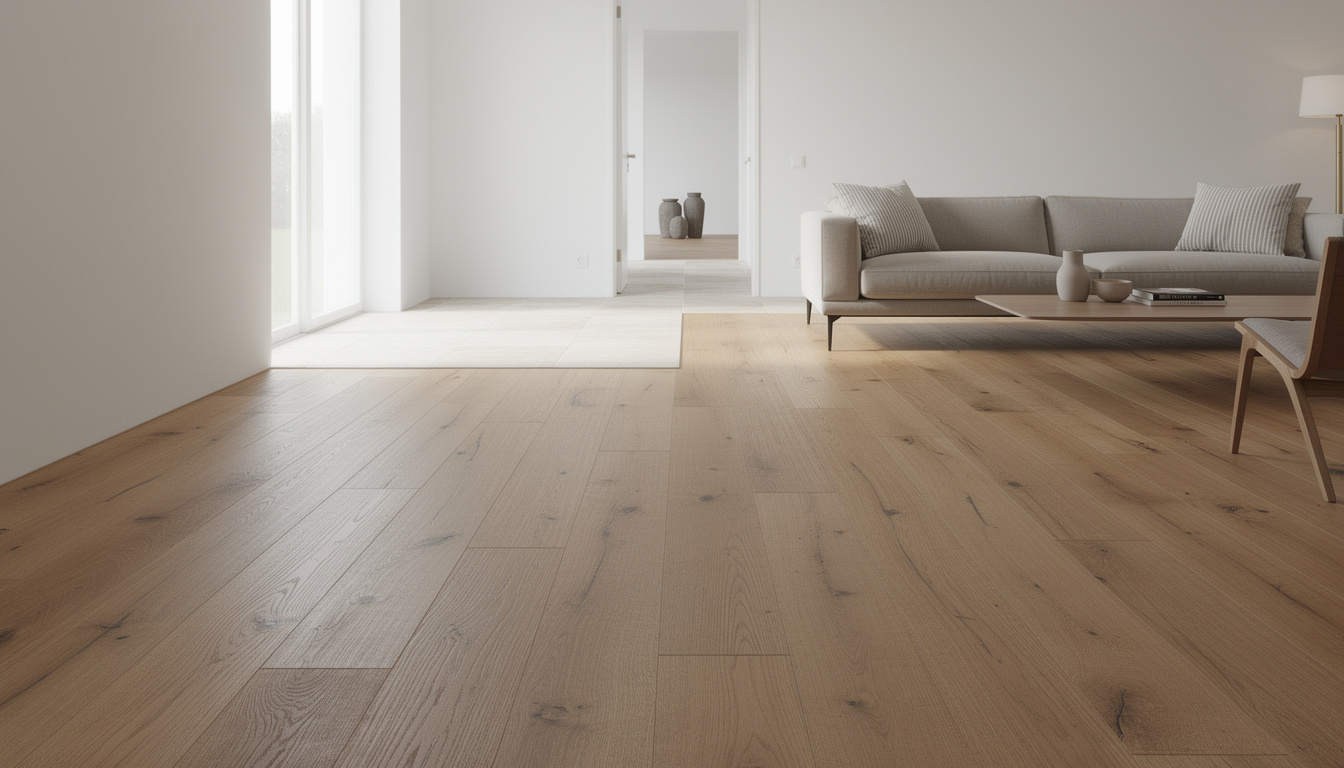
To keep it real, here’s a small case: Maya and Dev (a couple renovating a 1930s house) wanted “modern but not cold.” They picked wide-plank white oak with a matte finish and kept the baseboards classic. The result feels updated, yet the house still looks like itself—exactly the kind of balance today’s modern flooring is aiming for.
Insight: Natural materials aren’t winning because they’re trendy; they’re winning because they make a space feel human.
Eco-Friendly Floors and Healthier Homes: Sustainability Becomes the Baseline
For a while, sustainability in home renovation sounded like an optional add-on—nice if you could afford it, easy to ignore if you couldn’t. That tone is changing fast. In many 2026 remodel conversations, eco-friendly floors are simply the default expectation: people want to know what a product is made of, how long it will last, and what it releases into the air once installed. The “green” question isn’t just moral; it’s practical. A floor that lasts longer and doesn’t stink up your home with chemicals is just… a better floor.
If you’re shopping with sustainability in mind, certifications are your shortcut through the marketing fog. Look for FSC (Forest Stewardship Council) when buying wood products, which signals more responsible forest management. For indoor air quality, GREENGUARD-certified options can help you avoid materials that off-gas heavily. Pair that with low-VOC finishes and adhesives, and you’re already making a meaningful difference—especially in bedrooms, nurseries, or tight apartments where air circulation is limited.
Cork is having a quiet comeback, and honestly it makes sense. It’s harvested from the bark of cork oak trees without killing the tree, which is about as renewable as it gets. Underfoot, it has this gentle cushion that your knees notice immediately. It also naturally helps with temperature and sound, so if you’re dealing with echoey rooms or a downstairs neighbor with strong opinions, cork can change the vibe of the whole place. And no, it doesn’t have to look like a bulletin board anymore—new stains and formats can look surprisingly refined.
Reclaimed wood is another big player in the sustainable materials conversation, but the appeal isn’t just “saving trees.” It’s the story. Old timber comes with wear, nail holes, color variation, and that slightly smoky depth that new boards try (and fail) to imitate. Used well, reclaimed boards can make a modern home feel grounded. The key is to avoid the “theme park rustic” trap: keep the rest of the palette simple so the floor reads as authentic, not costume.
And let’s address the elephant in the renovation budget: sometimes you need the performance of manufactured products. The sustainability angle there becomes about longevity and maintenance. A durable floor that avoids frequent replacement can reduce waste over time. That’s why better-quality vinyl planks and updated laminate flooring are part of the conversation now, especially when they’re paired with responsible production and healthier adhesives.
Here’s a simple way Maya and Dev kept their project aligned: they used FSC-certified wood upstairs, cork in a home office for comfort, and low-VOC finishes throughout. Their contractor said the biggest “wow” was that the house didn’t have that harsh renovation smell. That’s not a tiny win; it changes how quickly a home feels livable.
Insight: The best sustainable choice is the one you won’t want to rip out in five years.
If you’re curious how designers talk about sustainability and performance in real projects, it helps to watch a few recent walkthroughs and material breakdowns.
Warm Woods and Earthy Color Stories: The Cozy Pivot in Contemporary Design
Cool gray floors had a long run. They looked clean, they felt neutral, and they played nicely with the all-white wall era. But plenty of people woke up one day and realized their home felt a bit… flat. That’s why warmer tones are pulling focus: honey oak, golden maple, and deeper walnut shades make rooms feel welcoming without requiring you to change everything else. In contemporary design, warmth isn’t about going traditional—it’s about making minimalism feel livable.
This color shift isn’t limited to wood flooring. Tile is moving into earthy territory too: clay, sand, terracotta, and muted browns that feel sun-baked rather than shiny. These tones are basically a cheat code for making a space feel grounded. Pair them with linen curtains, rattan textures, or even brushed metal fixtures, and you get a look that feels “designed” without being fussy.
There’s also a practical side to warm tones: they’re forgiving. A slightly darker, warmer surface can hide crumbs, dust, and everyday scuffs better than a pale cool gray. Matte finishes help here again, keeping glare down and letting the natural color read consistently from morning to night. If your room gets mixed lighting—bright sun in the afternoon, warm lamps at night—warm floors tend to look stable, while cooler floors can shift oddly depending on bulbs and shadows.
If you’re not ready to replace existing cool floors, you’re not stuck. A lot of people are “warming the room” instead of replacing the surface. Think warm-toned rugs, wood furniture with honey undertones, softer bulbs, and textiles like jute or wool. It’s a design trick that works because the eye reads the whole room as a palette, not just the floor. Ask yourself: do you hate the floor, or do you hate what’s happening around it?
To make this more concrete, here’s a quick guide Maya and Dev used when choosing samples. They looked at boards next to their cabinet paint, their wall color, and their biggest rug—then checked everything in three lighting conditions: morning daylight, midday brightness, and evening lamplight. It took longer, but it saved them from that classic regret where something looks perfect in a store and weird at home.
Quick comparison table: warm vs cool floors in real homes
| Factor | Warm woods / earth tones 🔥 | Cool grays / icy neutrals ❄️ |
|---|---|---|
| Overall mood | Inviting, cozy, “settled” 🏡 | Crisp, airy, sometimes sterile 🧊 |
| Pairs best with | Natural textures, cream whites, deep paints 🎨 | High-contrast black/white, very modern palettes 🖤 |
| Everyday maintenance look | Hides dust and small scuffs better ✅ | Can show dullness and debris faster ⚠️ |
| Resale flexibility | Broad appeal when kept natural 🧠 | More “dated-era” risk if very gray 📉 |
The bigger idea behind this trend is comfort. After years of high-contrast minimalism, people want homes that feel like a soft landing. Warm floors do that without requiring you to clutter up the space.
Insight: Warmth isn’t a color choice; it’s a mood strategy.
Bold Floor Patterns and Retro Comebacks: Herringbone, Checkerboard, and Tile “Rugs”
Pattern is back, and it’s not being shy about it. The smartest use of floor patterns right now is targeted: you add personality where it has the biggest impact—entryways, kitchens, powder rooms—without turning the entire house into a visual marathon. Patterned floors also do something walls can’t: they create motion and direction. A good layout can pull you through a space, making it feel bigger and more intentional.
Herringbone and chevron are the headline acts for wood layouts. They add rhythm, they look high-end, and they can be done in both light and dark tones. In a narrow hallway, a herringbone layout can create the illusion of width. In a small office, chevron can make the space feel dynamic rather than boxy. The trick is scale: small planks in a busy pattern can get chaotic, so many designers choose slightly larger elements to keep it modern.
Checkerboard tile is also having a moment again, but updated. Instead of harsh black-and-white, the new versions lean into softer pairings: cream with sage, beige with charcoal, sand with terracotta. That’s why it works in 2026 interiors—it nods to retro diners and European foyers without screaming “theme.” It’s playful, but it still feels grown-up.
Then there are encaustic-style tiles—geometric, floral, or artisan-inspired motifs that give a handcrafted feel. A popular move is using them as a framed “tile rug,” where the patterned section sits inside a border of calmer tile. You get drama without overwhelming the room, and it visually defines a zone—perfect under a dining table or in a vestibule.
One practical note: pattern doesn’t have to mean high maintenance. If you’ve ever fought tiny mosaic tiles (especially the little hex ones) you already know the pain: too much grout, too much cleaning, and sometimes a slippery surface. Larger-format patterned tiles or porcelain that mimics cement can give the same vibe with fewer grout lines and a more comfortable cleaning routine. That’s why certain micro-mosaics are fading while bold-but-manageable patterns are thriving.
Where bold patterns work best (and why)
- 🚪 Entryways: instant personality, hides dirt better than plain light tile.
- 🍳 Kitchens: defines the cooking zone, looks great with simple cabinets.
- 🛁 Bathrooms: creates a boutique-hotel feel without changing fixtures.
- 🧺 Laundry rooms: small space, big payoff—pattern turns it from boring to fun.
Maya and Dev used a checkerboard (cream + muted green) in a tiny mudroom. It became the “favorite corner” of the house—proof that you don’t need a huge budget to get a signature moment. Sometimes a little pattern does more than a lot of paint.
Insight: Pattern is the fastest way to make a room feel designed—use it where it counts.
Style Meets Function: Vinyl Planks, Engineered Wood, Porcelain, and Smarter Transitions
Let’s be honest: beautiful floors that can’t handle life are a headache. The strongest flooring trends now are built around performance—scratch resistance, moisture tolerance, and easy maintenance—without giving up style. That’s why vinyl planks (often labeled LVP) keep dominating busy households. They can convincingly mimic wood or stone, and they’re much less sensitive to spills, pet claws, or the chaos of a high-traffic kitchen. If you’ve got kids who think running indoors is an Olympic sport, LVP is basically peace of mind.
Laminate flooring has also improved a lot. Better wear layers, more realistic embossing, and smarter edge treatments make it less “plasticky” than older versions. It’s especially appealing when you want a wood look on a tighter budget, and when you’d rather spend money on other upgrades like lighting or custom storage. The big check is moisture: pick lines designed for better water resistance if you’re using it near kitchens or entry doors.
Engineered wood is the compromise that often feels like a win. You get a real wood top layer, but the construction is more stable in areas with temperature and humidity swings. That’s handy in condos, basements that are mostly finished, or homes where the HVAC situation isn’t perfectly consistent. It’s also a strong option if you love wood but want fewer worries than solid planks in tricky rooms.
Porcelain tile stays undefeated for wet zones—bathrooms, laundry rooms, mudrooms. It handles water, it handles cleaning products, and it can imitate everything from limestone to terrazzo. In a modern flooring plan, porcelain is often the “utility hero” that still looks elevated. Choose a lightly textured surface for traction, especially in bathrooms.
Mixing materials for a custom look (without it looking messy)
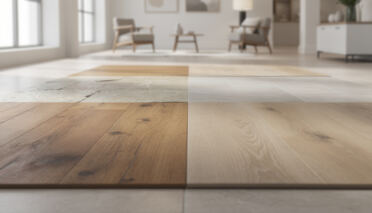
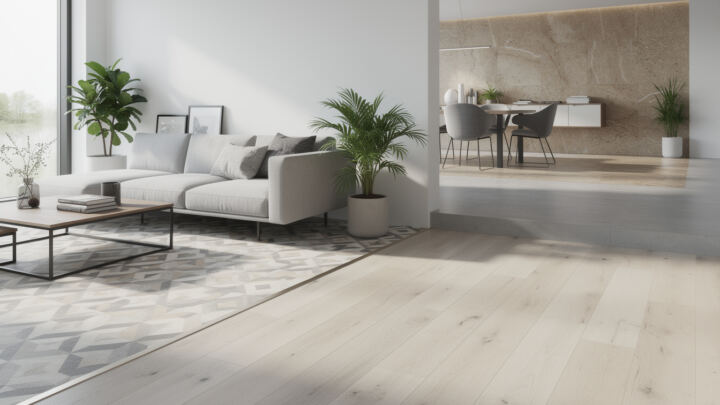
Mixing surfaces is one of the cleanest ways to make an open-plan space feel intentional. For example, you can run wood through the living and dining areas, then switch to tile in the cooking zone. Done well, it reads like zoning, not patchwork. The details matter: match the thickness so transitions are smooth, and use a threshold or seam that feels deliberate.
Carpet inlays can also work—especially if you want softness in a living room but still want durable perimeter flooring. You get comfort where you lounge, and practicality where people walk. If you lean industrial, even a slim concrete border can play nicely with wood for an entryway that takes a beating and still looks sharp.
Four looks that are starting to feel outdated (and what replaces them)
- 🩶 Gray-toned wood: replaced by honey, oak, and richer natural stains for warmth.
- ⬡ Tiny hex mosaic tiles: replaced by larger formats or textured stone-look for easier cleaning.
- 🐴 Faux barnwood: replaced by real reclaimed boards or subtler rustic finishes.
- ✨ High-gloss finishes: replaced by matte/satin for realistic everyday living.
Maya and Dev took the “function first” route downstairs: LVP that looks like oak in the family room, porcelain in the mudroom, and engineered wood upstairs. No one walking in can tell it’s a multi-material plan—because the tones and finishes were coordinated from the start.
Insight: The best floor isn’t the one you baby—it’s the one that makes your life easier while still looking great.
What’s the safest way to follow flooring trends without regretting it later?
Treat trends as accents, not a full-house mandate. Keep the core surface fairly timeless (warm wood tones, stone-like neutrals, matte finishes), and add trend-forward touches in smaller spaces like a powder room with bold floor patterns or a checkerboard tile moment. That way the home still ages well even if your taste shifts.
Are vinyl planks really a good choice for a modern home?
Yes—vinyl planks fit modern flooring goals when you need durability and water resistance, especially in kitchens, basements, and homes with pets. The key is choosing higher-quality products with realistic embossing, stable cores, and a wear layer suited to your traffic level, plus a finish that matches your contemporary design style (usually matte or low-sheen).
How do I choose sustainable materials for flooring without getting overwhelmed?
Start with two filters: certifications and chemistry. Look for FSC for wood products and GREENGUARD (or similar) for indoor air quality. Then choose low-VOC finishes and adhesives. After that, prioritize longevity: cork, reclaimed wood, and well-made engineered wood can be excellent eco-friendly floors because they last and stay comfortable over time.
What’s the easiest way to test a flooring color at home?
Bring home large samples and view them in at least three lighting situations: morning daylight, midday brightness, and evening lamplight. Place samples next to your cabinets, wall color, and a key textile (like your biggest rug). This reveals undertones fast—especially with warm woods versus cool grays.