When it comes to laundry room flooring, it’s more than just a matter of aesthetics; the right choice can significantly affect your convenience and the room’s durability. Since laundry areas are prone to moisture, spills, and high foot traffic, it’s crucial to choose flooring that meets these demands. In 2026, homeowners are leaning towards materials that combine durability, easy maintenance, and fashion-forward designs. Whether you’re remodeling or building a new laundry room, understanding the options can help you make the best choice for your space.
Flooring materials today have come a long way. You might find an array of options, from water-resistant vinyl flooring to elegant ceramic tiles that can withstand spills and humidity without sacrificing style. Alongside these popular choices, some flooring types should be avoided altogether due to their inability to handle the unique challenges of a laundry room. Let’s dive into the best flooring options available, weigh their pros and cons, and explore why choosing wisely matters.
The Best Options for Laundry Room Flooring
To simplify the decision-making process, we’ll analyze a few of the top contenders for laundry room flooring. These options have gained favor for their moisture resistant, stylish, and low-maintenance attributes. The most recommended types include:
- Luxury Vinyl Plank (LVP)
- Ceramic Tile
- Sheet Vinyl
- Laminate Flooring
- Natural Stone
Luxury Vinyl Plank (LVP)
Luxury Vinyl Plank flooring has become incredibly popular, and for good reason. Engineered with a thick, water-resistant core, LVP mimics the appearance of genuine wood or stone, providing an upscale look without the risks that come with these natural materials. This flooring is not only easy to clean, but it also comes in various styles and colors to match any decor.
For those who prioritize comfort, LVP is softer underfoot than tile or stone, making laundry days a little more pleasant. Its durability allows it to withstand the weight of heavy appliances such as washers and dryers, provided it is installed correctly. At Reliable Design-Build-Remodel, LVP has become a go-to option for many families due to its resilience and stunning visuals.
Ceramic Tile
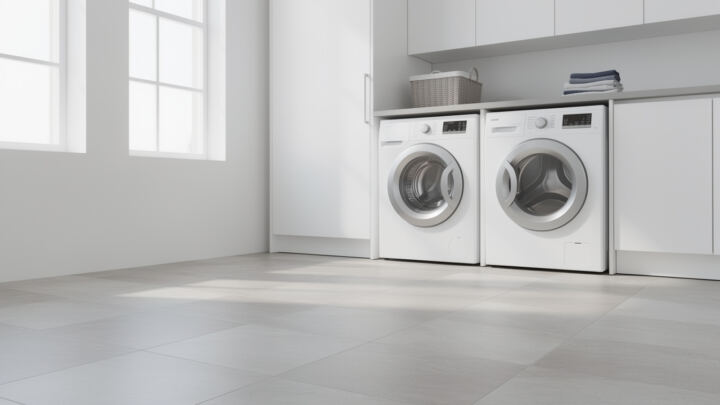
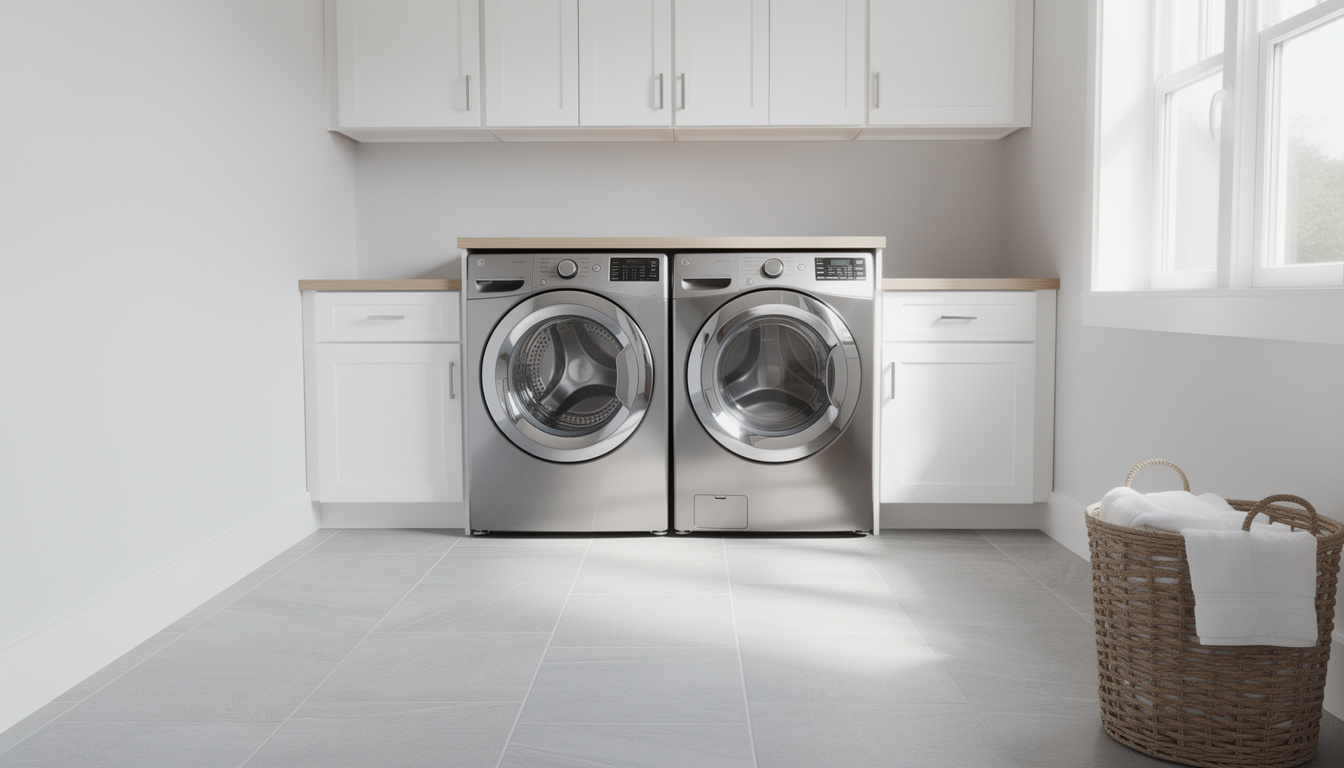
If you’re looking for something even sturdier, consider ceramic tile. Known for its durability and resistance to moisture, ceramic tiles are an excellent choice for the laundry room. They come in a variety of styles, colors, and finishes, making it easy to find a design that fits your home. Plus, ceramic tiles are incredibly easy to maintain—they only need regular sweeping and occasional mopping to keep them looking fresh.
However, there are some drawbacks. Ceramic tile can be cold to the touch, which might not be ideal if you frequently are barefoot while doing laundry. To combat this, some modern designs incorporate underfloor heating options. Additionally, while tile isn’t slippery when dry, be cautious when wet, as some finishes can be a little slick.
Sheet Vinyl
Sheet vinyl is a more budget-friendly option that provides solid resistance against water and stains. Available in large, continuous sheets, it reduces the number of seams where dirt and moisture can accumulate. This makes it a practical choice for a high-moisture area like a laundry room. Sheet vinyl can mimic the aesthetic of higher-end materials, giving you great visuals without breaking the bank.
However, it does have its limitations. If the sheet gets damaged, replacing it can be disruptive. The lifespan is generally shorter than other options, lasting about 5 to 20 years, depending on the quality and care taken. Despite this, its affordability and ease of maintenance make it an attractive choice for many homeowners.
Laminate Flooring
Yet, laminate is generally more vulnerable to moisture compared to other choices. If you opt for laminate, it’s crucial to ensure proper installation to minimize any seams that could let moisture seep in. Additionally, maintenance is pivotal; only dry cleaning methods are recommended—spills should be wiped up immediately to avoid long-term damage. Natural stone, such as slate or granite, offers unparalleled durability and adds a touch of elegance to any laundry room. It has a long lifespan, often enduring well beyond 20 years with proper care. The downside? It’s one of the most expensive options, with installation often requiring professional help due to its weight and complexity. Natural stone floors can be cold and slippery, but heating options are available, and proper sealing can protect against stains and spills. For those concerned about resale value, investing in stone can boost your home’s worth while giving your laundry a luxurious finish. While you might be tempted to choose flooring based solely on aesthetics or initial cost, some materials simply won’t hold up in a laundry environment. It’s best to avoid: Hardwood flooring is a favorite in many homes, but it doesn’t fare well in a laundry room. The natural wood can warp and swell due to moisture exposure, leading to costly repairs. Even with watering-resistant treatments, the risk of staining and damage from spills makes it far from ideal for this space. Although bamboo is known for its sustainability, it’s still susceptible to damage from moisture and spills. In a laundry room, this could lead to not only damage but the potential for squeaks and creaks as the material starts to weaken. Homeowners should look elsewhere for better options. Choosing the best flooring for your laundry room should reflect your needs, lifestyle, and aesthetic preferences. Factors to consider include:Natural Stone
Types of Flooring to Avoid
Carpet
Hardwood
Bamboo
How to Make the Right Choice for Your Laundry Room