Laminate flooring has had a real glow-up. What used to scream “quick flip” now shows up in stylish apartments, busy family homes, and even small retail spaces that need to look sharp without blowing the budget. The reason is simple: modern planks look more convincing, feel sturdier underfoot, and offer smarter surface layers that handle everyday life better than older generations ever did. Still, it’s not a magic floor. If you pick the wrong product for a damp basement, skip the right flooring underlayment, or rush the installation, you’ll find out fast where laminate draws the line.
The good news is that laminate flooring is pretty predictable once you understand how it’s built and how it behaves. The core affects water resistance, the wear layer influences durability, and the locking system decides whether your weekend DIY ends in high-fives or regret. In the sections below, we’ll follow a simple thread: a fictional homeowner, Maya, renovating a 1990s house with a dog, a teenager, and a habit of hosting friends. Her choices (and mistakes she avoids) will help you spot what matters—cost, types, design options, the right installation tools, and the kind of maintenance that keeps the floor looking “new” instead of “tired.”
En bref
- ✅ Laminate flooring is a layered product; the core and wear layer drive performance.
- 💸 Cost is usually lower than hardwood, and the look can be surprisingly high-end.
- 🧰 A smooth installation depends on prep, the right installation tools, and a compatible flooring underlayment.
- 💧 Water resistance varies a lot—some products tolerate spills, others hate humidity.
- 🧼 Easy maintenance is real, but you still need rules (especially with pets and chairs).
- 🎨 New design options include realistic textures, wide planks, and stone looks.
Laminate flooring basics: how it’s built, why it’s popular, and what “good” means
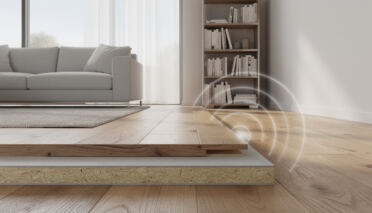
Think of laminate flooring like a layered sandwich engineered for daily wear. Maya started by cutting through the marketing terms and asking one practical question: “What am I actually buying?” That’s the right mindset, because laminate isn’t just “fake wood.” It’s a stack of materials pressed together under heat and pressure, and each layer has a job.
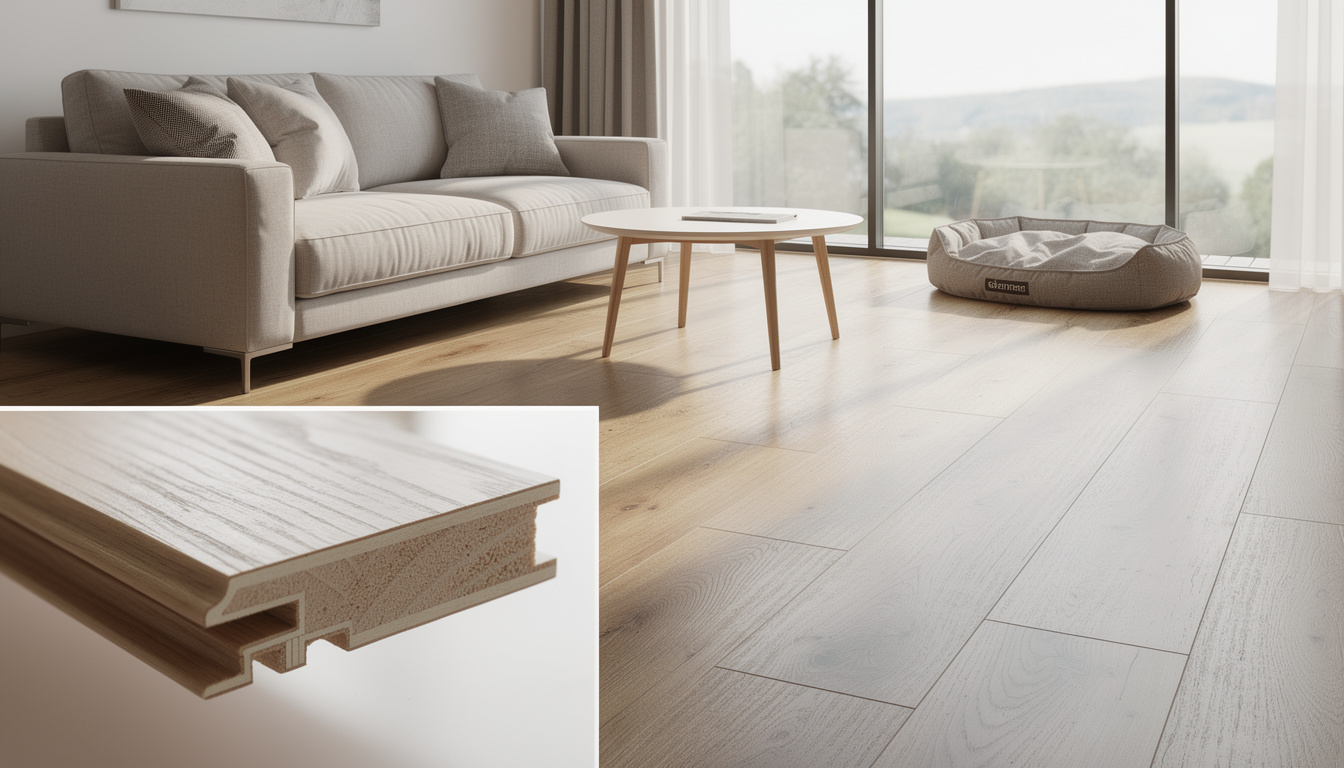
The top is the wear layer, usually a tough, transparent coating. Under that sits a printed design layer—this is where the wood grain or stone pattern lives. The core is typically a high-density fiberboard (HDF) or medium-density fiberboard (MDF), and the bottom is a balancing layer that helps stability. When you hear claims about durability, they mostly point to the wear layer and how well the core resists dents and swelling.
Types of laminate flooring: HDF vs waterproof cores, and why it changes everything
There are several types on the market, and core material is the big divider. Standard HDF laminate is strong and stable in dry areas, which makes it a solid choice for living rooms, bedrooms, and hallways. But water and HDF are complicated friends: a quick spill wiped up fast is usually fine, yet standing water can sneak into seams and cause the core to puff.
Newer “waterproof” or “water-resistant” laminates may use treated HDF, tighter seam coatings, or alternative cores. Some brands use polymer-based cores that don’t swell the same way. Maya’s dog had a habit of tipping the water bowl, so she chose a product with stronger water resistance ratings and sealed edges. The insight here is simple: don’t buy the word “waterproof” without reading what it actually covers—spills are one thing, a wet slab or a constantly damp laundry room is another.
Durability ratings and realistic expectations for a busy home
Many laminates use an AC rating (often AC3 to AC5) to indicate abrasion resistance. In plain terms, higher ratings handle more foot traffic and scratching. For Maya’s entryway, where grit from shoes can sandpaper a surface over time, she picked a higher-rated wear layer. For a guest bedroom, she didn’t need the toughest option.
Realistic expectations matter: laminate can resist scratches better than some softer hardwoods, but it can still get scuffed by dragging furniture. Also, it won’t be refinished like solid wood. You’re buying a surface engineered to last a long time as-is—so choose the right grade up front. That’s the difference between “this floor held up for years” and “why does it look worn after one season?”
Key takeaway: the “best” laminate flooring isn’t a single product—it’s the one whose layers match your room’s traffic, moisture, and lifestyle.
Laminate flooring design options: textures, colors, plank sizes, and making it look expensive
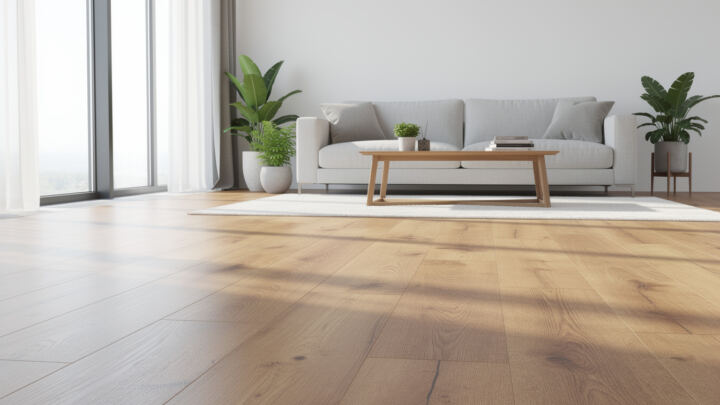
If you’re worried laminate will look flat or “printed,” you’re thinking about the old stuff. Today’s design options are the reason people keep choosing it even when they could afford something else. Maya wanted her renovated space to feel warm and a little Scandinavian—light oak visuals, matte finish, and wide planks. She got there by treating laminate like a design material, not just a cheap substitute.
Start with finish and texture. Matte surfaces hide dust and footprints better than glossy ones, and they feel more natural. Embossed-in-register textures align the grain you see with the texture you touch, which is a sneaky trick that makes a floor look more like real wood. When you’re standing in the room, that tactile realism matters more than the brand name.
Color strategy: picking tones that survive trends
Color is where people accidentally date their homes. Super-gray floors had a big moment, but they can feel cold fast. On the other hand, orange-heavy “golden oak” can scream early 2000s. Maya brought home large samples and checked them morning, noon, and at night because lighting changes everything.
A practical approach is to choose a neutral base tone (natural oak, soft walnut, gentle greige) and let furniture and paint carry the trend. That way, if your style changes, you’re not ripping out the floor to keep up. The floor is the stage, not the spotlight—unless you want it to be.
Plank format, patterns, and the “layout illusion”
Wide planks can make a room feel bigger and calmer, while narrower strips can add visual rhythm. Longer boards reduce the “busy” look because you see fewer end joints. Some laminates even offer herringbone or chevron looks with click systems designed for patterns. It’s not always cheap, but it can be a serious style upgrade without the labor of real parquet.
Maya’s trick: she ran the planks along the longest sightline from the front door to the back windows. The space immediately felt more open. And she avoided tiny repeating patterns by selecting a product with a larger print “repeat,” so the same knot didn’t show up every three boards. This is the kind of detail you notice subconsciously—your brain reads it as more authentic.
Matching trim and transitions so it doesn’t look like a DIY patchwork
Trim can make or break the whole vibe. Baseboards, quarter round (if needed), and transition strips should match the room’s style. If the laminate is modern, chunky rounded trims can look off. Maya swapped to simple, taller baseboards and used color-matched transitions only where she had to—like at the tile boundary near the powder room.
Design takeaway: great laminate doesn’t “announce itself”; it quietly supports the room’s style while handling real-life wear.
Next up is the part where most floors succeed or fail: the installation details you don’t see once the furniture is back.
Laminate flooring installation: subfloor prep, flooring underlayment, and the tools you actually need
Laminate flooring is famous for DIY-friendly click systems, but that reputation sometimes makes people sloppy. Maya nearly made that mistake when she assumed the subfloor “looked fine.” A straightedge proved otherwise: a few low spots and a slight ridge would have caused bouncing and seam stress. The funny thing is, laminate is forgiving in some ways (no glue-down for most rooms) and unforgiving in others (flatness and expansion gaps are non-negotiable).
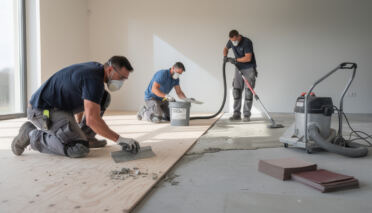
Start with subfloor prep. Whether you’re over plywood or concrete, you want clean, dry, and flat within the product’s tolerance. That often means leveling compound for dips and sanding down high seams. Skipping this step is how you end up with creaks, separation, or a “soft” feel that makes the whole floor seem cheap even if it wasn’t.
Flooring underlayment: comfort, sound, and moisture control (not a random foam sheet)
The flooring underlayment matters more than people think. It can reduce noise, add a bit of cushion, and—crucially—act as a moisture barrier on concrete. Some laminates come with attached pad, which is convenient, but you still may need a separate vapor barrier depending on the slab and the manufacturer’s rules.
Maya’s home had a concrete area in the converted den. She used an underlayment rated for vapor protection and taped seams carefully. That little detail helps with long-term durability, because moisture migration is slow and sneaky. You don’t want to discover a problem a year later when edges start to swell.
Installation tools checklist: what’s essential vs what’s nice-to-have
You don’t need a truckload of gear, but you do need the right installation tools. The goal is clean cuts, tight joints, and consistent spacing for expansion. Here’s a practical list Maya used:
- 📏 Measuring tape and a long straightedge for layout and flatness checks
- 🧱 Spacers to keep expansion gaps at walls and fixed objects
- 🔨 Rubber mallet and tapping block to seat joints without damaging edges
- 🪚 Miter saw or jigsaw for cuts (a score-and-snap cutter can work for some planks)
- 🪝 Pry bar/pull bar for tightening the last row near walls
- 🧼 Vacuum to keep debris from creating tiny bumps under planks
Nice-to-have? A laser measure for room planning and a moisture meter if you’re on concrete or doing a whole-house job. Not glamorous, but it keeps you from guessing.
Common installation mistakes (and how Maya avoided them)
One classic mistake is ignoring acclimation rules. Some laminates need time in the room to adjust to temperature and humidity. Another is failing to stagger end joints properly, which can weaken the floor’s visual flow and its stability. Maya also made sure not to pin the floating floor under heavy built-ins—floating floors need freedom to expand and contract.
And yes, door jamb cuts matter. Undercutting jambs so the plank slides under looks cleaner than hacking around it with caulk. It’s a small pro move that makes the entire job feel intentional.
Installation insight: a “floating” floor only floats well when the base is flat, the underlayment is correct, and the perimeter gaps are respected.
Cost and durability: budgeting laminate flooring like a grown-up (materials, labor, and long-term value)
People love laminate because the cost can be friendly, but the price tag on the box is only the start. Maya set a budget for materials, underlayment, trim, tools, and a little buffer for waste (because every room has weird cuts). She also compared DIY versus hiring a crew for the tricky areas like the hallway with multiple doorways.
Material prices range widely depending on thickness, wear layer quality, locking system, and whether it’s marketed as highly water-resistant. Labor varies by region and by complexity—stairs, odd layouts, and heavy prep can push costs up fast. The smart move is to get itemized estimates, not just a “per square foot” headline number.
Value isn’t just cheap: what you’re paying for in better laminate
Higher-end laminate often buys you a denser core, tighter joints, better edge treatments, and a more convincing surface texture. That translates into fewer gaps, less hollow sound, and better resistance to everyday abuse. Maya paid a bit more for the main floor where traffic is heavy and saved on a simpler product upstairs.
Durability is also about how the home is used. A quiet household with slippers will get a longer runway out of almost any decent product. A family with dogs, kids, and frequent guests should treat higher abrasion ratings as a practical investment, not an upsell.
Comparison table: laminate vs other common options
| Option | Typical cost vibe 💸 | Durability in busy areas 🧱 | Water resistance 💧 | Maintenance effort 🧼 |
|---|---|---|---|---|
| Laminate flooring | Usually budget-to-mid ✅ | High with good AC rating 👍 | Varies by product ⚠️ | Easy: sweep + damp mop 🚿 |
| Solid hardwood | Higher 💰 | Can dent/scratch, but refinishable 🔁 | Low to moderate ⚠️ | Moderate: careful cleaners 🧴 |
| Engineered wood | Mid-to-high 💸 | Good, depends on veneer thickness 🪵 | Moderate ⚠️ | Moderate 🧽 |
| LVP (vinyl plank) | Budget-to-mid ✅ | Good; can gouge under sharp loads 🧰 | Often very high 💧 | Easy 🧼 |
| Tile | Mid-to-high 💸 | Very high 🏋️ | Very high 💧 | Grout adds work 🧽 |
Long-term value: where laminate wins and where it doesn’t
Laminate wins when you want a good-looking, scratch-resistant surface for a controlled budget, especially in dry-to-normal rooms. It loses when you need true wet-room performance or when you want a floor you can sand and refinish multiple times. Maya decided her kitchen would get a higher water-resistant laminate because she’s disciplined about wiping spills. For the mudroom, she used a different material altogether.
Budget insight: spend for performance where life is rough, and save where the room is calm—your floor plan should drive your spending, not a single price per square foot.
Maintenance and water resistance: keeping laminate flooring looking sharp without babying it
One reason laminate flooring stays popular is the simple maintenance. You’re not oiling it, waxing it, or scheduling refinishing. But “low maintenance” doesn’t mean “no rules.” Maya learned a few habits that kept her floor looking clean even with a shedding dog and a teenager who somehow generates crumbs just by walking.
Daily grit is the enemy. Tiny particles act like sand under shoes and chair legs, slowly dulling the surface. A quick sweep or vacuum with a hard-floor setting does more for your floor’s long-term shine than any fancy product. Then there’s moisture: even when you buy better water resistance, it’s still smart to treat standing water like an emergency, not a vibe.
Cleaning routine that works (and what to avoid)
Maya’s routine is boring, which is exactly why it works. She vacuums twice a week, spot-cleans as needed, and uses a lightly damp microfiber mop for deeper cleaning. She avoids soaking the floor—no dripping mops, no puddles, no steam cleaners. Steam is a common “looks safe” mistake because it feels gentle, but heat and moisture can stress seams and soften edges over time.
She also avoids waxes and polishes that leave residue. Those products can create a weird haze that attracts dirt and makes the floor look streaky. If you want a nicer sheen, the better approach is simply consistent cleaning and using the manufacturer-approved cleaner when needed.
Moisture reality check: spills, humidity, and pet accidents
Let’s be real: spills happen. The difference is response time. A knocked-over glass wiped up quickly is no big deal for many products. A slow leak behind the dishwasher is where laminate can get wrecked. Maya placed a cheap leak detector under the sink and behind the fridge water line—small tech, big peace of mind.
For pet accidents, the key is speed and seam awareness. Clean promptly, dry the area, and don’t let liquid linger at plank edges. If accidents are frequent, that’s a strong signal to prioritize higher-performing products or choose a different material for that zone.
Small protection moves that seriously extend durability
- 🪑 Felt pads under chairs and tables to reduce scuffs
- 🚪 Mats at entrances to trap grit (but avoid rubber backings that can discolor)
- 🐾 Regular nail trimming for pets to minimize clicking and scratching
- 🌡️ Stable indoor humidity to reduce seasonal movement
- 🧯 Quick response to leaks—don’t “wait and see”
Maya also kept a small box of spare planks in the basement, flat and dry. If a board ever gets damaged, having the same batch can make repairs easier. That’s not paranoia—it’s just smart homeownership.
Maintenance insight: laminate lasts longest when you treat grit like sandpaper and water like a deadline.
Is laminate flooring really waterproof?
Some products are highly water-resistant, with sealed edges and tighter locking systems, and they can handle spills for a limited time. But true waterproof performance depends on the core, seam design, and the room conditions. For constant moisture (like a frequently wet mudroom), choose carefully and follow the manufacturer’s rules on underlayment and vapor barriers.
What flooring underlayment should I use under laminate?
Use the underlayment recommended by the laminate manufacturer for your subfloor type. On concrete, a vapor barrier is often required to control moisture migration. If the planks have an attached pad, you may still need a separate barrier film—always check the product instructions so you don’t void the warranty.
Which installation tools are essential for a click-lock laminate job?
At minimum: measuring tape, straightedge, spacers, tapping block, rubber mallet, pull bar, and a saw suited to the plank (miter saw, jigsaw, or laminate cutter). A vacuum helps keep debris from causing bumps under the floor, and a moisture meter is a smart add-on for concrete installations.
How do I improve durability in high-traffic areas like hallways?
Choose a higher abrasion rating, keep grit under control with mats and frequent vacuuming, and protect furniture legs with pads. Also make sure the subfloor is flat during installation—movement and bounce can stress seams and shorten the floor’s lifespan even if the wear layer is tough.
What’s the biggest cost mistake people make with laminate flooring?
Budgeting only for the planks and forgetting the extras: underlayment, trim, transitions, moisture barrier (if needed), leveling materials, and waste for cuts. The second big mistake is buying a cheaper product for a space that needs better water resistance or abrasion performance—repairs and replacement cost more than upgrading upfront.