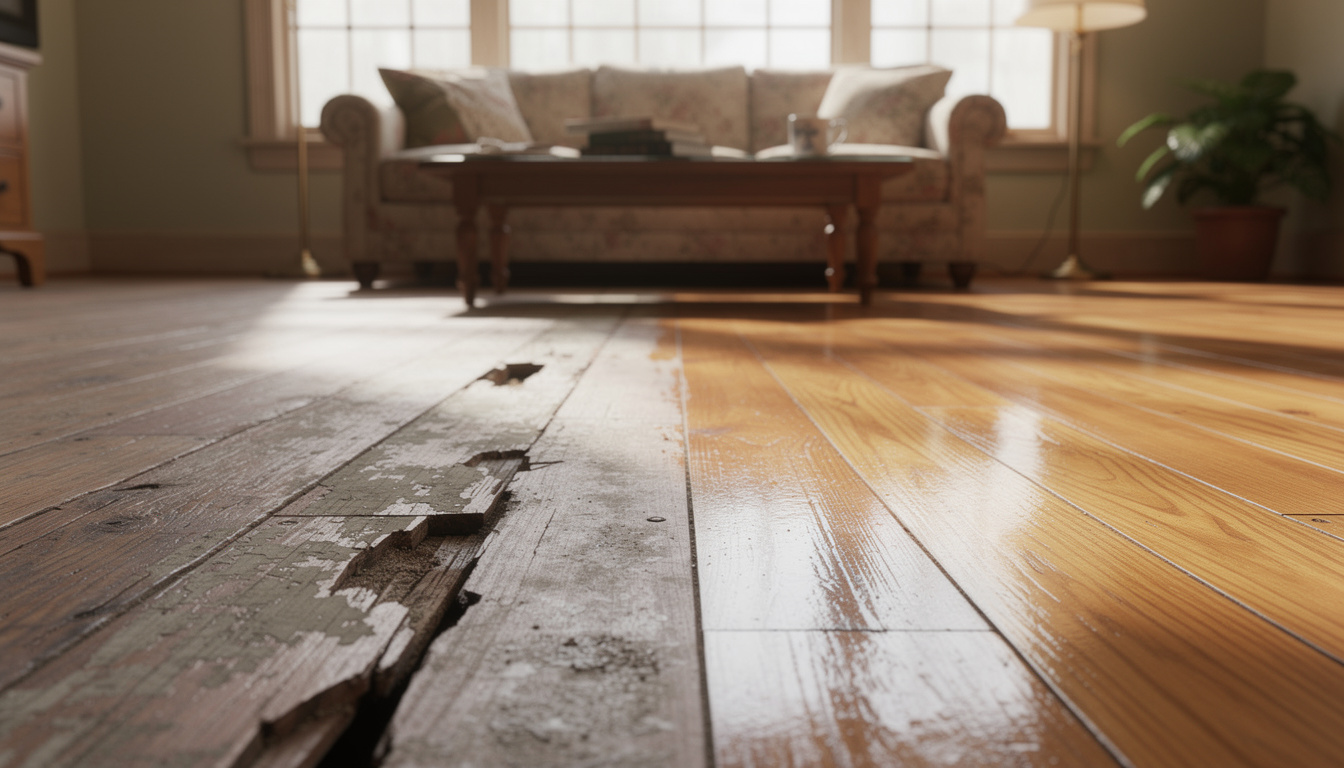
That “tired floor” vibe isn’t always damage—it’s usually a finish that’s given up after years of shoes, pets, sun, and the occasional spilled drink. Under the scuffs and dull patches, old hardwood floors often still have plenty of life left, and the transformation from worn to fresh can be one of the most dramatic changes you can pull off in a home without remodeling a single wall. The trick is treating this like a real project: you’re not just cleaning, you’re doing a full restoration—from surface prep to sanding, from staining choices to final protective coats (yes, varnishing counts in everyday talk, even when you’re actually using polyurethane). If you’ve ever seen a “before/after” where the boards go from lifeless to glowing, that’s not magic—it’s process, patience, and keeping dust under control.
In 2026, DIY refinishing is also easier to plan than it used to be: rental sanders are widely available, low-odor water-based finishes have improved a lot, and there’s no shortage of tutorials. Still, it’s not a one-afternoon craft. It’s a careful sequence of steps where each stage sets up the next. The good news is that with the right prep and a steady pace, you can refinish your hardwood floors yourself and get results that look genuinely professional. Let’s get into what to watch for, what to rent, what to buy, and how to avoid the classic DIY mistakes that make a gorgeous floor look “kinda okay.”
En bref
- 🪵 Learn the 5 signs your old wood surface actually needs a full refinish (not just a polish).
- 🧰 Build a realistic toolkit: rental sander, grits, edge tools, fillers, and solid safety gear.
- 🧹 Prep and containment matter: dust control, nail setting, board fixes, and smart room sealing.
- 📏 Do sanding in a grit sequence, inspect with a flashlight, and fix swirl marks before you regret it.
- 🎨 Choose staining + finish like a designer: test samples, pick sheen, and match lighting.
- 🛡️ Apply 2–3 thin topcoats (poly or “varnish”) and respect cure times so the surface survives real life.
- 🐾 Plan your timeline: socks today, pets later, furniture in a week, rugs after two weeks.
When to refinish old hardwood floors at home: the telltale signs you can’t ignore
People wait way too long to refinish because they assume the floor is “just old” and there’s nothing to be done. But wood is stubborn in the best way: most hardwood floors are salvageable, and what looks like permanent ugliness is often just a worn-out top layer. The key is knowing whether you’re looking at cosmetic issues (easy win) or structural problems (still fixable, but different effort).
Let’s use a simple storyline. Imagine Mia buys a 1920s bungalow. The living room boards are gorgeous… in theory. In practice, the finish looks cloudy, there are dark marks by the patio door, and the center path through the room is basically bare. Mia’s first instinct is to cover it with a rug. Her second instinct is to price replacement. The smarter move is to read the floor’s “signals” before spending big.
Five clear signals your hardwood floor needs new life
Here’s what usually screams “this is a refinishing job,” not a quick cleaning session:
- 🐶 Deep scratches and marks from pets, chair legs, or dragged furniture that catch your fingernail.
- 🌞 Color loss and fading where sunlight has bleached sections near windows or French doors.
- 💧 Water damage and dark spots around sinks, plant stands, or entryways where moisture sat too long.
- 🪵 Bare wood showing where the protective coat has worn through (often in traffic lanes).
- ✨ No shine or reflection even after cleaning—meaning the finish isn’t protecting anything anymore.
If you’re seeing two or more of these, a full restoration process is usually worth it. And yes, the “before vs after” can look almost unreal, especially when the grain pops again after sanding and sealing.
Solid vs engineered: the decision that protects you from an expensive mistake
Before you rent anything, you need to identify your floor type. Solid hardwood can handle multiple refinishes over its life. Engineered wood has a thinner wear layer on top; sand too aggressively and you can burn right through the veneer.
A practical check: look at an exposed edge near a vent or threshold. If it’s clearly thick (often close to 3/4 inch for older solid boards), you’re usually safe for a standard refinish. If it’s noticeably thinner with layered construction, treat it gently—sometimes a light screen-and-recoat is a better plan than full sanding.
Also look at the grain. Solid boards tend to show natural variation; engineered surfaces sometimes repeat patterns in a way that looks “too consistent.” When in doubt, pull a floor register and inspect. That one minute can save you weeks of regret.
What “needs refinishing” is not the same as “needs replacement”
Even heavily worn areas often clean up beautifully as long as the wood isn’t rotted or permanently warped. Cupping (edges higher than the center) and loose boards can be handled, but they may require extra leveling work and a more aggressive grit sequence. Dark stains from pet urine or deep water intrusion can sometimes remain as shadows, but many homeowners decide that a little character is better than ripping out history.
The big takeaway: when your home has real wood underfoot, you’re sitting on an upgrade you can earn with time rather than money—and the next step is gathering the right gear without overbuying.
DIY hardwood floor refinishing tools and materials: what to rent, what to buy, what to skip
Tool choices can make DIY feel either smooth and predictable or like a chaotic dust festival. The goal is to keep your workflow steady: remove the old finish efficiently, smooth the surface evenly, keep dust under control, and apply stain and topcoat without drama. The good news is you don’t need a contractor trailer full of equipment—you need a focused kit.
Core equipment checklist (with a sanity-saving mindset)
Think in categories: removal, smoothing, cleaning, coloring, protecting, and safety. If you miss one category, you’ll end up improvising at the worst possible moment (like 9 p.m. on a Sunday with wet stain and no clean cloths).
| Item 🧰 | What it’s for 🎯 | DIY note 💡 |
|---|---|---|
| Orbital floor sander 🌀 | Remove old finish, flatten minor unevenness | Friendlier than a drum sander for beginners; may be slower on heavy buildup |
| Sandpaper (40/60/100 grit) 🧻 | Progressive smoothing from rough to fine | Buy extra; return unused packs if the store allows |
| Handheld orbital / edge sander 🔧 | Edges, corners, along walls | Match grits with the main sander to avoid “halo” differences |
| Vacuum + microfiber mop 🧹 | Dust removal between passes | HEPA is ideal, especially in older homes with unknown contaminants |
| Wood filler 🪵 | Gouges, chips, deep scratches | Don’t fill wide board gaps; seasonal movement can crack filler |
| Pre-stain conditioner 🧴 | Even stain absorption | Huge help on blotch-prone species like pine/maple/birch |
| Wood stain 🎨 | Add or shift color | Test in your room’s lighting before committing |
| Polyurethane (aka “varnish” in casual talk) 🛡️ | Durable protective topcoat | Thin coats beat thick coats; choose sheen wisely |
| Applicators (roller/brush/pad) 🖌️ | Even application of stain and finish | Quality tools reduce bubbles and lap marks |
| Safety gear (respirator, eye, hearing) 😷 | Protect lungs/eyes/ears | Non-negotiable during sanding and finishing |
Rentals vs purchases: keep your budget practical
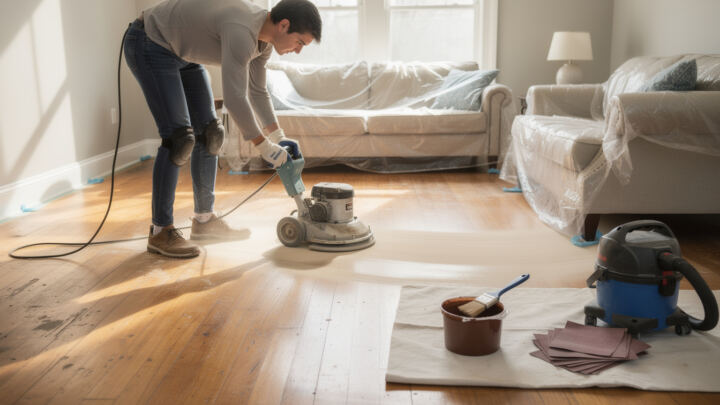
In most cities, big sanders and edgers are easy rentals from home improvement stores. That’s the sweet spot for a DIY refinish: rent the heavy machines, buy the consumables and finishing materials. If your floor has thick old coatings or adhesive residue, you may need a more aggressive setup (some people jump to a drum sander). That tool is fast, but it can also dig trenches if you pause in one spot. If you’re new, an orbital floor sander is slower but more forgiving.
One trick that saves money: do a small test area with your starting grit. If the finish “gums up” and melts into the paper quickly, you’re dealing with a coating that needs either a coarser grit or a pre-stripping approach. Nothing burns cash like shredding through sandpaper because you didn’t test first.
Dust control and safety: the part everyone underestimates
Dust is not just annoying; it’s the reason a lot of DIY jobs look rough. Seal doorways with plastic, cover vents, and keep the work zone contained. If your home is older and there’s any chance of legacy materials (like lead paint on baseboards or old adhesive layers), treat the dust like it matters—because it does. A respirator and a HEPA vacuum turn this from “reckless weekend” into an actual controlled project.
Once your tools are lined up, the next challenge is sequencing the work so you don’t create new problems while fixing old ones.
If you want a visual walkthrough before you touch a machine, watching one full tutorial end-to-end makes everything feel less mysterious.
Preparation and sanding sequence: the make-or-break part of hardwood floor restoration
If refinishing has a “secret,” it’s this: the final look is mostly decided before you ever open a can of stain or polyurethane. Prep and sanding are where you earn that smooth, even glow. Rush here and the floor will tell on you later—swirl marks, scratches, and uneven coloration show up like a spotlight once finish hits the surface.
Room prep that actually prevents headaches
Clear everything. Not just furniture—think curtains that trap dust, vent covers, door mats, even picture frames on nearby walls if you’re sensitive to fine dust. Seal doorways with plastic and tape, and cover vents so dust doesn’t ride your HVAC through the entire house.
Then get on your hands and knees and do the unglamorous stuff: check for loose boards and secure them. Set nail heads below the surface with a nail set. Pull staples if you find them. Any metal left proud will tear sandpaper and can spark gouges that are a pain to fix.
Choosing a grit plan: start coarse enough, then earn your smoothness
A common DIY mistake is starting too fine because it “feels safer.” But fine paper doesn’t remove old finish efficiently—it mostly polishes scratches. For many floors, starting around 40 grit (or testing coarser if finish is stubborn) makes the process predictable. From there, you step up in stages: 60 grit to refine, then 100 grit to smooth for stain readiness.
Work methodically, overlapping passes and staying consistent with the grain. For edges, match the grit to the main field so you don’t create a visible band around the room. And vacuum between every grit change—leftover coarse debris can carve fresh scratches during the next pass.
Filling and repair: fix what should be fixed, leave what should move
Deep gouges, chips, and isolated damage are good candidates for wood filler. Let it dry fully, then sand it flush. But wide gaps between boards are usually a “leave it alone” situation. Wood expands and contracts seasonally; filling big gaps often leads to cracked filler and crumbly mess later. Those gaps are part of the floor’s story, and most people stop noticing them once the finish looks fresh.
Inspection with a flashlight: your last chance to catch swirls
After your final sanding pass, kill the overhead lights and use a flashlight at a low angle across the boards. This makes sanding marks obvious. Pay special attention to transitions between the edge-sanded perimeter and the main field; that’s where swirl marks love to hide.
If you see problems, fix them now with targeted sanding. Don’t assume stain will “hide it.” Staining usually does the opposite: it highlights imperfections. This is the moment where patience pays off in a very visible way.
Once your surface is clean, flat, and dust-free, you’re ready for the part everyone cares about most: color and finish choices that make the room feel new.
Want extra confidence about machine handling and avoiding “trenches”? A dedicated sanding demo is worth the time.
Staining and varnishing choices that look right in a real home: color, sheen, and modern durability
This is where your floor stops being “a project” and starts becoming the vibe of the room. Color and sheen affect everything: how big the space feels, how warm the light looks, and how often you’ll notice dust or scratches. In 2026, the finish options are better than they used to be, especially for water-based topcoats that dry faster and amber less than older oil formulas.
Pre-stain conditioner: the underrated difference between “rich” and “blotchy”
If your floor is pine, maple, or birch—or if you’re not sure—use a pre-stain conditioner. It partially seals the porous spots so the pigment doesn’t soak in unevenly. Skipping it is how you end up with dark patches that look like someone spilled coffee and tried to wipe it up with a sock.
Apply it evenly, let it sit according to the label (often in the 15–30 minute range), then wipe excess. This simple step makes your DIY job look less like DIY.
Picking a stain color: trends are fun, but your lighting is the boss
Three popular directions keep showing up in real homes because they work with lots of styles:
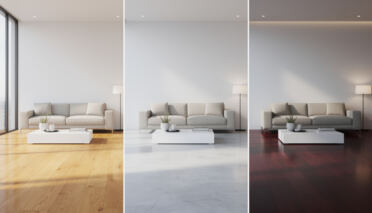
- 🌾 Natural oak: warm, classic, and forgiving—great if you want the grain to be the main character.
- ☕ Dark espresso: dramatic and upscale, especially in formal spaces, but it can show dust and scratches more.
- 🩶 Cool greys: modern without feeling sterile when paired with warm textiles and softer lighting.
Here’s the move that saves heartbreak: test samples in your actual room, on your actual wood, at different times of day. Morning sun and evening lamplight can make the same stain look like two different colors. If you can, test in a closet or under where furniture will sit—somewhere you can live with the experiment.
Applying stain without lap marks
Work in small sections (think 3–4 feet). Keep a wet edge so you don’t create overlapping lines. Roll or wipe on, then wipe off excess in the direction of the grain. The wipe-off step controls color intensity and prevents shiny puddles that dry weird.
Then wait. If the stain isn’t fully dry, your topcoat can fail to bond properly. That’s how you get peeling later, which is the opposite of what a restoration is supposed to accomplish.
Topcoat “varnishing”: polyurethane done the calm, professional way
Whether you call it varnishing or topcoating, you’re building a protective shell. Choose sheen based on lifestyle:
- 🧸 Matte: hides scuffs, footprints, and dust best—amazing for kids and pets.
- ✨ Satin: subtle glow, designer-favorite balance of style and practicality.
- 🏠 Semi-gloss: brighter reflection, still manageable, but shows imperfections more.
Apply thin coats, don’t shake the can (stir gently to avoid bubbles), and keep the room stable—roughly 65–75°F is a comfortable target. After the first coat dries (often about 24 hours, but follow the product), lightly sand with very fine paper (around 220 grit), vacuum, wipe, then coat again. Most floors want 2–3 coats for a durable result.
The insight to hold onto: the prettiest finish is the one that matches your life, not the one that looks best on a showroom sample.
Drying, curing, and living on your floors again: timelines, pet plans, and long-term care
The last phase is where a lot of people accidentally ruin a great refinish. Dry-to-touch is not the same as cured. A floor can feel fine under socks and still be soft enough to dent under a chair leg, or get scratched by a dog’s nails. If you respect the curing window, you’ll keep that fresh look for years instead of months.
A realistic “back to normal” schedule
Exact times depend on your specific product and humidity, but these general guidelines keep you safe:
- 🧦 First 24 hours: avoid foot traffic if you can; if you must walk, use clean socks only.
- 🚶 First 48 hours: keep traffic minimal; no rough shoes, no dragging anything.
- 🐾 About 72 hours: pets can usually return carefully (trim nails if possible).
- 🪑 About 1 week: move furniture back, gently, with felt pads on every leg.
- 🧺 About 2 weeks: wait before placing area rugs so moisture doesn’t get trapped and slow curing.
If you’re thinking “that’s a long time,” you’re not wrong—but it’s also the difference between a finish that holds up and one that looks prematurely worn. For Mia in our bungalow story, this is where she planned a mini-staycation: she refinished one room, lived in the other, and rotated spaces instead of trying to do the whole house at once.
Small rules that keep the finish looking new
Once the floor is cured, daily life becomes the real test. Here’s what actually helps:
- 🧽 Use a microfiber dust mop regularly; grit is basically sandpaper under your feet.
- 🚪 Add entry mats and adopt a “shoes off” habit when possible.
- 🪑 Check felt pads every few months; worn pads become scratch machines.
- 💦 Clean spills fast; standing water is never your friend on wood.
- 🧴 Use a cleaner meant for finished wood—avoid harsh all-purpose products that dull sheen over time.
When you should consider alternatives to a full sand-and-refinish
Sometimes you don’t need the whole process. If your floor still has an intact finish but looks dull, a screen-and-recoat (light abrasion plus a new topcoat) can refresh the look without heavy sanding. On engineered flooring with a thin wear layer, this can be the safer approach.
And if your boards move a lot seasonally (squeaks, shifting), some homeowners prefer more flexible finish systems over a hard “plastic sheet” feel. The right choice depends on your home, not just a trend.
Bottom line: treat curing like part of the craft, not a boring waiting room, and your newly refinished hardwood floors will keep paying you back every day.
Can I refinish old hardwood floors at home without sanding?
Sometimes, yes. If the existing finish is still intact (no bare wood, no deep scratches), you may be able to do a screen-and-recoat: lightly abrade the surface and apply a fresh topcoat. If you have bare spots, water stains, or heavy damage, full sanding is usually the only way to get an even result.
How do I know if my floor is solid hardwood or engineered wood?
Check an exposed edge near a floor vent or threshold. Solid hardwood is typically thick and uniform, while engineered wood shows layers with a thinner top wear layer. If the wear layer is thin, aggressive sanding can damage it, so choose a gentler restoration method.
What grit sequence should I use for DIY hardwood floor sanding?
A common DIY sequence is coarse-to-fine, such as 40 grit to remove old finish, then 60 grit to refine, and 100 grit to smooth for staining. Always test a small area first; if the finish gums up or doesn’t come off cleanly, you may need a coarser start. Vacuum between every grit change.
Do I really need pre-stain conditioner before staining?
If your wood is prone to blotching (often pine, maple, birch), conditioner makes staining much more even and prevents patchy dark spots. For many DIY jobs, it’s the easiest step that noticeably improves the final look.
When can I move furniture and rugs back after varnishing/polyurethane?
Avoid heavy traffic for about 48 hours, keep pets off for around 72 hours, wait roughly a week before moving furniture back (with felt pads), and hold off on area rugs for about two weeks so the finish can cure properly and not trap moisture.