In brief
- ✨ Polished concrete turns an existing slab into a finished floor with serious aesthetic_appeal and a clean, modern vibe.
- 🛠️ It’s built for durability and everyday abuse—think pets, high heels, rolling carts, and constant foot traffic.
- 🧼 Expect low_maintenance routines: dust-mopping, pH-neutral cleaning, and occasional burnishing in busy zones.
- 💡 Its reflectivity can brighten interiors and cut lighting needs in retail, studios, and warehouses.
- 🌿 It’s often eco_friendly and supports sustainability because you’re upgrading what’s already there.
- 🎨 The versatility is real: from matte to high-gloss, “cream” finishes to bold aggregate exposure, dyes, sawcuts, and inlays.
- ⚠️ Not magic: cracks, moisture vapor, and staining risks are part of the honest concrete story—planning and protection matter.
Polished concrete floors have quietly moved from “industrial-only” to “everywhere you look,” and it’s not hard to see why. People want a surface that feels modern without being fussy, something that can take daily life without turning into a weekend project. A polished slab checks those boxes: it’s sleek, it’s tough, and it tends to age in a way that looks intentional instead of tired. The big trick is that the floor is usually already there—the structural concrete underneath the carpet, vinyl, or tile—so the finish is less about adding layers and more about refining what you’ve got.
To keep this practical, we’ll follow a simple thread: a fictional café-and-studio space called River & Stone. The owner wants one continuous floor that works for customers, staff, deliveries, and the occasional spilled oat milk latte. Along the way, you’ll see how polished concrete is made, why it performs so well, where it shines (literally), and where it deserves a second thought. If you like floors that look “architect-designed” but behave like work boots, you’re in the right place.
Advantages of Polished Concrete Floors: How the System Is Actually Built
Polished concrete isn’t a coating you lay on top; it’s a process that mechanically refines the surface of a slab until it reaches a specific clarity and sheen. That detail matters because it explains a lot of the benefits people talk about—especially strength, wear resistance, and why the finish doesn’t peel the way some topical systems can.
At River & Stone, the owner first assumed “polished” meant a glossy sealer. The contractor corrected that fast: the core of the work is grinding with progressively finer diamond tooling. Those diamonds open and level the surface, then close it back up as the grit steps get finer. The floor becomes smoother, denser, and more light-reflective, but it still breathes like concrete.
Mechanical grinding, honing, and polishing—why it’s more than just shine
The workflow usually starts with a slab check. Cracks get evaluated, joints are treated, and weak areas are repaired. This is where expectations get set: concrete moves, and even perfectly done repairs can remain visible as part of the “honest” look. If you’re chasing perfectly uniform like sheet vinyl, polished concrete may feel too real.
Next comes the heavy grinding. Coarser passes flatten and remove surface imperfections. If you want visible stone (aggregate exposure), this is where it happens—grinding deeper reveals sand and larger stones. For a “cream” finish, the work stays closer to the top, leaving more cement paste visible and the overall look softer.
Densifiers and guards: the quiet heroes behind durability
After the initial cut, a silicate densifier is applied. It reacts in the concrete and hardens the surface, tightening the pore structure. That’s a big reason polished concrete holds up in busy spaces: you’re not relying on a thick film that can scratch off; you’re improving the substrate itself.
Then comes honing and polishing with finer grits, pushing the surface toward the chosen sheen—matte, satin, or high-gloss. Many specs include a breathable guard or penetrating sealer to improve stain resistance. In high-traffic commercial zones, burnishing can be added to boost gloss and improve the floor’s early-life protection. Done right, the system becomes a long_lifespan finish that looks intentional, not temporary.
The real takeaway: the “advantage” starts with the process. A well-prepped slab plus proper densification equals performance you can feel underfoot.
Why Polished Concrete Floors Are Cost-Effective, Durable, and Low-Maintenance
Let’s talk money and effort—the two things that make or break most flooring decisions. Polished concrete is often cost_effective because it leverages the slab you already paid for when the building was constructed. Instead of buying tile plus mortar plus grout plus underlayment (or wood plus adhesive plus transitions), you’re paying for labor and tooling to upgrade an existing surface.
At River & Stone, the owner compared polished concrete with large-format porcelain. The tile looked amazing on day one, but the quote ballooned with substrate prep, leveling, and the sheer labor of setting and grouting. Polished concrete still required prep, but it eliminated a stack of materials and reduced future cleaning complexity—no grout lines to discolor, no boards to cup, no vinyl seams to lift.
Durability that fits real life (not just showrooms)
Concrete is already one of the hardest flooring substrates in common use. When you densify and refine the surface, you increase abrasion resistance and reduce dusting. That’s why polished floors show up in warehouses, schools, galleries, and busy storefronts: the finish tolerates constant movement and still looks presentable.
Think about the daily stressors: grit from shoes, chair legs, delivery dollies, and temperature swings. A polished floor handles that better than many film-forming finishes because there’s less to delaminate. In a café context, that matters when staff drag tables at closing time or when a weekly delivery drops a pallet at the entrance.
Low-maintenance routines that don’t take over your calendar
low_maintenance doesn’t mean “no maintenance.” It means you’re mostly removing grit and using the right cleaner so you don’t dull the surface. Daily dust-mopping keeps abrasive particles from acting like sandpaper. Periodic auto-scrubbing with a pH-neutral solution lifts soils without leaving residue.
In high-traffic lanes—like the path from the front door to the counter—occasional burnishing brings back clarity. It’s closer to “refresh” than “refinish.” That difference is huge for owners who don’t want downtime.
| Factor | Polished Concrete Floors | Typical Alternative |
|---|---|---|
| Daily care | 🧹 Dust-mop + spot clean spills | 🧽 Often similar, but grout/edges add work |
| Deep cleaning | 🧼 Auto-scrub with pH-neutral cleaner | 🧴 May need stronger chemicals or special products |
| Long-term refresh | ✨ Burnish / re-guard traffic lanes | 🔁 Recoat, re-grout, sand/refinish, or replace |
| Expected service life | 🏗️ Decades with proper care | ⏳ Often shorter, depending on wear layer/coatings |
The practical insight: when a floor lasts and stays easy to care for, the “cheap vs. expensive” conversation shifts from installation day to the next decade.
Want to see the process in action before we get into design options? This quick video search pulls up great walk-throughs of grinding, densifying, and polishing.
Design Advantages: Aesthetic Appeal, Versatility, and Reflectivity in Real Spaces
Polished concrete has a reputation for being “gray and glossy,” but that’s like saying coffee is “just brown.” The design range is broad, and the choices you make—aggregate exposure, sheen level, color, and joint layout—change the entire vibe of a room. This is where aesthetic_appeal and versatility stop being buzzwords and start becoming a legit design toolkit.
At River & Stone, the owner wanted the floor to feel warm enough for a café but clean enough for a studio space that hosts product shoots. The solution was a satin sheen with a “salt-and-pepper” aggregate exposure: enough visual texture to hide everyday dust, but still smooth and bright under lighting.
Choosing aggregate exposure and sheen without guessing
Pros often specify polished concrete using two separate “dials.” First is aggregate exposure (from cream to large stone). Second is the sheen (matte through high-gloss). When you name both, you reduce the classic disappointment of “this isn’t what I pictured.”
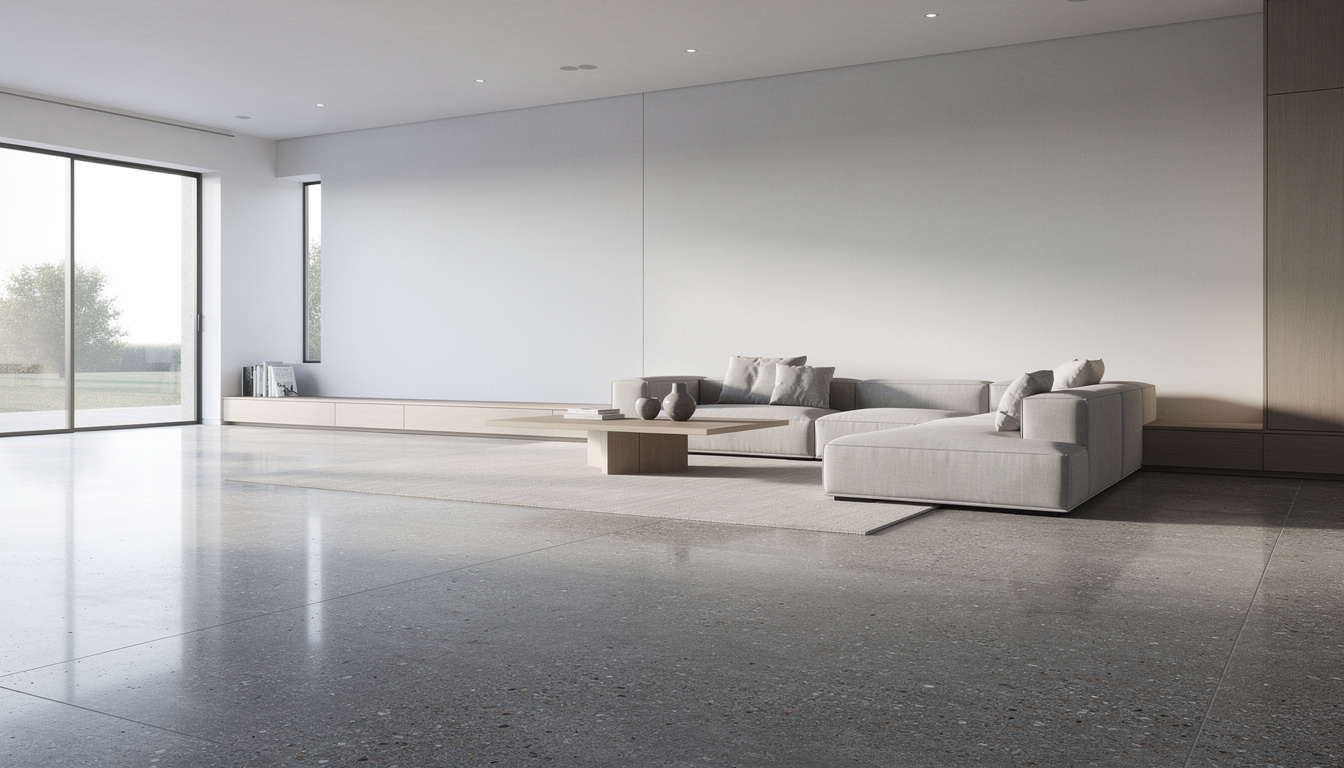
A cream finish can look more minimal and calm, great for homes and galleries. Medium or large aggregate reads more dynamic and can disguise minor wear patterns in commercial spaces. High-gloss boosts reflectivity, but a satin finish can feel more relaxed while still looking premium.
Reflectivity: the hidden advantage for lighting and mood
reflectivity is more than a cosmetic perk. A brighter floor bounces light around, which can reduce reliance on overhead fixtures—especially in retail, warehouses, or studios where consistent illumination matters. In smaller homes, that same effect can make rooms feel bigger and less cluttered.
In the studio zone of River & Stone, photographers noticed fewer harsh shadows because light was filling the space from below. That doesn’t mean you can delete your lighting plan, but it can make your setup more forgiving.
Customization ideas that still feel timeless
Concrete takes dyes and stains, but the best results come from planning and mockups. You can also add sawcut patterns to define zones—like a subtle “rug” shape under a seating area—without changing materials. Inlays and logos are possible too, especially for branded commercial spaces.
- 🎨 Use integral color or dye for warm grays, taupes, or charcoal tones that hide daily dust.
- 🧱 Add sawcuts to echo tile proportions—minus the grout maintenance.
- 🪨 Pick a “salt-and-pepper” exposure to balance texture and refinement.
- 💡 Choose satin sheen for a softer look, high-gloss for maximum pop and brightness.
- 🧭 Define traffic lanes visually with subtle patterning, not different flooring types.
The key insight: when the design is specified clearly, polished concrete doesn’t look “unfinished”—it looks deliberate.
For more inspiration, this video search tends to surface home tours and commercial projects that show how different exposures and sheen levels change the feel.
Sustainability and Indoor Health: Eco-Friendly Advantages of Polished Concrete Floors
Polished concrete’s green reputation isn’t marketing fluff when it’s used the right way. One of the biggest sustainability wins is simple: you’re often not installing a new floor at all—you’re upgrading the existing slab. That reduces the need for extra raw materials, packaging, adhesives, and disposal. In a renovation-heavy era where clients care about embodied carbon, that’s a real advantage.
At River & Stone, the building was an older shell with a structurally sound slab hiding under worn vinyl. Instead of sending old flooring to landfill and trucking in replacement materials, the team removed the vinyl, dealt with adhesive residue, and polished what was already there. Less incoming material, less outgoing waste—straightforward, but impactful.
Low-VOC feel and better indoor air quality
Polishing systems typically avoid the heavy odors associated with some resin floors and solvent-based adhesives. That matters in occupied buildings where downtime is expensive. It also matters in homes where people are sensitive to odors and want a calmer indoor environment.
Another underrated perk: a dense, smooth slab doesn’t trap dust and allergens the way carpets can. That can support healthier indoor air quality, especially when paired with good HVAC filtration and regular cleaning. No floor is a medical device, obviously, but fewer places for grime to live is a win for day-to-day comfort.
Breathability and moisture behavior (the part people forget)
Concrete “breathes,” meaning moisture vapor can move through it. That’s not automatically a problem; it can even be an advantage compared with impermeable coatings that trap moisture and fail. But it does mean you should moisture-test slabs—especially on-grade concrete and newer pours—before polishing and guarding.
If moisture vapor transmission is high, you can see salts (efflorescence), haze, or discoloration. Planning ahead avoids the heartbreak of a beautiful finish that looks blotchy six months later. In commercial projects, moisture testing is routine; in homes, it’s often skipped and later regretted.
Energy and comfort considerations
Concrete has thermal mass, which can help stabilize indoor temperatures when the building is designed around it. Polished concrete also pairs nicely with radiant heating: it conducts heat well and distributes warmth evenly. In cooler climates, that can shift comfort perceptions from “this feels cold” to “this feels solid and cozy.”
The lasting insight: eco_friendly benefits come from using less material, choosing sensible products, and respecting moisture realities—not from chasing a green label.
Practical Limits to Know: Managing Cracks, Stains, Moisture, and Comfort
The advantages are real, but polished concrete isn’t a perfect fit for every space. The honest way to love it is to understand what it will and won’t do—then design around that. At River & Stone, the owner loved the final look, but they also learned to treat the floor like a high-performance surface, not a magical one.
Cracks and repairs are part of the concrete story
Concrete moves with shrinkage, temperature shifts, and building settlement. Hairline cracks, control joints, and patch areas can remain visible, even after excellent repair work. Some people love this because it feels architectural and authentic. Others want a perfectly uniform canvas. Knowing which camp you’re in saves a lot of frustration.
A good contractor will explain where cracks are likely to show, how joints will be treated, and what “acceptable variation” looks like. If your project needs a perfectly consistent finish for branding or a clinical aesthetic, you might consider a different system—or plan for decorative sawcuts and patterns that make natural variation feel intentional.
Stain and etch sensitivity: quick cleanup is your superpower
Polished concrete resists many day-to-day spills, especially when guarded, but acids can etch the surface and oils can stain if they sit. Lemon juice, vinegar, wine, and certain cleaning chemicals can leave marks if ignored. The fix isn’t complicated: wipe spills fast, use mats where messes are predictable, and keep the right cleaner on hand.
For spaces like commercial kitchens, auto bays, or areas with aggressive chemicals, resin systems often win because they offer stronger chemical resistance. That’s not a loss for polished concrete—it’s just using the right tool for the job.
Moisture risks and why testing matters
If moisture vapor is pushing up through a slab, it can create haze or discoloration and can interfere with some protective products. Moisture testing before finishing is a smart step, especially for on-grade slabs. When results are high, solutions might include better drainage, vapor mitigation systems, or adjusting the finishing approach.
Acoustics, comfort, and slip resistance in daily life
Hard surfaces reflect sound. In homes and open offices, that can translate into echo. Rugs, upholstered furniture, curtains, and acoustic panels help a lot. Underfoot comfort is another reality: concrete is firm, so anti-fatigue mats make a noticeable difference behind counters or standing desks.
Slip resistance is often misunderstood. A shiny floor can still meet friction thresholds when it’s properly maintained, but water and grease change the game. Use walk-off mats at entrances and choose appropriate cleaning routines so you’re not leaving residue that creates slick spots.
- 🧽 Clean with a pH-neutral product; avoid harsh acids and greasy soaps that dull or slick the surface.
- 🚪 Use walk-off mats to capture grit before it turns into micro-scratches.
- 🧻 Treat spills like a timer is running—wipe quickly to reduce staining and etching risk.
- 🧪 Moisture-test slabs (especially on-grade) to avoid future haze and discoloration surprises.
- 🪑 Add rugs and soft furnishings to tame echo and improve comfort without hiding the floor.
The bottom-line insight: polished concrete rewards people who plan for real-world behavior—then it pays them back with a floor that stays sharp for years.
Do polished concrete floors really last for decades?
Yes—when the slab is sound and the polishing is done correctly, polished concrete can deliver a long_lifespan measured in decades. The key is routine grit removal, periodic deep cleaning, and refreshing high-traffic areas with burnishing or reapplying a guard as needed.
Are polished concrete floors slippery?
They can be safe when dry and properly maintained, even at higher sheen levels. Slip performance depends more on cleanliness, residue-free cleaners, and how water or grease is managed (mats, prompt cleanup) than on shine alone.
Is polished concrete an eco_friendly flooring choice?
Often, yes. It supports sustainability because it typically uses the existing concrete slab instead of importing new flooring materials. That can reduce waste, adhesives, and material manufacturing impacts, especially in renovation projects.
What’s the biggest mistake people make with polished concrete?
Skipping prep and testing. Ignoring slab flatness, crack/joint planning, and moisture conditions can lead to visible repair issues, haze, or disappointing appearance. Great results come from good evaluation, clear specs for aggregate exposure and sheen, and a sensible maintenance plan.
How does polished concrete compare with epoxy or urethane coatings?
Resin coatings typically offer stronger chemical resistance for harsh environments, while polished concrete wins on breathability, a more natural look, and long-term value when you want a durable, low_maintenance surface without a thick film that can peel or delaminate.