In brief
- 🌤️ Light flooring color tends to boost brightness and improve space perception, making rooms feel more open.
- 🌑 Dark floors visually “anchor” a space, often creating a cozy, grounded ambient mood—but they can shrink a room if lighting is weak.
- ✨ Finish and sheen (glossy vs matte) change lighting effects dramatically, from energetic sparkle to calm softness.
- 🧭 Grain, pattern, and layout quietly guide movement and attention, shaping how people experience the room atmosphere.
- 🪵🧱 Flooring materials (wood, tile, concrete, cork) influence warmth, acoustics, and maintenance—so the “vibe” lasts beyond day one.
- 🎯 Smart color contrast and decor harmony come from matching undertones (warm/cool) more than matching exact shades.
If you’ve ever walked into two apartments with the same layout but wildly different vibes, there’s a good chance the floors were doing more work than you noticed. Flooring isn’t just background; it’s the biggest continuous surface in the room, so your flooring color becomes a kind of “emotional thermostat” for the whole space. Light tones can make a cramped studio feel breathable, while deeper tones can make a big, echoey living room finally feel settled. And the twist is that color alone doesn’t run the show—finish, texture, pattern, and material all team up to shape room atmosphere.
To make this practical, we’ll follow a fictional homeowner, Maya, who’s renovating a small city condo and a slightly gloomy open-plan living area. She’s not trying to win design awards—she just wants her home to feel good on a random Tuesday night and still look sharp when friends come over. Along the way, you’ll see how interior design basics like undertones, reflectivity, and color psychology translate into real decisions you can test with samples and lighting. Ready to mess with perception (in a good way)?
How Flooring Color Shapes Room Atmosphere Through Color Psychology
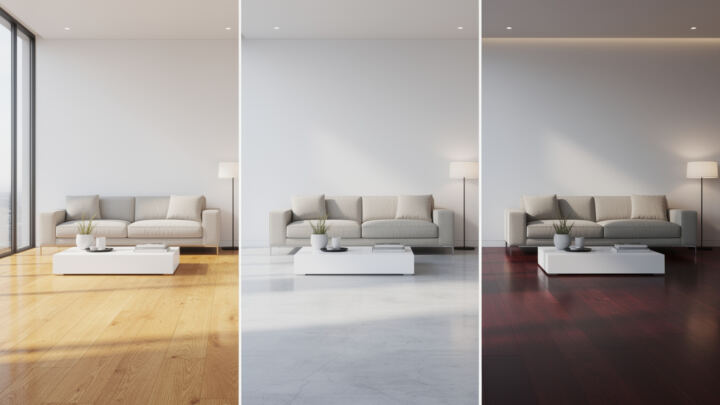
The fastest way to change a room’s emotional read is to change what your eye hits first. And because floors cover so much visual ground, flooring color can set the tone before anyone notices your sofa or art. In color psychology terms, lighter shades often cue calm, clarity, and openness, while darker shades communicate security, richness, and sometimes drama. Neither is “better”—they just push the ambient mood in different directions.
Maya learned this the hard way when she temporarily rolled out a deep walnut-look vinyl in her small office nook. The nook instantly felt stylish, but also tighter and more intense—great for focus in short bursts, less great for long days. When she swapped to a washed oak tone, the same corner felt less “serious” but more breathable, like her shoulders dropped a little. That’s the emotional layer of space perception: your brain reads brightness as possibility and darkness as enclosure, even when the square footage hasn’t changed.
Warm vs cool undertones: the detail that makes or breaks decor harmony
A huge chunk of “why does this feel off?” comes from undertones fighting each other. Warm floors (golden oak, honey pine, warm beige tile) tend to play nicely with creamy whites, earthy textiles, and brass accents. Cool floors (ash gray, whitewashed planks, concrete with blue-gray stain) often pair better with crisp whites, black metal, and cooler stones.
Maya’s living room had a warm greige wall paint and she kept buying cool gray rugs because they looked modern online. In person? The room felt slightly sickly, like everything disagreed politely. Once she chose a rug with a warm base (even if it still read “neutral”), decor harmony finally clicked.
Using color contrast without turning the room into a chessboard
Color contrast matters because it defines edges. High contrast (very dark floor + very light walls) feels crisp and graphic, but it can also highlight dust, scuffs, and uneven lighting. Low contrast (similar floor and wall values) feels smoother and calmer, but can get bland unless texture steps in. A solid trick is to keep the floor and main wall within a moderate range, then create “contrast moments” with one or two bold items—like a dark coffee table or a saturated artwork—so the eye has somewhere to land.
The insight to keep: flooring color is basically the room’s emotional baseline—get that right, and everything else becomes easier to tune.
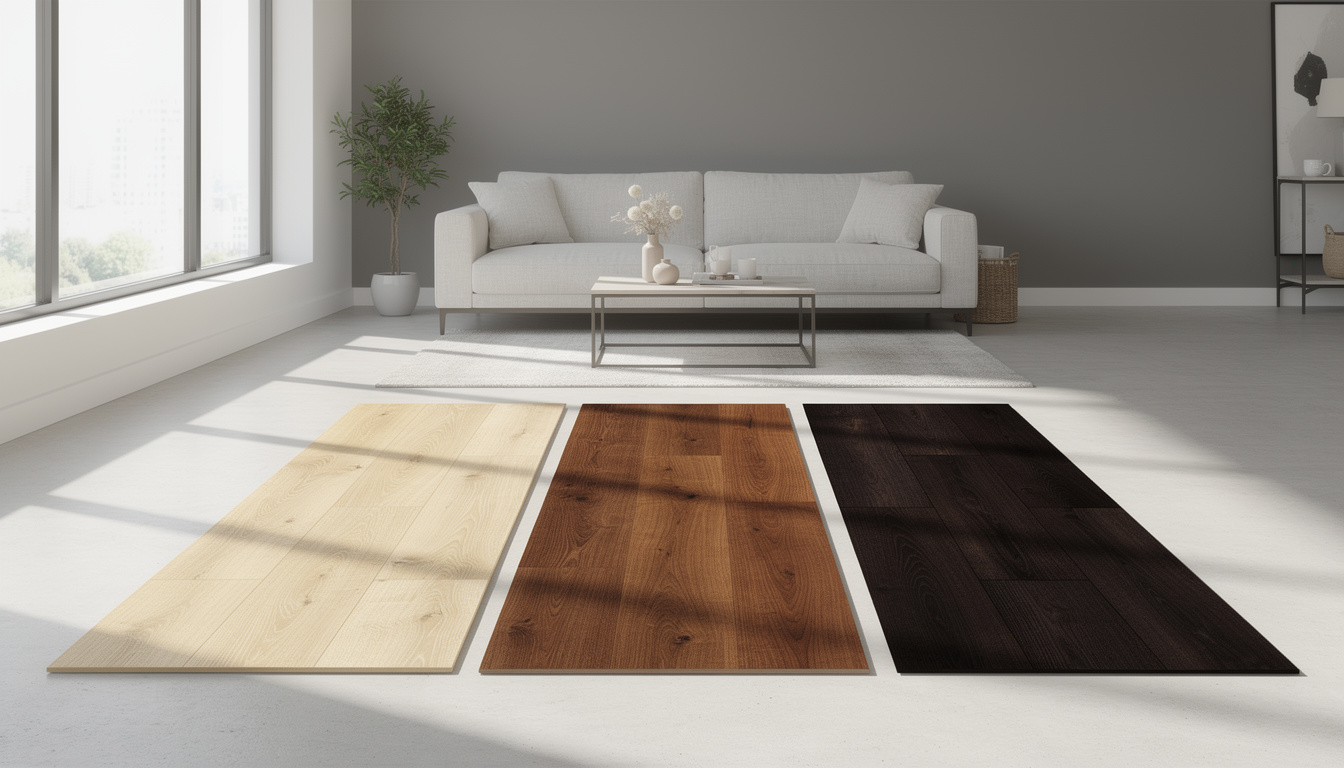
Lighting Effects, Finish, and Sheen: Why the Same Floor Looks Different All Day
People love to choose flooring from a tiny sample under store lights, then act surprised when it looks totally different at home. But your floor is basically a giant light reflector (or absorber), so lighting effects can make the “same” shade read warmer, cooler, brighter, or moodier depending on the hour. Maya’s condo had east-facing windows, which meant bright, cool morning light and warmer artificial light at night—two completely different stages for the same material.
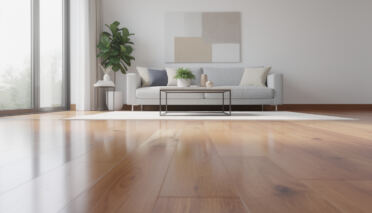
Here’s where finish and sheen start acting like secret levers. A glossy or polished surface reflects more light, which can feel lively and upscale, but it also highlights footprints, dust, and texture inconsistencies. Matte and satin finishes scatter light, reducing glare and making the space feel calmer and more forgiving.
Glossy vs matte: the behavior shift you can feel
Gloss tends to amplify motion. People notice movement because reflections shift as you walk, so the room feels a little more active. That can be great in a social zone like a dining area or an entry where you want energy. Matte, on the other hand, visually “quietens” a room. In a bedroom or reading corner, that calmer ambient mood is often exactly what you want.
Maya tested a high-gloss porcelain tile in her kitchen because it looked clean and bright. Then she realized it doubled her under-cabinet lighting into a glare-fest, especially when she cooked at night. Switching to a satin finish kept the brightness but removed the “stadium spotlight” vibe.
Daylight vs bulbs: controlling mood with temperature
Light temperature matters: cooler bulbs (higher Kelvin) sharpen contrast and can make cool floors look sleeker, while warmer bulbs soften edges and make wood tones feel richer. If your floors already lean warm and your bulbs are very warm, everything can skew yellow. If your floors lean cool and your bulbs are cool, the space can feel a bit clinical. The sweet spot is choosing bulbs that support your goal: cozy lounge, crisp workspace, or balanced everyday living.
One takeaway that sticks: finish isn’t just appearance—it’s how your room behaves under light.
Want to see how designers evaluate sheen and reflection in real spaces? This video query pulls up practical walkthroughs you can mirror at home.
Space Perception Tricks: Making Rooms Feel Larger (or Cozier) With Flooring Color
If walls are the boundaries, floors are the “field.” And your choice of flooring color can either visually stretch that field or pull it inward. This is where space perception becomes less theory and more like a design hack you can use without knocking down a single wall.
Light floors generally bounce light around, which helps a room read bigger—especially in small apartments, narrow hallways, or rooms with limited windows. Dark floors can make large spaces feel intimate and expensive, but in small or poorly lit rooms they may compress the footprint unless you counterbalance with layered lighting and lighter walls.
Plank width, direction, and layout: the “hidden geometry” of atmosphere
Color is only half the story. Wide planks usually feel more expansive and contemporary, while narrow strips can feel busier (sometimes charming, sometimes cramped). Direction matters too: running planks along the longest dimension can elongate a room; running them across can make a narrow space feel wider. Tile layout has similar power—large-format tiles reduce visual breaks, while small tiles add rhythm and detail.
Maya had a long corridor that felt like a tunnel. She chose a lighter tone and aligned the plank direction to emphasize width rather than length. It didn’t magically change the architecture, but it changed the experience—less “bowling lane,” more “gallery walkway.”
A practical comparison table for real-life decisions
| Choice 🎨 | Typical room atmosphere 🏠 | Space perception effect 📏 | Best-use example ✅ |
|---|---|---|---|
| Light, matte wood-look | Calm, airy, easygoing 😌 | Feels larger; edges soften | Small living rooms, studios |
| Medium-tone satin hardwood | Balanced, warm, “classic modern” 🧠 | Neutral effect; easy to style | Open-plan family spaces |
| Dark, low-sheen floor | Grounded, cozy, dramatic 🎭 | Can shrink unless well-lit | Large lounges, libraries |
| High-gloss tile | Energetic, crisp, formal ✨ | Feels bigger but can glare | Bright kitchens, statement entries |
The key insight: space perception is a design decision, not a fixed reality—and floors are one of the strongest tools you’ve got.
Grain, Pattern, and Visual Rhythm: Guiding Movement Without Saying a Word
Once Maya had the base tone figured out, she got stuck on a question that sounds picky but isn’t: “Do I want a busy grain or a quiet one?” This is where grain and pattern shape room atmosphere in a sneaky way. They create visual rhythm, which affects how your eye moves, where it rests, and how “noisy” or “smooth” the room feels.
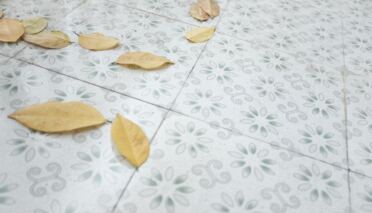
Bold, high-variation grain patterns add character and can hide wear, but they compete with patterned rugs and busy furniture silhouettes. Subtle grain feels calmer and more modern, but it can show scratches or stains depending on finish and color. Patterned tile (encaustic look, checkerboard, herringbone) brings instant personality, yet it also locks you into a stronger style direction.
Using pattern to zone open-plan spaces
In open-plan layouts, flooring can quietly define zones without adding walls. For example, a consistent base floor with a patterned tile “rug” inset near the kitchen can separate cooking from lounging. Or you can rotate plank direction to suggest a dining zone versus a living zone—just be careful with transitions so it feels intentional, not accidental.
Maya’s friend Leo did this in his rental (no permanent changes allowed). He used a large flatweave rug with a linear pattern aligned with the walkway. The room instantly had flow; people naturally walked where the lines pointed. That’s pattern doing behavioral design.
A quick checklist that keeps pattern from overwhelming decor harmony
- 🧩 If the floor has strong grain, keep large furniture fabrics more solid to protect decor harmony.
- 🎯 If you want bold tile, keep wall color simpler so color contrast doesn’t turn chaotic.
- 🧠 In small rooms, prefer quieter patterns to support calmer space perception.
- 🚶 Align patterns with traffic paths so movement feels natural, not jittery.
The insight to carry forward: pattern is the tempo of a room—set it too fast and everything feels busy; set it right and the space feels effortless.
If you like seeing real examples of herringbone, chevron, and plank direction choices, this video query will surface plenty of room tours and layout demos.
Flooring Materials, Maintenance, and Long-Term Mood: Keeping the Atmosphere Alive
Even if you nail the perfect flooring color, the vibe won’t survive if the floor always feels cold, sounds echoey, or looks beat-up after a year. That’s why flooring materials matter as much as shade. Material decides tactile comfort, acoustics, durability, and how the surface ages—basically, whether your room atmosphere stays intentional or slowly drifts into “meh.”
Wood, tile, concrete, and cork: the personality differences
Wood tends to read warm and human. It’s forgiving underfoot and can be refinished (depending on the product), which helps long-term aesthetics. The tradeoff is moisture sensitivity—kitchens and entryways need realistic care and good mats.
Tile reads crisp and clean, especially in lighter tones that boost lighting effects. It’s durable, but it can feel hard and loud. If you want tile without the “airport terminal” acoustics, layer rugs and consider softer textiles nearby.
Concrete is minimal and flexible: stains and sealers can push it warm or cool. It can look incredible in modern interiors, but comfort and echo control become your job—rugs, furniture, and even wall hangings do a lot of heavy lifting.
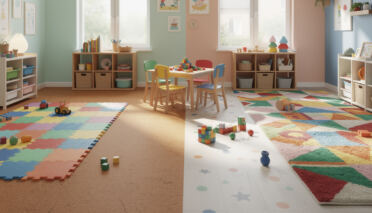
Cork is a quiet hero: softer underfoot, naturally warmer, and often great for sound absorption. Style-wise it’s not for every aesthetic, but in bedrooms and offices it can create an instantly calmer ambient mood.
Maintenance routines that protect color, sheen, and sanity
Maintenance isn’t glamorous, but it’s what keeps your floor from looking “tired.” The right sealants help resist scuffs, moisture, and UV fading. In 2026, a lot of homeowners are also choosing lower-VOC finishes and more durable wear layers for easier upkeep—less smell, fewer touch-ups, and a cleaner everyday feel.
Here are practical habits that actually make a difference:
- 🧼 Use a cleaner made for your surface (wood isn’t tile; tile isn’t concrete).
- 🛡️ Add felt pads and entry mats to reduce micro-scratches that dull sheen.
- 🔍 Do quick seasonal checks for gaps, peeling sealant, or moisture issues.
- ☀️ If sunlight hits one area hard, rotate rugs to prevent uneven fading.
A quick note on transparency and affiliate links
Some articles about home upgrades may include affiliate links; if you click and buy, the publisher might earn a commission. If you’re reading a post that includes product links (like sealants, cleaners, or sample kits), it’s worth checking the site’s disclosure so you know what’s what.
The final insight: materials and maintenance are what make a great atmosphere last, not just what makes it look good on day one.
How do I choose flooring color if my room gets very little natural light?
Go lighter or mid-tone with warm undertones, and avoid super glossy finishes that can create harsh glare from artificial bulbs. Pair the floor with layered lighting (ceiling + lamps) to support space perception and keep the ambient mood from feeling flat.
What’s the safest flooring color if I change my decor often?
A neutral base with clear undertones—like a natural oak, soft beige, or balanced greige—usually gives the most flexibility. You can then add color contrast through rugs, pillows, and art without losing decor harmony.
Does a glossy floor always make a room feel bigger?
It can, because it reflects more light and boosts lighting effects, but it may also highlight smudges and create uncomfortable glare. If you want brightness without the mirror-like feel, try satin instead of full gloss.
How do flooring materials change the feel of a room beyond looks?
They affect temperature underfoot, acoustics, and maintenance. Wood often feels warmer and softer than tile; tile can feel crisp but louder; concrete looks minimal but may echo; cork can feel quiet and comfortable. Those factors strongly shape room atmosphere over time.