In brief
- 🧽 Start every scratch repair with smart cleaning so grit doesn’t get sealed in.
- 🔍 Identify if the mark is in the finish only or down into bare wood—your method changes completely.
- 🖊️ For light floor scratches, a matching wood stain marker or a thin recoat can be enough.
- 🕯️ Wax sticks (or even a close-match crayon) are great for quick scratch removal on small nicks.
- 🧱 Deep damage needs wood filler, careful sanding, then sealing for real floor restoration.
- 🧴 Finish compatibility matters: polyurethane vs. shellac vs. varnish can make or break the blend.
- 🧼 Long-term floor maintenance (pads, mats, habits) reduces future repairs dramatically.
Hardwood has a funny way of keeping score. One dragged chair at a dinner party, a dog doing hallway sprints, a tiny pebble that hitched a ride on a sneaker—suddenly your once-perfect wooden floors have a thin white line that grabs your eye every time the light hits it. The good news is most scratches look worse than they really are, especially in modern homes where sunlight and LEDs make every surface “high definition.” The better news: you don’t need to jump straight to a full refinish to get your floor looking right again. A lot of scratch repair is about matching the fix to the damage—cleaning correctly, testing color in a hidden spot, and knowing when you’re dealing with a scuffed finish versus a gouge into the wood fibers.
To keep this practical, let’s follow a simple thread: a fictional homeowner, Maya, who’s trying to keep her 1920s oak floor looking sharp while living an actual life (two kids, one cat, and furniture that seems to migrate weekly). Her approach is basically what you want in 2026: quick wins where possible, durable repairs where necessary, and habits that make floor polishing and touch-ups a rare event instead of a monthly ritual.
How to Repair Scratches on Wooden Floors: Diagnose the Damage Before You Touch Anything
The biggest mistake with floor scratches is treating them all the same. Maya’s first scratch looked like a thin gray streak near the couch. She almost grabbed a marker and went to town—until she realized it was mostly embedded grime inside a tiny scuff in the finish. Once she cleaned it properly, it faded by half. That’s why the first step is diagnosis, not product shopping.
Start by asking: is the scratch only in the protective topcoat, or did it cut into the wood? A finish-only mark often looks white or hazy from certain angles, especially under bright overhead lighting. A deeper cut tends to look darker because it exposes raw wood that absorbs oils and dirt. A quick “fingernail test” helps: if your nail catches, you’re likely dealing with a deeper groove that may need wood repair beyond a simple recoat.
Clean first (seriously), or you’ll lock dirt into the repair
Before any scratch removal attempt, wipe the area with a soft rag slightly dampened with water to lift grit. If the floor is oily from cleaners or foot traffic, use a small amount of hardwood floor cleaner on a microfiber cloth, then wipe again with a water-damp cloth to remove residue. Let it dry fully. This isn’t busywork; sealing over dust makes a permanent “shadow” that’s harder to fix than the original mark.
For Maya, the hallway scratches were worse because tiny particles from outside were being ground in. Once she added a doormat and got stricter about “shoes off,” new marks slowed down fast—an underrated part of floor maintenance.
Spot-test color like you’re matching paint, not guessing vibes
If you’re using a stain marker, wax stick, or tinted filler, do a spot test in an inconspicuous area (inside a closet, under a radiator cover, behind a plant stand). Wood tones shift with age, sunlight, and finish type. A “walnut” marker can look perfect on the label and totally wrong on your floor. The spot test tells you whether you’re close enough to proceed or need a different shade.
One more thing: your floor’s sheen matters. Even if the color is perfect, a matte patch on a satin floor will still read as a patch. That’s why diagnosis includes color and finish level—your path to floor restoration depends on both.
Key insight: The fastest repairs come from treating the scratch you actually have, not the one you fear you have.
Easy DIY Scratch Repair for Surface Marks: Stain Markers, Recoats, and Blending Tricks
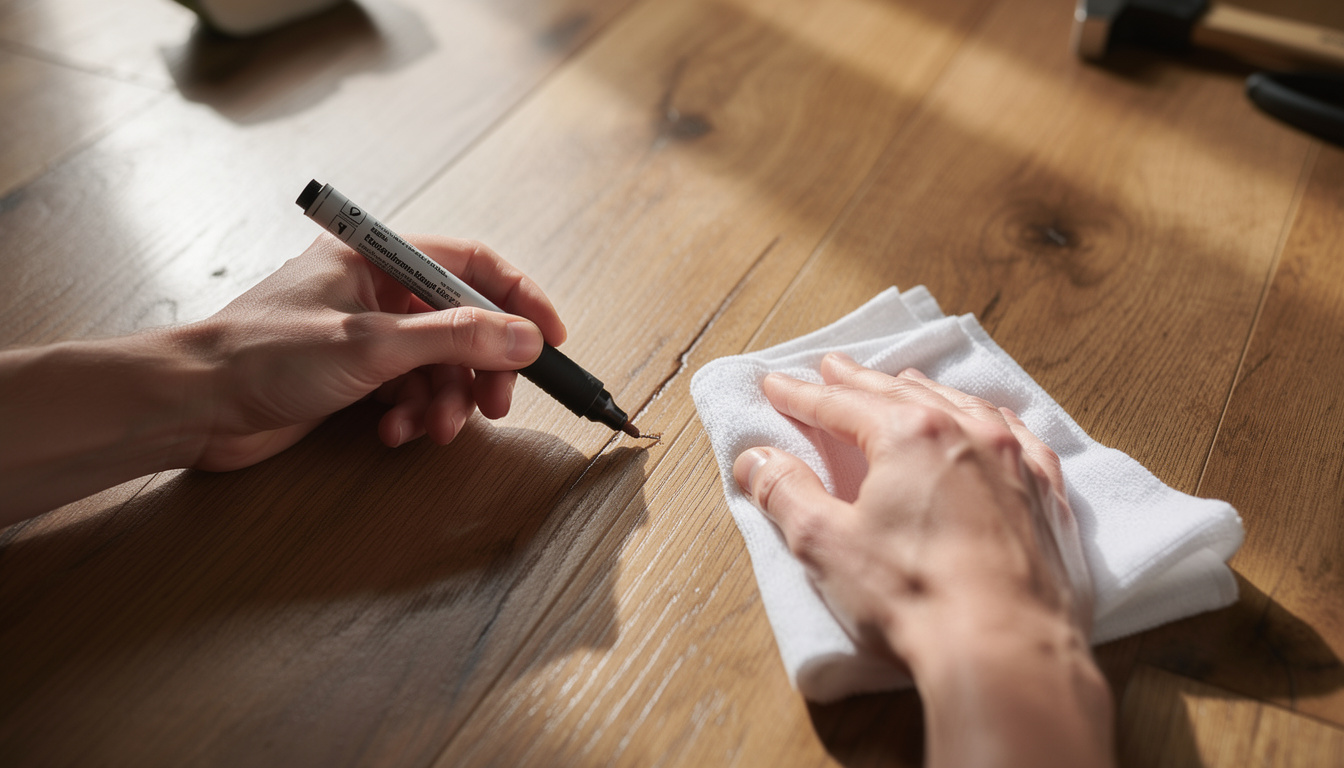
When the damage is shallow—think scuffs in the finish or a light line that doesn’t catch your nail—you can often fix it in under an hour (plus drying time). Maya’s living room had those classic micro-scratches from moving a coffee table around during movie nights. The wood wasn’t damaged; the topcoat was just roughed up.
Use a wood stain marker the “controlled” way
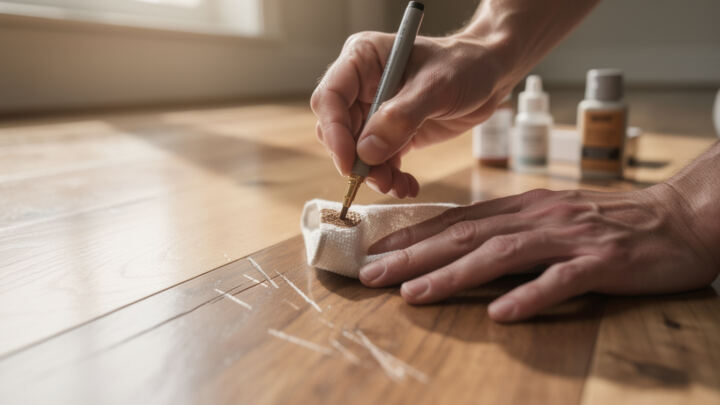
A wood stain marker is great, but the technique matters. Instead of aggressively coloring the scratch like a kid with a Sharpie, apply lightly, then blend. Run the marker tip across the scratch a couple of times—minimal pressure. The goal is gradual tint, not saturation.
Then, lightly rub the area with a clean rag with a tiny bit of mineral spirits (just enough to dampen, not soak), following the grain. This helps blend and remove extra pigment sitting on the surface. If you draw too heavily, you can make the line darker than the surrounding boards, which ironically makes the scratch more obvious. Maya learned this the hard way near her bay window, where sunlight amplified a too-dark touch-up line.
Recoat the finish for scratches that are “in the top layer” only
If the scratch is purely in the protective coating, a thin recoat can hide it by restoring the uniform sheen. Clean, rinse, and dry the spot thoroughly. Then use a small tipped brush to apply a thin layer of the same type of finish already on the floor—often polyurethane in many homes, but sometimes shellac or another varnish in older properties.
This is where people get tripped up: mixing finishes can cause cloudy patches or poor adhesion. If you’re not sure what’s on your floor, test in a hidden area or ask a local paint/hardware shop to help you identify it. For high-gloss specialty finishes, hiring a pro can be cheaper than redoing a larger botched area later. 💡
Quick comparison table: which “light scratch” fix to try first
| Method | Best for | Pros | Watch-outs |
|---|---|---|---|
| 🖊️ Stain marker | Color loss in a thin line | Fast, cheap, easy to redo | Can go too dark if over-applied |
| 🧴 Thin finish recoat | Scuffs in polyurethane/shellac layer | Restores sheen, blends well | Must match existing finish type |
| 🕯️ Wax stick / crayon | Tiny nicks and shallow scratches | Immediate cosmetic improvement | Not as durable in high-traffic zones |
Key insight: For light damage, your goal isn’t rebuilding wood—it’s restoring color and sheen so the eye stops catching the line.
Wax Sticks and “Crayon-Level” Fixes: Fast Scratch Removal That Looks Surprisingly Good
Wax-based products are the unsung heroes of everyday scratch repair. They don’t replace a proper refinish, but they do a great job at disguising small scratches and tiny chips, especially in areas that don’t get constantly scrubbed. Maya keeps a couple of wax repair sticks in a drawer like a mini first-aid kit for her wooden floors.
How to use a wood wax stick the right way
Clean the scratch, rinse, and let it dry. Choose a wax stick that matches your floor’s tone (or slightly lighter—darker wax can look like a stripe). Rub the stick back and forth over the scratch to fill it. If the scratch is narrow but a bit deeper, use a plastic-tipped putty knife to press the wax down into the groove.
Then wait. Let the wax settle for a day if you can. After that, buff with a soft cloth, moving along the grain. This levels the surface, removes excess wax, and restores a little shine. It’s not floor polishing in the professional sense, but visually it can be a night-and-day difference.
Yes, a regular wax crayon can work (with realistic expectations)
If you’ve got kids, you might already have a box of crayons that happens to match your floor. A wax crayon can fill a micro-scratch in a pinch. It’s not as hard-wearing as a proper floor wax stick, but for a tiny nick under a side table, it’s a perfectly acceptable “right now” fix. 🧠 The trick is to buff well so you don’t leave a waxy halo around the mark.
Where wax fixes shine—and where they don’t
Wax is ideal for cosmetic blending. It’s less ideal in wet-prone areas (near a sink) or places that get frequent damp mopping, since repeated moisture and detergents can lift it faster. If Maya wax-fills something right in the entryway, she expects to touch it up occasionally. In a guest room? It can last ages.
Key insight: Wax repairs are a smart “appearance fix” when the wood isn’t structurally damaged and you want the scratch to stop screaming at you.
Deep Scratch Repair and Gouges: Wood Filler, Sanding, and True Floor Restoration
When a scratch is deep enough to catch your nail, or you see raw wood, you’re past simple touch-up. This is where wood filler earns its keep. Maya had a nasty gouge from a metal plant stand that tipped over during a weekend cleaning spree. It wasn’t huge, but it was deep—and because it was in a high-visibility spot, she needed a repair that wouldn’t crumble out.
Remove topcoat only if needed (especially with polyurethane floors)
If your floor has a polyurethane coating and you’re repairing into the wood, you may need to lightly remove the finish around the scratch so the repair bonds and blends. One method is to gently rub mineral spirits with a scouring pad over the affected area, then wipe clean and allow it to dry completely. Wear gloves and eye protection when handling chemicals. 🥽
If your floor doesn’t have that type of coating, you can often skip this removal step. The point is to create a clean, workable surface rather than smearing filler onto a slick layer that won’t accept it.
Apply wood filler (not wood putty) and eliminate air pockets
Use wood filler that’s close to your floor color. Work a small amount into the scratch using your fingertip, pushing it in different directions. This helps remove trapped air bubbles, which can later show up as tiny voids after sanding.
A common DIY mix-up is using wood putty. Putty can behave differently with stain and may not cure or accept color the same way filler does. If you plan to tint or topcoat, filler is usually the more predictable option for wood repair.
Let it dry fully—often about a day, depending on product and humidity. Rushing this is how you end up with a repair that shrinks after you’ve already sealed it.
Level, sand lightly, then seal like you mean it
Once dry, use a putty knife to scrape excess filler flat. Move in multiple directions so the edges feather nicely. Then sand with fine grit paper (around 220–300 grit) very lightly. You can follow the grain or use small circles, but keep pressure gentle—over-sanding can create a “dish” that reflects light oddly.
Wipe away dust with a slightly damp cloth (wrung out well). Avoid pulling filler out of the scratch itself. After that, seal the patched area with the same sealer used elsewhere. Apply thin coats with a natural bristle brush or a lamb’s wool roller. Foam rollers can trap air and leave bubbles. Let the finish dry completely (often 24 hours) before walking on it, and plan for at least two coats for a solid blend.
Key insight: Deep repairs look “pro” when the patch is flat, the color is close, and the final finish matches the surrounding sheen—not when the filler is simply the right shade.
Floor Maintenance to Prevent Future Scratches: Habits, Pads, and Smart Floor Polishing
After you fix scratches once, you start noticing what causes them. Maya didn’t magically stop living in her house; she just made a few changes so floor maintenance stayed easy. The goal isn’t a museum-perfect floor. It’s a floor that ages gracefully and doesn’t get wrecked by everyday stuff.
Target the real culprits: grit, furniture legs, and pet traffic
Most recurring floor scratches come from tiny abrasives. One grain of sand under a shoe can act like sandpaper. A quick routine—shake out entry mats, vacuum with a soft-floor attachment, and do a light dry mop—prevents a lot of damage before it starts.
Furniture is the second villain. Felt pads wear down and pick up grit, turning into scratch discs. Replace them periodically and choose thicker pads for heavier items. For chairs that slide daily, upgrade to felt-and-plastic glides made for hardwood.
Pets matter too. Keeping nails trimmed helps, but so does adding runners in “zoom lanes” like hallways. It’s not about banning the dog from the house; it’s about being strategic. 🐾
A practical checklist you can actually stick with
- 🚪 Put a proper doormat outside and a softer mat inside to catch grit.
- 🧹 Vacuum regularly with a hardwood-safe head (no beater bar).
- 🪑 Add/replace felt pads under chairs, stools, and side tables.
- 🧦 Set a “no shoes” zone when possible—especially after rain or snow.
- 🧴 Use the right cleaner sparingly; too much product can leave dulling residue.
- ✨ Schedule occasional floor polishing only if your finish is compatible (don’t mix random shine products).
When to stop spot-fixing and consider a broader refresh
If scratches are everywhere and the finish looks generally tired, you’ll spend more time on tiny touch-ups than on living your life. That’s when a screen-and-recoat (for many polyurethane floors) or a more involved sanding/refinishing job can be the better value. A pro can sand until the scratch is gone, then apply a fresh finish, but it’s usually worth waiting until you have multiple problem areas rather than paying to fix one isolated mark.
Key insight: The cheapest scratch is the one you never make—small habits beat constant repairs.
How do I know if a scratch is only in the finish or down into the wood?
Look at it under angled light. Finish-only scratches often look white or hazy and may disappear slightly when the floor is damp (then reappear when dry). If your fingernail catches, or you see darker exposed wood, it likely cut into the wood fibers and needs a deeper scratch repair approach (wax/filler plus sealing).
Can I use a wood stain marker on any hardwood floor scratch?
You can use a wood stain marker on many light floor scratches, but always spot-test first in a hidden area. Apply lightly and blend with a cloth (a tiny bit of mineral spirits can help). If you over-saturate the line, it can turn darker than the surrounding floor and become more visible.
What’s the difference between wood filler and wood putty for floor restoration?
Wood filler is typically designed to harden and can accept sanding and finishing more predictably, which is why it’s commonly used for deeper scratches and gouges. Wood putty can stay more flexible and may not take stain or finish the same way, making color matching harder during wood repair. For deep damage, wood filler plus sanding and sealing is usually the cleaner path.
Do I really need to seal after using wood filler?
Yes. Sealing protects the repair, locks in color, and helps the sheen match the rest of the floor. After the filler dries and you sand it smooth, apply thin coats of the same finish used elsewhere (often polyurethane). Let it dry fully before traffic—commonly around 24 hours per coat.