One minute your living room looks put-together, the next there’s a dark spot on the carpet floors that makes the whole place feel messy. It’s usually something dramatic (red wine at a game night) or something annoyingly ordinary (coffee drips you didn’t notice until they dried). And then there are the “mystery stains” that appear like they pay rent. The frustrating part isn’t just the stain—it’s that not all marks behave the same, and the wrong move (too much water, the wrong chemical, aggressive scrubbing) can lock the problem deeper into the fibers.
The good news: most stubborn stains aren’t magic, they’re chemistry and timing. If you match the stain type to the right stain removal method, use smart spot treatment habits (blotting, testing, controlled dwell time), and know when deep cleaning or professional carpet cleaning is worth it, you can rescue carpets that look beyond saving. Let’s break it down in a way that actually works in real life—kids, pets, busy mornings, and all.
En bref
- 🧠 Identify the stain type first (water-based, oil-based, protein-based, dye/tannin) to choose the right cleaning solutions.
- ⏱️ Speed matters: fast blotting prevents spill “migration” into carpet padding and reduces permanent discoloration.
- 🧻 Blot, don’t scrub: scrubbing frays fibers and spreads the stain, especially on loop-pile carpets.
- 🧪 Always patch-test (especially with hydrogen peroxide, ammonia, or commercial spot removers) to avoid bleaching or distortion.
- 🧼 Use targeted methods: enzymes for pet messes, absorbents for grease, oxygen cleaners for colored organic stains.
- 🔥 For set-in stains, controlled heat + moisture + extraction (steam/hot water extraction) can outperform repeated DIY attempts.
- 🛡️ Prevention is a cheat code: protectants, mats, no-shoes habits, and scheduled carpet care stop repeat stains and re-soiling.
How to remove stubborn stains from carpet floors by identifying what you’re dealing with
If you want stubborn stains gone for good, the first “cleaning tip” is also the least exciting: figure out what made the mark. This matters because carpet fibers don’t just hold spills on the surface—liquid can travel down, dyes can bond, and oils can cling like glue. Two stains that look identical can require totally different carpet cleaning approaches.
Think of it like this: you’re not cleaning “a spot,” you’re breaking a bond. Water-soluble spills (like soda) usually respond to gentle surfactants and rinsing. Oil-based messes need something that can surround and lift grease. Protein stains (blood, dairy, pet accidents) need enzymes to break down the structure—otherwise they hang around and smell weird later.
Water-soluble vs. oil-based vs. protein-based stains (the quick mental model)
Water-soluble stains include juice, many soft drinks, and some light food spills. These are typically easier—unless they contain dye or tannins (hello coffee and red wine). The fibers absorb the liquid quickly, so fast blotting is the difference between a quick spot treatment and an all-day project.
Oil-based stains are the ones that feel “sticky” or leave a dark shadow even after you’ve cleaned. Salad dressing, butter, makeup, and even things like automotive grease dragged in from a garage are classic examples. Oils don’t rinse out with plain water; they need a grease-cutter like clear dish soap or a solvent-based product made for carpets.
Protein-based stains are where people accidentally make things worse. Using warm water on blood can set it. Leaving pet urine to “dry out” can lock odor into the padding. Enzyme cleaners are the hero here because they digest the organic material instead of just moving it around.
Real-life example: Maya’s “three-stain weekend”
Maya (fictional, but painfully relatable) hosted friends on Friday: someone spilled red wine. Saturday: her dog had an accident near the hallway runner. Sunday: her kid dropped a chocolate cookie and stepped on it. All three stains looked like “brownish spots” by Monday, but each required a different stain removal plan.
Wine needed dye/tannin help (club soda and, cautiously, oxygen-based options). The pet stain needed enzymes to stop odor returning. The chocolate stain was both grease and pigment, so it needed a two-step approach. The big takeaway: correct identification saves time and prevents damage—that’s the backbone of smart home cleaning.
Once you can label the stain category, picking the right cleaning solutions becomes simple instead of guesswork—and that sets you up for methods that actually stick.
Carpet cleaning prep that actually works: supplies, patch tests, and blotting technique
People love hunting for “one weird trick” to fix carpet floors, but the boring prep is what usually decides whether stubborn stains lift cleanly or become a faded halo. The goal is to remove the stain without wrecking the fiber, leaving residue, or pushing moisture into the backing.
Start by building a small kit. You don’t need a garage full of products, but you do need the right basics on hand so you’re not improvising with colored towels and random bathroom cleaner (please don’t).
Essential supplies for home cleaning and spot treatment
- 🧻 White cloths or paper towels (white prevents dye transfer)
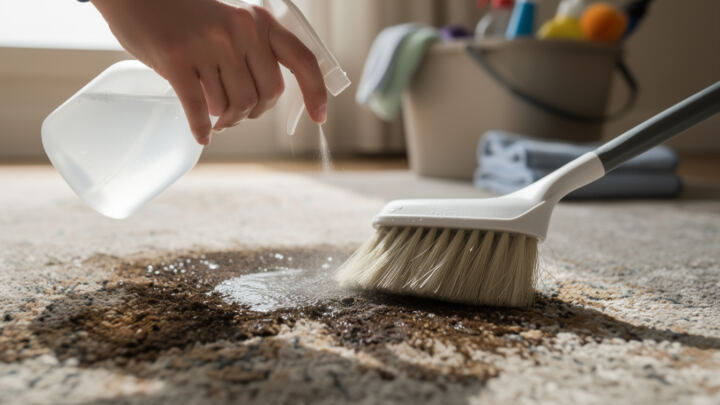
- 🧴 Spray bottle for controlled application (less over-wetting)
- 🧼 Clear liquid dish soap (grease-cutting without extra dye)
- 🍶 White vinegar (helpful for certain organic and tannin-related stains)
- 🧂 Baking soda or cornstarch (odor control and oil absorption)
- 🪥 Soft-bristled brush (for gentle agitation, not shredding)
- 🧪 Enzyme cleaner for pet-related stains (non-negotiable if odor is involved)
- 🧤 Gloves + good ventilation if using stronger commercial products
Here’s the underrated part: application control. A spray bottle prevents “carpet soup.” Over-saturating is how stains wick back from the padding days later, making you think the stain “returned” when it never actually left.
How to blot correctly (and why rubbing backfires)
Blotting sounds basic, but technique matters. Press down firmly with a clean cloth and hold pressure for about 20–30 seconds on wet spills. Then switch to a dry section of cloth so you’re not just reapplying what you picked up.
Always work from the outer edge inward. That keeps the stain from spreading and helps avoid that fuzzy “ring” look. And yeah—don’t rub. Rubbing roughs up fibers, especially on plush carpet, which can leave a permanent texture difference even if the color improves.
Patch testing: the 24-hour rule that saves carpets
If you’re using hydrogen peroxide, ammonia-based solutions, or a new commercial stain remover, do a hidden test (closet corner, under a couch). Apply a tiny amount, wait up to 24 hours, and check for fading or fiber stiffness. It’s a tiny pause that prevents an expensive mistake.
With prep handled, you’re ready to choose the right method per stain type—because strategy beats effort every single time.
Want to see the basics demonstrated quickly before you start mixing anything? This helps you copy the motion and pressure without guessing.
Step-by-step stain removal methods for stubborn stains (water, oil, protein, and dye)
This is the part where most people go straight to the strongest product and hope for the best. Instead, you’ll get better results by using a “least aggressive that works” approach—especially if you care about long-term carpet care and not just today’s spot.
Method 1: Water-based stains (including many drinks)
For a fresh spill, blot first. Then mix 1 tablespoon clear dish soap + 2 cups cool water in a spray bottle. Lightly mist (don’t soak), then blot. If the stain is coffee or juice, follow with a light rinse (plain water in a spray bottle) and blot again.
The rinse step matters more than people think. Soap left behind attracts dirt later, creating a “shadow stain” that makes the spot reappear after a week of foot traffic.
Method 2: Oil-based stains (grease, makeup, salad dressing)
Start dry. Sprinkle baking soda or cornstarch and let it sit 15–20 minutes to absorb oil. Vacuum thoroughly. Then apply a small amount of dish soap solution or a carpet-safe solvent product designed for oily stains, and blot.
If you skip the absorbent step, you often end up smearing grease deeper. Think of cornstarch as your first responder—it grabs oil before liquid cleaners push it around.
Method 3: Protein stains (pet accidents, blood, vomit, dairy)
Remove solids with a spoon or dull knife, then use cold water to blot. Apply an enzyme-based cleaner and let it dwell 10–15 minutes (follow the label). Blot, rinse lightly, and blot again.
With pet urine, you sometimes need to saturate to the depth of the contamination. That sounds scary, but the goal is to reach what smells—not just what you see. Then you need airflow and drying (fans, dehumidifier) so you don’t trade odor for mildew.
Quick-reference table: stain type, best cleaning solutions, and what to avoid
| Stain type | Best first-choice approach | Avoid 🚫 | Pro tip ⭐ |
|---|---|---|---|
| ☕ Coffee/tea (tannin) | Dish soap + water, then vinegar solution if needed | Overheating the area early | Rinse well to prevent re-soiling |
| 🍷 Red wine (dye/tannin) | Club soda blotting; oxygen-based cleaner if set | Rubbing (spreads pigment) | Work outer-edge to center to stop halos |
| 🐾 Pet accidents (protein) | Enzyme cleaner, proper dwell time | Steam/heat before odor is neutralized | Dry fast with fans to prevent wicking |
| 🖊️ Ink | Rubbing alcohol dabbed onto cloth | Pouring alcohol directly onto carpet | Use multiple clean cloth sections |
| 🧈 Grease/oil | Cornstarch/baking soda + vacuum, then soap/solvent | Hot water alone | Dry-absorb first, wet-clean second |
Once you’ve tried the targeted method a couple of times, you’ll know if you’re winning. If you’re not, it’s time to escalate—carefully—into deep cleaning territory.
If you want a visual walkthrough of handling older spots without shredding fibers, this kind of video is useful before you break out stronger products.
Deep cleaning carpet floors like a pro: steam extraction, dry compounds, and chemical spot escalation
Some stubborn stains aren’t on the surface anymore. They’ve moved down into the tuft base or even into the pad. At that point, repeated DIY spot treatment can create a bigger problem: residue buildup and over-wetting. Deep cleaning is where you stop “dabbing at the symptom” and actually flush out what’s trapped.
Hot water extraction (steam cleaning) and why it works
Hot water extraction—often called steam cleaning—pushes heated solution into the pile and then pulls it back out with suction. That extraction part is the magic. It removes dissolved soil instead of letting it dry back in place.
If you’re renting a machine, go slow on each pass. Fast passes leave moisture behind. If you’re hiring professional carpet cleaning, truck-mounted systems typically have stronger suction, which can mean faster drying and less chance of wick-back.
One practical note: for protein stains (especially pet accidents), don’t jump to high heat until enzymes have done their job. Heat can set proteins and odors in ways that are genuinely hard to reverse.
Dry cleaning compounds for delicate or low-dry-time situations
Dry compound systems use an absorbent material that you brush into fibers. It binds to soil and gets vacuumed out. This is solid for busy households where you can’t have damp carpet floors for half a day, and it’s gentler for certain constructions.
It’s also a smart move when you’re trying to avoid humidity-related issues. If you live in a damp climate or you’re dealing with a basement room, less moisture is often the safer play.
Chemical escalation: oxidizers, neutralizers, and dye removers
Oxidizing cleaners (often oxygen-based powders) can help with organic color stains like wine or coffee. Neutralizers can help with certain acidic residues. Dye removers are for the truly stubborn color transfer moments—like a red sock in a laundry basket resting on carpet during a humid weekend.
Keep it simple: escalate one step at a time, rinse between attempts, and never stack random products “to make it stronger.” Mixing chemicals is how home cleaning turns into a ventilation emergency.
Deep cleaning works best when it’s paired with prevention—because the easiest stain to remove is the one that never sets up camp.
Carpet care that prevents stubborn stains: protectants, routines, and emergency response that’s actually realistic
Prevention can sound like a lecture, but it’s really just making stain removal less frequent and less dramatic. Carpet care is about reducing the odds that a spill becomes a permanent memory. The best part is that most prevention steps are low effort once they’re routine.
Protective treatments: what they do (and what they don’t)
Carpet protectants (like fluoropolymer-based sprays used by many services) create an invisible barrier that helps resist water and oil bonding to fibers. In high-traffic areas, refreshing protection every 12–18 months is common, especially after deep cleaning.
Protectants don’t make carpets stain-proof. They buy you time. Instead of a spill instantly soaking in, you often get a window where blotting actually works before the liquid migrates downward.
Daily and weekly habits that keep carpet floors from looking “tired”
A no-shoes policy is unreasonably effective. Shoes bring in oils, fine grit, and street residue that slowly dulls fibers and makes future spots cling harder. Add doormats at entrances and you’ve already reduced what ends up embedded in the pile.
Vacuuming matters more than people want to admit. High-traffic lanes (hallways, near the couch) benefit from daily quick passes. Whole-home vacuuming a couple times a week keeps abrasive particles from grinding into the pile and making it easier for stains to latch on.
Emergency kit setup (so you don’t panic-clean)
Put a small kit where accidents happen: near the kitchen, the kids’ area, or the pet zone. Include white cloths, club soda, a small bottle of dish soap, and a trusted commercial spot cleaner. When you can respond within 30 seconds, you prevent a lot of “set-in” scenarios.
And yes, save a reputable cleaner’s number in your phone. Some situations—flooding from a spill, major pet accidents, or stains with persistent odor—are just faster and safer with professional equipment.
When you treat carpet care like a system instead of a once-a-year scramble, your carpet cleaning days get way less stressful—and the floors stay nicer with less effort.
Why do stubborn stains come back after I clean them?
Usually it’s wicking: moisture (and dissolved residue) travels up from deeper carpet layers as the area dries. Use less liquid, extract/blot more thoroughly, rinse out soap, and speed drying with fans or a dehumidifier to reduce return stains.
Is hydrogen peroxide safe for carpet stain removal?
Sometimes, but it can lighten dye in certain carpets. Patch-test in a hidden area and wait up to 24 hours. If it’s safe on your carpet, peroxide (often paired carefully with a little dish soap) can help with some colored organic stains.
What’s the best way to remove pet urine from carpet floors and stop the smell?
Use an enzyme cleaner and follow the dwell time on the label so it can break down proteins. Blot, lightly rinse, blot again, and dry quickly. If the urine reached the padding, you may need deeper saturation or professional carpet cleaning to fully eliminate odor.
Should I use hot water on stains to make them lift faster?
Not always. Heat can set protein stains (like blood or some pet messes). Start with cool or cold water for protein-based stains, and use warm water more selectively for greasy or general soil—always paired with proper extraction and rinsing.
When is it smarter to call a professional instead of doing more DIY cleaning?
Call a pro if you see repeated wick-back, discoloration after multiple attempts, strong persistent odors, suspected mold/moisture issues, or large-area staining. Professional hot water extraction and targeted chemistry can remove residue without over-wetting or damaging fibers.