In brief
- 🌿 Cork is eco-friendly and renewable, harvested without cutting down trees.
- 🦶 Daily comfort is a real perk: it feels springy, warmer than tile, and kinder on joints.
- 🔇 Built-in soundproofing and strong insulation make rooms calmer and cozier.
- 😷 Naturally hypoallergenic thanks to suberin, which helps resist mold and pests (with proper cleaning).
- 💧 Not truly waterproof: pick only water-resistant products for kitchens and manage spills fast.
- 🛠️ Many modern options click-lock, but long-term durability depends on wear layer + maintenance.
- 🧽 It can be low-maintenance day-to-day, yet may need periodic resealing in busy zones.
Cork flooring has been quietly moving from “cool eco choice” to mainstream pick in U.S. homes, and it’s not hard to see why. It brings a kind of laid-back warmth that makes spaces feel lived-in immediately, even when the décor is minimal. Underfoot, it’s softer than hardwood and noticeably less cold than tile, which changes how a room feels during everyday routines—making coffee, chasing a toddler, standing at the counter answering emails. At the same time, cork’s story appeals to people who want materials that don’t come with a heavy environmental hangover: bark harvested, trees left standing, forests kept valuable and protected.
Still, cork isn’t a miracle surface. It has quirks—sunlight can shift the color, heavy furniture can leave dents, and water is an ongoing negotiation unless you choose the right product and treat it right. The upside is that most of these trade-offs are manageable when you match the flooring to your rooms, your climate, and your habits. Let’s walk through what cork does best in residential spaces, where it struggles, and how to make it look great for the long haul.
Benefits of Cork Flooring in Residential Spaces: Comfort, Warmth, and Everyday Livability
If your home has spots where you’re on your feet a lot—kitchen prep zones, a standing desk corner, a laundry folding area—cork’s signature benefit is immediate: comfort. Cork is packed with tiny air-filled cells, which makes it naturally springy. That little “give” can reduce fatigue compared with harder surfaces like ceramic tile, and it’s noticeably gentler on knees and lower back during long sessions of cooking or pacing through a phone call.
To make this feel real, picture a typical evening: Mia, a homeowner in a two-story 1990s build, cooks while her kids do homework at the island. With tile, the kitchen always felt a bit harsh—cold in winter, loud when someone dropped a spoon, and tiring during big meal prep days. After installing cork planks with a durable factory finish, she said the room became the place people actually lingered. That’s not a design trend; that’s daily life getting easier.
Thermal-regulation that changes how rooms feel
Cork’s natural insulation supports better thermal-regulation. It doesn’t “steal” warmth from your feet the way stone does, and it can reduce the perception of drafts in older homes. This doesn’t mean you’ll cut your heating bill in half, but it can help rooms feel stable and comfortable—especially in bedrooms and upstairs spaces that often run cooler.
It also plays nicely with radiant heat systems when the product is approved for it. Done right, cork plus radiant heat is one of those combinations that makes you wonder why every home doesn’t feel like that. The key is following manufacturer limits on temperature and using compatible adhesives/underlayments so performance and warranties stay intact.
Soundproofing for multi-story homes and open plans
One underrated advantage is how cork handles noise. The same cellular structure that creates cushioning also supports soundproofing by dampening footsteps and absorbing some of the sharp “click” that travels through many hard floors. In open-plan layouts, it can reduce that constant background clatter—chairs moving, shoes on the way out, toys sliding across the floor.
In Mia’s case, the big win wasn’t just a quieter kitchen. The whole main level felt calmer, and upstairs footfall noise softened enough that late-night snacking didn’t wake the kids as often. That’s the kind of benefit you don’t see on a sample board, but you feel it every day.
Insight: Cork’s livability isn’t just about looks—it’s about how your home sounds and feels when it’s actually being used.
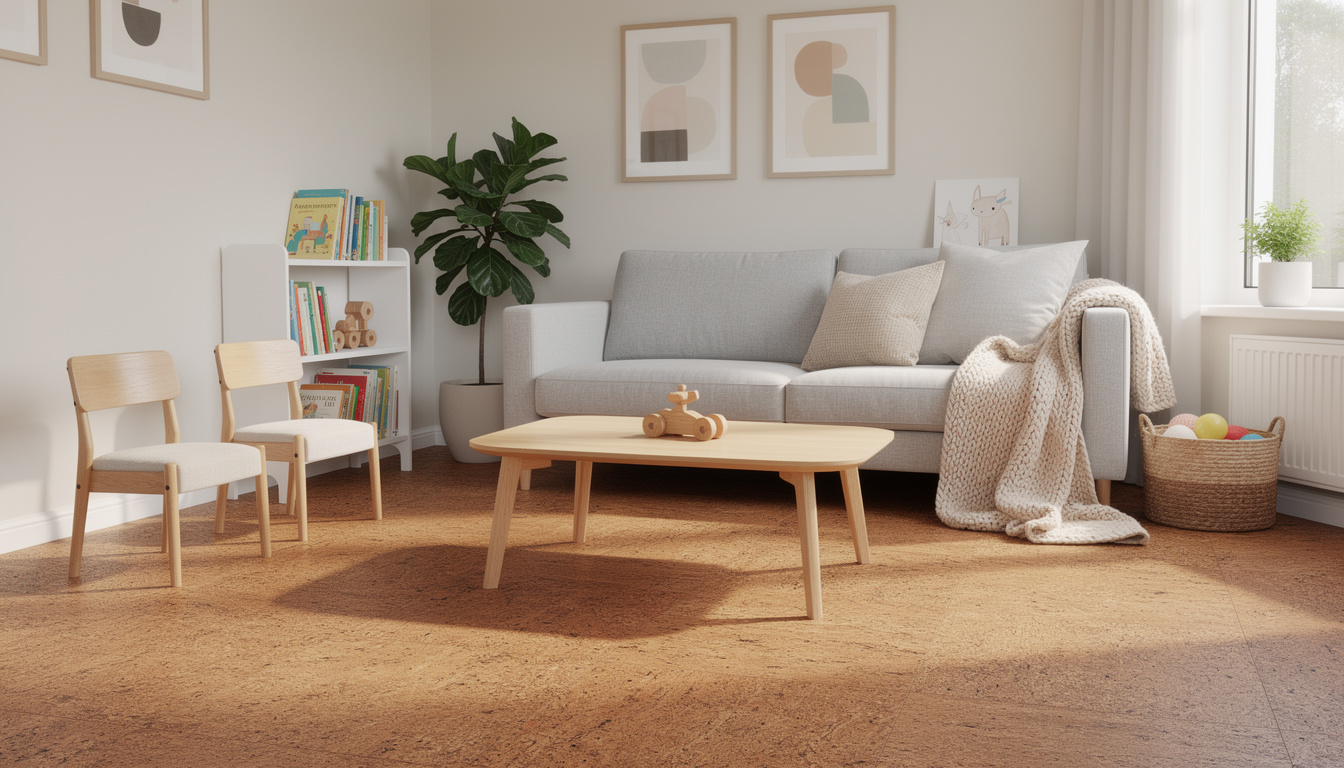
Eco-Friendly Cork Flooring: Renewable Sourcing, Healthier Homes, and Real Sustainability
Cork’s sustainability story is one of the rare ones in home materials that holds up under casual scrutiny. Cork comes from the bark of the cork oak, harvested without cutting the tree down. The bark regenerates, and the same tree can be harvested again and again—typically on a cycle of roughly 9–12 years—making cork a truly renewable resource when responsibly managed.
That matters in a practical way: when forests have economic value, they’re more likely to be preserved. Cork oak landscapes also support biodiversity and carbon storage, so a flooring purchase can connect—indirectly, but meaningfully—to keeping those ecosystems intact. If you’re aiming for an eco-friendly remodel, cork is one of the cleaner “big surface” choices you can make, alongside responsibly sourced wood and certain recycled-content floors.
Indoor air quality: hypoallergenic potential and smart product choices
Many homeowners also care about what’s floating around inside their walls. Cork contains suberin, a natural compound that can help resist mold and pests, giving it hypoallergenic potential—especially compared to surfaces that trap dust or are prone to hidden moisture issues. Of course, the floor still needs regular cleaning, and the real-world result depends on your home’s humidity, ventilation, and habits.
In 2026, it’s also common to see cork products marketed with low-VOC adhesives and finishes. That’s worth paying attention to. If you’re remodeling a nursery, a guest room for sensitive family members, or a home office where you spend eight hours a day, choosing low-emission finishes can matter as much as the base material.
What to look for when shopping (without getting lost in marketing)
Brands love buzzwords. Here’s the grounded checklist that keeps things simple: ask for third-party environmental certifications when available, read warranty language about finish performance, and confirm whether the product is designed to be refinished or just replaced once worn. If you’re comparing two similar-looking options, the “greener” one is often the one with transparent documentation, not the one with the prettiest leaf icon on the box.
| Feature | Why it matters at home | What to ask the retailer |
|---|---|---|
| 🌳 Renewable bark harvesting | Supports long-term forest value and lower-impact sourcing | “Where is the cork sourced, and is harvesting documented?” |
| 😷 Hypoallergenic potential | May reduce mold/pest issues when kept clean and dry | “What finish system is used, and how should it be cleaned?” |
| 🧪 Low-emission finishes | Helps maintain healthier indoor air quality | “Is it low-VOC, and do you have certification paperwork?” |
| ♻️ End-of-life options | Less landfill waste when replaced years later | “Can it be recycled or repurposed locally?” |
Choosing cork for sustainability isn’t about being perfect; it’s about making a high-impact surface in your home align with values and comfort at the same time.
Insight: The most sustainable floor is the one you keep looking good for a long time—so durability and care are part of “green,” too.
Want to see how cork is made and why it behaves the way it does underfoot? This is a helpful visual rabbit hole.
Durability of Cork Flooring: Wear Layers, Pets, Furniture, and Long-Term Performance
Let’s talk about the thing people worry about most: durability. Cork is resilient, but it is also softer than many hard flooring types. That softness is why it feels good—yet it’s also why it can dent under heavy furniture, show marks from high heels, or take scratches from pet claws if you’re not proactive.
The good news is that “cork flooring” isn’t one single product. You’ll see solid cork tiles, engineered planks, and various finish systems. The performance difference between a thin, lightly finished cork and a thicker product with a tough factory coating is massive. When you’re evaluating options, pay close attention to the wear layer thickness (and what the warranty actually covers), not just the color.
Real-home scenarios: dogs, dining chairs, and the moving-day test
In a home office, cork often performs beautifully because the traffic is predictable and moisture is low. Add a rolling chair, though, and you need a plan: a chair mat, soft caster wheels, or a dedicated rug zone. In a dining room, chair legs are the villain. Felt pads are cheap; replacing a floor because of chair scraping is not.
For pets, it’s usually manageable, but you have to accept that nails can leave micro-scratches over time. Keeping nails trimmed and using rugs in the “zoomies hallway” makes a bigger difference than people expect. If your dog regularly drags toys across the floor like it’s a job, choose a product with a robust finish and a reputation for resisting abrasion.
Refinishing and repair: what’s possible (and what isn’t)
Some solid cork floors can be sanded and refinished, which can extend lifespan significantly. Some engineered products allow targeted plank replacement or spot repairs, depending on construction. The catch is that not every cork floor is meant to be refinished, and sanding through a thin wear layer is a one-way trip to regret. Ask directly: “Can this exact product be refinished? How many times?” and get the answer in writing if possible.
Also keep sunlight in mind. UV can shift cork’s color over time, especially in bright rooms with big windows. Window treatments and UV-resistant finishes help keep the look consistent. If you love that sun-drenched aesthetic, you don’t need to avoid cork—you just need a plan.
- 🪑 Add felt pads under furniture legs (replace them when they flatten).
- 🐾 For pets, trim nails and use runners in high-speed routes.
- ☀️ Use UV-filtering shades to reduce fading in sunny rooms.
- 🧹 Sweep grit often; it acts like sandpaper on finishes.
- 🧰 Keep a few spare planks/tiles for future spot repairs.
Insight: Cork holds up best when you treat it like a premium finish—protect the surface, and it rewards you with years of comfort.
To get a feel for how cork compares with other floors (and what “pros and cons” really mean in a lived-in house), it helps to watch a few installers break it down.
Water-Resistant Cork Flooring in Kitchens: Moisture, Humidity, and What to Avoid
Cork and water have a complicated relationship. Cork can resist moisture to a point, especially when sealed well, but it’s not automatically safe from standing water. If liquid gets through seams or sits long enough, cork can swell or warp. That’s why people sometimes have wildly different experiences: one homeowner says it’s perfect in the kitchen, another says it failed. The difference is usually product selection, sealing, and habits.
In residential spaces, cork is best in rooms with low to moderate moisture. Kitchens can work if you choose the right build and you’re realistic about cleanup. Bathrooms and very damp laundry rooms are usually a “only if explicitly rated for it” situation, with proper barriers and careful installation.
Humidity control and acclimation: the unglamorous step that saves floors
Cork also reacts to humidity swings—expanding when it’s humid, contracting when it’s dry. Many manufacturers recommend keeping indoor humidity roughly between 30% and 60% for best results. If your home swings wildly (hello, winter heating + dry air), you may see small gaps unless the material was acclimated and installed properly.
Acclimation is boring, but it’s essential: letting the cork sit in the room environment before installation helps it settle into the home’s “normal.” Skipping this step is like refusing to let paint cure and then being surprised when it scuffs.
Sealers, barriers, and the truth about “water-resistant” claims
Some newer cork lines are marketed as water-resistant, often because they use improved core tech, tighter locking systems, and tougher finishes. That can be a genuine upgrade, but it still doesn’t turn cork into a bathtub-ready material. Read the fine print: does “water-resistant” mean it can handle occasional spills for a set number of hours, or does it mean it’s suitable for wet rooms? Those are different universes.
A moisture barrier under the floor (when required) and careful attention to seams and edges can dramatically reduce risk. In a kitchen, a few practical habits do just as much: wipe spills quickly, use a sink mat, and watch for slow leaks under dishwashers and fridges.
Insight: Cork can survive kitchens when you respect moisture—most failures happen when water is treated like “someone else’s problem.”
Low-Maintenance Cork Flooring Care: Cleaning Routines, Resealing, and Keeping the Finish Fresh
Cork can be low-maintenance in the sense that it doesn’t demand complicated daily rituals. The core routine is simple: remove grit, avoid excess water, and protect the finish. The most common mistake is using too much liquid when mopping, which can push moisture into seams or dull certain finishes.
For day-to-day cleaning, dry sweeping or a microfiber mop is your best friend. Dirt and fine grit are what chew up finishes over time—especially near entry doors and in hallways. When you do wet-clean, a damp (not wet) mop plus a cleaner recommended by the manufacturer keeps you safe from residue buildup and finish damage.
Resealing and refinishing schedules (what “normal” looks like)
How often you reseal depends on traffic, finish type, and lifestyle. A quiet guest room might look great for ages with minimal effort. A busy kitchen with kids and a dog may need more frequent attention to keep the protective layer intact. Think of it like exterior paint: the goal isn’t to wait until it fails; it’s to refresh before the surface is exposed.
Finishes vary. Polyurethane and aluminum-oxide coatings generally offer strong stain resistance and toughness. Wax-based finishes can look classic and warm, but they usually ask more from you in upkeep. Whatever you pick, align it with how you live—because the “prettiest” option that doesn’t match your schedule becomes a chore fast.
A room-by-room approach that actually works
In living rooms and bedrooms, cork’s softness and warmth can shine with minimal fuss. In home offices, manage rolling chairs. In entryways, use mats to catch grit. For multi-story homes, cork’s noise dampening improves comfort, but only if the top layer stays in good shape—so the cleaning routine matters.
- 🚪 Use entry mats to trap grit before it hits the finish.
- 🧼 Clean with a manufacturer-approved solution (avoid harsh chemicals).
- 💦 Damp mop only—no soaking, no steam mop unless the brand explicitly allows it.
- 🧽 Spot-clean spills quickly to protect seams and edges.
- 🛡️ Refresh protective coatings before high-traffic paths look “tired.”
Insight: Cork care is less about constant work and more about a few smart habits that prevent expensive problems.
Is cork flooring a good choice for families with kids?
Yes—many families love cork for its comfort and soundproofing. The springy feel can be kinder during play, and it’s quieter than many hard floors. Use felt pads, rugs in high-traffic zones, and quick spill cleanup to protect durability.
Can cork flooring handle kitchens if I want something water-resistant?
Kitchens can work if you choose a water-resistant cork product, follow the required moisture barrier and sealing steps, and wipe spills quickly. Avoid letting water sit near sinks, dishwashers, or fridge lines, and watch for slow leaks.
Does cork flooring help with allergies?
Cork has hypoallergenic potential because it naturally resists some mold and pests thanks to suberin, and it doesn’t trap dust like thick carpet can. Regular dry cleaning and controlling indoor humidity (often around 30%–60%) are still essential for best results.
How do I pick a cork floor that will last?
Focus on durability factors: a reputable brand, a strong factory finish, suitable wear layer thickness, and warranty terms that match your space. If you have pets or heavy furniture, prioritize tougher finishes and plan for protective pads and rugs.
Is cork compatible with radiant heating?
Often yes, and it can feel amazing thanks to cork’s insulation and thermal-regulation benefits. Confirm the specific product is approved for radiant heat, follow temperature limits, and use compatible underlayments/adhesives to maintain performance and warranty coverage.