New floors are one of those “simple” home upgrades that can spiral fast: a quick price quote turns into debates about cost, durability, moisture risks, and whether your Saturday cleaning routine is about to get harder. And in 2026, the conversation is even noisier—materials and labor pricing keep shifting, while product tech (especially in vinyl and water-resistant laminate) keeps closing the gap with more traditional surfaces. The real trick isn’t just picking something that looks good under showroom lighting. It’s choosing flooring materials that can handle your lifestyle, your subfloor realities, and your tolerance for maintenance over the next 20–30 years.
To make this less abstract, we’ll follow a fictional couple—Maya and Jordan—renovating a 1990s home with a busy dog, a basement that gets humid in summer, and a goal to avoid “redoing the floors again” in a decade. Their choices will mirror the same trade-offs most people face: do you pay more now for long-term performance, or spend less and accept a shorter replacement cycle? This comparison breaks it down with practical numbers, real-world wear patterns, and the hidden line items that usually show up after you’ve already committed.
En bref
- 💸 The real flooring cost includes materials, labor, subfloor prep, and long-term maintenance—not just the sticker price.
- 🪵 Hardwood can last 75–100+ years with refinishing, but upfront pricing is high and timelines vary by finish method.
- 🧱 Tile (especially porcelain) is a durability monster in wet zones, but installation complexity can inflate labor costs.
- 🌊 Modern vinyl (LVP/LVT) is waterproof, stable, and budget-friendly, with wear layers that strongly affect lifespan.
- 🧩 Laminate is a value play when you choose higher AC ratings and improved moisture-resistant cores.
- 🧼 Carpet wins on softness and noise, but replacement cycles and cleaning costs change the long-term math.
- 🧯 Plan a 15–25% contingency for surprises—older subfloors and hidden moisture issues are repeat offenders.
Cost vs Durability: How to Compare Flooring Materials Like a Contractor
When Maya and Jordan asked three installers for quotes, they got three wildly different totals—despite choosing similar-looking finishes. That’s because pros don’t evaluate flooring like a shopping cart. They evaluate it like a system: what it costs to buy, what it costs to install, what it costs to keep looking decent, and how soon you’ll be paying again.
A practical comparison usually tracks five buckets over a 20–30 year horizon: material costs, installation labor, subfloor preparation, maintenance, and replacement frequency. It’s not unusual for materials to represent roughly 60–70% of the initial bill, but that swings depending on the category. Labor tends to land around 20–30%, while prep work, trims/transitions, and finishing can add another 10–20%. Those “small” percentages are where budgets quietly break.
The hidden line items that decide whether your quote is real
In the couple’s house, the living room subfloor was flat and dry—easy. The basement, though, had a slight slope and old adhesive residue from a previous floor. That’s where subfloor prep matters: leveling compounds, moisture barriers, patching, or even plywood underlayment. You don’t see any of that in pretty product photos, but you feel it in invoices.
Transitions are another sneaky category. If your kitchen meets a hallway, or tile meets hardwood, you’ll need transition strips, reducers, and sometimes custom trim. Individually they’re not huge, but across a whole level they stack up.
Lifecycle thinking: the “cheapest” floor can be the most expensive
Say you pick a low-cost surface that needs replacing every 8–12 years. Over 24 years, you might pay for removal, disposal, and reinstall two extra times. Meanwhile, a more expensive surface that lasts 30–50 years may cost less across the same window—even if it hurts upfront. That’s why durability isn’t an abstract bragging right; it’s a financial variable.
To keep the math grounded, here’s a broad lifecycle snapshot that many contractors use for first-pass planning. Exact outcomes depend on traffic, pets, sunlight, cleaning habits, and whether installation was done correctly.
| Flooring type | Installed cost range (USD/sq ft) | Typical durability window | Maintenance vibe |
|---|---|---|---|
| 🪵 Hardwood (solid) | $12–$25 | 75–100+ years (refinishable) | 🧴 Refinishing every ~10–15 years |
| 🪵 Engineered hardwood | $8–$18 | 30–60 years (depends on wear layer) | 🧽 Easier stability; limited refinishing |
| 🧱 Tile (ceramic/porcelain) | $3–$15 (stone $8–$25+) | 50–100 years | 🧼 Grout care + occasional sealing |
| 🌊 Vinyl (LVP/LVT) | $3–$8 | 15–25 years | 🧹 Simple cleaning; watch wear layer |
| 🧩 Laminate | $2–$6 | 8–20 years | 🧽 Easy care; moisture resistance varies |
| 🧸 Carpet | $2–$12 | 5–15 years | 🧼 Pro cleaning + stain management |
One more budgeting rule that saved Maya and Jordan: they kept a 15–25% contingency for surprises. If your home is older, or you’re changing floor height (like removing thick carpet and installing tile), that buffer isn’t pessimism—it’s realism. Next, let’s talk about the premium elephant in the room: hardwood.
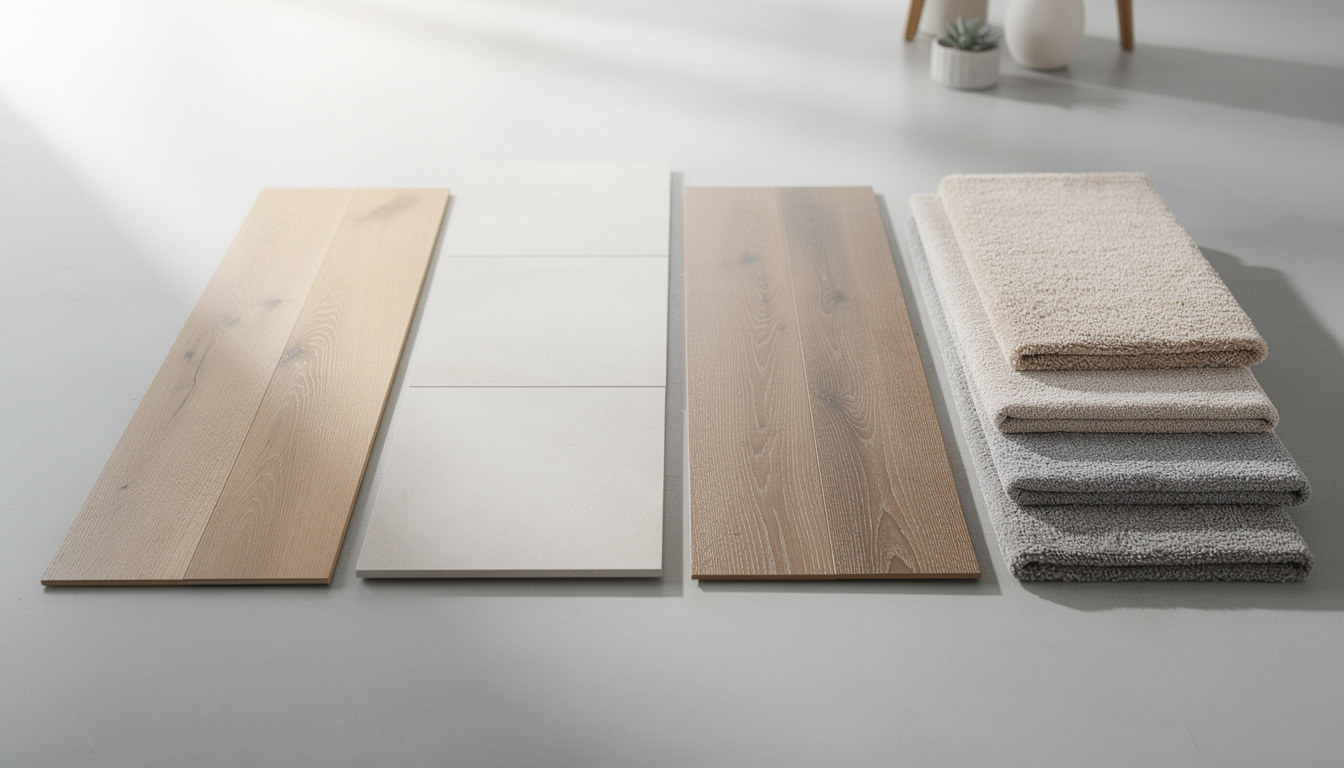
Hardwood Flooring Cost and Durability: When the “Gold Standard” Pays Off
Hardwood keeps its reputation for a reason: it’s one of the few flooring materials that can look better after decades if it’s maintained correctly. The catch is that you pay for that privilege upfront. Installed pricing commonly lands around $8–$25 per sq ft, with solid wood at the higher end. Still, in homes where resale value matters, hardwood often behaves like a long-term asset rather than a disposable finish.
Maya and Jordan loved the look of wide-plank oak, but they also had a dog that treats the hallway like a drag strip. The installer’s advice was blunt: hardwood is durable, not indestructible. The real win is that surface wear isn’t the end of the story—because refinishing can reset the clock.
Solid vs engineered: same vibe, different physics
Solid hardwood commonly runs about $12–$25 per sq ft installed. Its superpower is refinishing potential: sand it down, restain, reseal—repeat. With good care, a 100+ year lifespan is realistic, and historic homes prove it. Oak is often the cost-effective workhorse (frequently around $12–$18 installed), while exotics like Brazilian cherry or teak can jump to $20–$30 installed depending on the market and board quality.
Engineered hardwood usually falls around $8–$18 per sq ft installed and is built for stability. That matters if your home has humidity swings or you’re installing over concrete. The key detail is the wear layer (the real wood veneer on top). Products with a thick wear layer—around 4mm or more—can often handle 3–5 refinishing cycles, pushing useful life into the 40–60 year zone instead of “looks tired after 12.”
Pre-finished vs site-finished: money isn’t the only trade-off
This one surprised the couple: pre-finished hardwood can cost roughly $2–$4 more per sq ft than site-finished once all variables are counted, but it shrinks disruption. Pre-finished installs can wrap in 1–2 days because boards arrive sealed and ready. Site-finished floors may take 5–7 days due to sanding, coats, cure time, and the whole “your house smells like finish” chapter.
So why ever choose site-finished? Seamless appearance and customization. If you want a specific stain or a glass-smooth finish, site finishing still has a place. But if you’re living in the home during the project, pre-finished can be the sanity-preserving option.
Hardwood maintenance: predictable, but not optional
Hardwood maintenance is less about constant work and more about periodic big moves. Expect refinishing around every 10–15 years in many households, faster in high-traffic homes. Day-to-day, you’re protecting the finish: felt pads under chairs, grit control at entryways, and cleaning products that won’t leave residue.
Maya and Jordan ended up choosing engineered oak upstairs for stability and a more manageable budget, while saving solid hardwood for the main level later. That decision points to the next question: what if you want serious durability in wet areas without the wood anxiety? That’s tile territory.
If you want to see installer perspectives on finish choices and wear expectations, this video search is a solid starting point.
Tile Flooring Comparison: Ceramic vs Porcelain vs Natural Stone for Long-Term Durability
Tile is the flooring world’s endurance athlete. In kitchens, entries, mudrooms, and bathrooms, it handles moisture and abrasion in a way that makes many other surfaces feel fragile. But tile is also where “material price” can be wildly misleading. You can find tile for $2 per sq ft and tile for $50+, and both can technically be called tile. The difference is performance, body composition, and how forgiving it is when life gets messy.
Jordan wanted tile in the basement family room because it felt “safer” against humidity. The contractor agreed—but warned that installation quality matters as much as tile choice. A cheap tile installed perfectly can outlast a premium product installed poorly. Tile durability is a system: substrate, thinset, grout, movement joints, and moisture control all work together.
Ceramic vs porcelain: similar look, different resilience
Ceramic tile often lands around $3–$8 per sq ft installed for common residential-grade options. It’s generally a strong value in moderate-traffic areas, especially walls and light-use floors. The drawback is that ceramic is typically less dense than porcelain, so it can be more vulnerable to chipping or staining depending on the glaze.
Porcelain tile commonly runs $5–$15 per sq ft installed and earns its higher price with density and low porosity. It resists staining, scratching, and water penetration better than many traditional ceramics. If you’re installing in a place where wet shoes, pets, or spills are routine, porcelain tends to keep its “new floor” look longer with less drama.
One upgrade that’s worth understanding is through-body porcelain. Instead of a surface glaze hiding a different internal color, the body is consistent throughout. That means chips are less visually obvious—huge for entries and commercial-like wear at home.
Natural stone: gorgeous, but it comes with a relationship contract
Natural stone typically ranges around $8–$25 per sq ft installed (and can go higher). The durability story depends on the stone. Granite and slate can be extremely tough. Marble and travertine deliver that luxury look, but they demand more careful maintenance and can etch or stain more easily.
If Maya and Jordan had gone marble in the kitchen, they would’ve needed to accept regular sealing and quick cleanup routines. For some people that’s totally fine—like owning a white sofa. Beautiful, but you don’t pretend it’s “low effort.”
Where tile really costs money: labor, prep, and grout decisions
Tile installation is specialized. Layout, cuts, leveling, and waterproofing can push labor well above what you’d pay for click-lock products. Subfloor flatness is critical; even small unevenness can cause lippage (edges you feel when you walk). That’s why tile jobs often have higher prep costs than people expect.
Grout is the long-term wildcard. Lighter grout looks crisp, but it shows grime. Sealing helps, and epoxy grout can resist staining better, but it adds to the initial bill. Still, when tile is done right, it can realistically run 50–100 years, which is hard to beat in a durability comparison.
So tile is the durability king in wet zones—but what if you want water resistance, speed, and a softer feel underfoot? That’s where modern vinyl has completely changed the conversation.
For visual examples of porcelain durability testing and real-world installs, this video search is useful.
Vinyl and Laminate Cost Comparison: The Modern Budget Duo with Surprising Durability
Ten years ago, people heard “vinyl” and pictured thin sheets curling at the corners. In 2026, that stereotype is outdated. Luxury vinyl plank (LVP) and luxury vinyl tile (LVT) are now serious contenders when you want the look of wood or stone, a manageable cost, and strong moisture performance. Laminate has also leveled up, especially with improved water-resistant cores that reduce swelling risks.
Maya and Jordan’s biggest debate was the basement: tile felt permanent, but it felt cold. LVP felt warmer and faster to install. Their contractor put it simply: if you want waterproof and comfortable, premium vinyl is hard to argue with—just don’t cheap out on the wear layer.
Luxury vinyl plank (LVP/LVT): what you’re really paying for
Installed LVP often sits around $3–$8 per sq ft. The big selling point is waterproof performance and easy day-to-day maintenance—sweep, mop, done. But the product category is wide, and durability hinges on construction and wear layer thickness.
Wear layer thickness is your durability dial. For many homes, a minimum of 12-mil wear layer is a sensible baseline. For heavy traffic, pets, or small businesses, 20-mil or more is the safer bet. Some premium lines go 28–40 mil, delivering seriously tough performance that can feel closer to commercial-grade expectations.
Construction matters too. Rigid core options—often labeled SPC (stone plastic composite) or WPC (wood plastic composite)—help with dimensional stability and can feel more forgiving underfoot than brittle surfaces. That stability is exactly why vinyl is popular in basements and condos over concrete slabs.
Laminate: cheap doesn’t have to mean disposable
Laminate typically runs around $2–$6 per sq ft installed. It’s a value option when you pick the right specifications. The two big indicators are abrasion rating and moisture resistance.
Look at AC ratings (Abrasion Class). AC3 is usually fine for residential spaces. If you’re dealing with high foot traffic, kids, or an open-plan layout where everything funnels through one path, stepping up to AC4–AC5 can give you more commercial-like durability. That upgrade might add roughly $1–$2 per sq ft, but it can noticeably extend the service life.
Moisture resistance used to be laminate’s weak spot. Modern water-resistant or “waterproof” laminates cost a bit more—often around $1–$2 per sq ft extra compared to basic lines—but they reduce edge swelling and buckling risks in places like kitchens. Still, laminate isn’t the same as vinyl in standing water scenarios; it’s improved, not magical.
Real-life placement: where vinyl and laminate shine
In Maya and Jordan’s plan, LVP won the basement because it handled humidity and felt comfortable for movie nights. Laminate became a candidate for a low-traffic guest room because it delivered the wood look at a lower price point.
If you’re doing a whole-house renovation, mixing materials can be smart: use vinyl where water is a risk, and laminate where you want value without constant spills. The insight here is simple: budget products can be durable when you buy the right specs for the right room.
Next up, the soft option people love to hate (and sometimes secretly want): carpet.
Carpet Cost and Durability: Comfort, Noise Control, and the Replacement Reality
Carpet is still a legitimate choice, especially for bedrooms, stairs, and spaces where you want warmth and sound absorption. It’s also the category where long-term costs can sneak up—because cleaning and replacement cycles are often shorter than people expect. Installed pricing typically runs around $2–$12 per sq ft depending on fiber, construction, and padding. That’s a big spread, and it’s why two “carpet quotes” can feel like they’re from different planets.
Maya wanted carpet upstairs because it made mornings quieter and the home cozier. Jordan worried about stains and pet hair. The compromise was selecting a more durable fiber and a construction that hides wear better, then budgeting for professional cleaning as part of normal upkeep rather than an emergency expense.
Fiber types: durability starts at the chemistry level
Nylon is often the durability leader in residential carpet, commonly landing around $4–$10 per sq ft installed depending on brand and padding. It tends to bounce back better under traffic and offers strong stain resistance when treated.
Polyester can be more budget-friendly—often around $2–$6 per sq ft installed—and can look great in low-traffic areas. The trade-off is that it may not recover from crushing as well in hallways or on stairs. If you’re carpeting a guest room that barely gets used, polyester can be a rational choice. If you’re carpeting the main staircase, nylon usually wins the durability comparison.
Construction choices: why some carpet “ages” faster
Cut pile carpets often cost less upfront and feel soft, but they can show footprints and vacuum marks more easily. In a high-traffic path, that can look like premature wear even if the fibers are technically intact.
Loop pile constructions (including Berber-style looks) can hide soil and wear patterns better. Textured styles also camouflage traffic lanes, which can extend the time before you feel like you “need” to replace it.
Maintenance math: cleaning isn’t optional if you want the lifespan
Carpet maintenance has a rhythm: frequent vacuuming, quick response to spills, and periodic professional cleaning. Over time, that adds cost—but it also extends life and improves indoor air quality. If you skip cleaning, the fibers hold soil that grinds them down, shortening the replacement cycle.
Replacement timing typically sits somewhere in the 5–15 year range depending on traffic and quality. That’s not a reason to avoid carpet; it’s a reason to plan honestly. Carpet is comfort-first. If comfort is your priority, budget for upkeep and accept that it’s not a 50-year floor.
Now that we’ve covered the major materials, the final piece is decision strategy: how to match the right surface to the right room without overpaying.
Room-by-Room Flooring Materials Strategy: Matching Cost, Durability, and Maintenance to Real Life
If you’ve ever seen a pristine white rug in a home with three muddy dogs and wondered “how?”, the answer is usually money, time, or both. Flooring works the same way. The best comparison isn’t only between products—it’s between products and your daily routine. Maya and Jordan’s project got easier once they stopped hunting for one perfect material and started assigning roles: moisture defense here, comfort there, resale value in the main areas.
Residential priorities: comfort + resale value + predictable upkeep
For many homeowners, the sweet spot is balancing appearance and long-term performance. Hardwood still carries strong market appeal, especially in living rooms and dining spaces. Engineered hardwood can offer a similar look with better stability over concrete or in climates with big humidity swings.
Luxury vinyl is the pragmatic pick in busy homes: it handles spills, pet accidents, and everyday chaos with minimal stress. That’s why so many renovators use LVP in open-plan main floors where kitchens blend into living spaces—fewer transitions, fewer panic moments.
Moisture zones: bathrooms, basements, laundry rooms
If moisture is part of the room’s personality, lean into waterproof surfaces. Tile and vinyl are the usual leaders. Sealed concrete can also be a strong choice in some basements, though it’s a different look and feel.
Laminate has improved a lot, but it still needs careful product selection and thoughtful installation details (like perimeter expansion gaps and spill management). For bathrooms with frequent standing water, vinyl or tile remains the safer play.
Commercial logic (that homeowners can borrow)
Commercial spaces obsess over lifecycle cost: how often a surface needs service, how fast it can be repaired, and how it looks under constant wear. That’s why you see polished concrete, commercial carpet tiles, and LVT dominating offices and retail. Homeowners can copy that thinking in high-traffic zones: entries, hallways, and kitchens benefit from surfaces with easy repair or high wear tolerance.
A practical decision checklist (use it before you fall in love with a sample)
- 🚪 Traffic pattern: Where do people actually walk, pivot, and drag stuff?
- 🐾 Pets and claws: Are you okay with patina, or do you want “always looks new”?
- 💧 Moisture exposure: Occasional spills or regular humidity/standing water?
- 🧽 Maintenance tolerance: Do you want “mop and done” or are you fine scheduling refinishing/sealing?
- 🧱 Subfloor reality: Is it flat, dry, and stable—or a prep-work surprise waiting to happen?
- 🧾 Replacement horizon: Are you renovating to sell soon or to stay for decades?
Budgeting like a grown-up: avoid the “halfway remodel stall”
A comprehensive plan includes removal and disposal of old floors, subfloor repair, installation, trims, and finishing details. Many homeowners also use third-party estimating services to sanity-check contractor proposals before signing—especially when quotes vary widely and you want clarity early. Regardless of how you estimate, a contingency fund is what keeps small surprises from turning into major compromises.
The throughline from Maya and Jordan’s renovation is that “best” depends on context: the strongest strategy is mixing materials intelligently so each room gets what it actually needs. And that’s where cost, durability, and maintenance finally align instead of fighting each other.
What flooring material has the best durability for the money?
For many homes, luxury vinyl (LVP/LVT) offers one of the strongest cost-to-durability ratios: it’s waterproof, easy to maintain, and typically lasts 15–25 years when you choose a solid wear layer. If you can spend more upfront, porcelain tile and quality hardwood can outlast almost everything, but they usually require higher installation budgets.
Is solid hardwood always better than engineered hardwood?
Not always. Solid hardwood has the longest refinishing potential and can last 75–100+ years, but engineered hardwood is often more dimensionally stable over concrete or in homes with humidity swings. If you choose engineered with a thick wear layer (around 4mm+), you can still refinish it multiple times and get decades of service.
How do I choose between laminate and vinyl in a kitchen?
If you want maximum water protection and simple maintenance, vinyl is usually the safer option because it’s truly waterproof in most formats. Laminate can work well if you choose a modern moisture-resistant product with a higher AC rating, but it’s still more vulnerable if standing water is common or spills aren’t cleaned quickly.
Why do tile projects often cost more than expected?
Tile is labor-intensive and sensitive to subfloor conditions. Prep for flatness, waterproofing steps (in wet areas), layout and cutting time, grout selection, and transition details can all increase labor and materials beyond the tile price itself. A durable tile floor is a system, not just the tile.
What maintenance costs should I expect over time?
Hardwood often needs refinishing about every 10–15 years, tile may require grout care and occasional sealing (especially stone), vinyl and laminate generally need routine cleaning only, and carpet typically benefits from periodic professional cleaning and may need replacement sooner (often 5–15 years depending on traffic and fiber type).